

HEMATOLOGY
Latest News
Advertisement
Latest Videos

CME Content






































Advertisement
More News

In the phase II CLOVER-1 trial, the small-molecule phospholipid drug conjugate CLR 131, achieved high response rates in patients with relapsed/refractory multiple myeloma and relapsed/refractory non-Hodgkin lymphoma, meeting the primary efficacy end point of the study, according to a press release from Cellectar Biosciences, developer of the agent.
In an interview with <em>Targeted Oncology</em>, Rajneesh Nath, MD, discussed the background and rationale for the phase III SIERRA trial. He also explained what this research means for the treatment landscape of acute myeloid leukemia.
The use of agents targeting Bruton tyrosine kinase have moved into the standard of care for the treatment of chronic lymphocytic leukemia/small lymphocytic lymphoma in recent years. New data have indicated that more effective therapy by way of combination regimens and newly approved agents may further improve the prognosis of this disease.

Jeff P. Sharman, MD, discusses what differentiates acalabrutinib from other BTK inhibitors available in chronic lymphocytic leukemia.

The FDA has granted Priority Review to the New Drug Application for tazemetostat as treatment for patients with relapsed or refractory follicular lymphoma who have received at least 2 prior lines of systemic therapy. The drug will now be considered for accelerated approval and the application was designation as a supplemental NDA with a Prescription Drug User Fee Act target action date of June 18, 2020, Epizyme, Inc announced in a press release.
The FDA has granted Priority Review to the Biologics License Application for lisocabtagene maraleucel for the treatment of adult patients with relapsed or refractory large B-cell lymphoma, after at least 2 prior therapies.
In an interview with Targeted Oncology, Allison J. Moskowitz, MD, discussed the treatment options for patients with Hodgkin lymphoma and what research is still to come in the field. She also compared the treatment landscape of Hodgkin lymphoma with that of T-cell lymphomas, a rare subset of patients.
The aurora A kinase inhibitor alisertib plus the class I histone deacetylase inhibitor romidepsin is a safe combination for the treatment of patients with relapsed/refractory lymphomas, according to the findings from a phase I study whose results were published by Paolo Strati, MD, and colleagues in Haematologica.
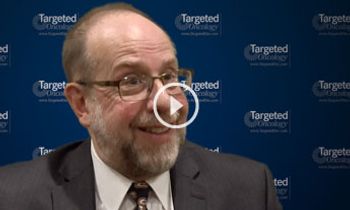
Karl M. Kilgore, PhD, discusses the role of chimeric antigen receptor T-cell therapy as treatment of patients with relapsed/refractory diffuse large B-cell lymphoma and where this option might fit into the landscape in the future.
Next-generation sequencing in patients with chronic lymphocytic leukemia treated with the combination of chlorambucil and ofatumumab showed that the presence of TP53, SF3B1, and NOTCH1 mutations were predictive of reduced efficacy, according to the results of the phase III COMPLEMENT1 trial published in Haematologica.
In January 2020, the FDA approved new treatment options in gastrointestinal stromal tumors, bladder cancer, and epithelioid sarcoma. The FDA also granted several Priority Review Designations, orphan drug designations, and a Fast Track designation, as well as a Breakthrough Therapy designation.

Courtney D. DiNardo, MD, MSCE, explains the rationale for the phase II AG221-AML-005 trial.
Following the FDA approval of gemtuzumab ozogamicin with induction and consolidation therapy in newly diagnosed CD33-positive acute myeloid leukemia, investigators led by Richard F. Schlenk, MD, hypothesized that patients with NPM1-mutated acute myeloid leukemia, which occurs in 20% to 30% of the patient population, could also derive benefit from gemtuzumab.
In an interview with Targeted Oncology, Paul M. Barr, MD, discussed the rationale and preliminary findings for the phase I/II study evaluating umbralisib and ublituximab plus venetoclax in patients with relapsed/refractory chronic lymphocytic leukemia. He also explained how the role of combination therapy continues to evolve in this space.









Advertisement
Advertisement
Trending on Targeted Oncology - Immunotherapy, Biomarkers, and Cancer Pathways
1
Subcostal Robotic Surgery Cuts Thoracic Pain
2
David DiBardino, MD, on the Rationale for Intratumoral Therapy in Lung Cancer
3
Four Approvals Reflect Growth in Hormone-Sensitive Prostate Cancer Treatment
4
FDA Grants Final Approval to Cabozantinib Capsule Formulation
5