

LYMPHOMAS
Latest News
Advertisement
Latest Videos

CME Content

































Advertisement
More News

Brentuximab vedotin plus nivolumab, doxorubicin, and dacarbazine appears to be well tolerated in patients with advanced stage classical Hodgkin lymphoma, according to data from the phase 2 SGN35-027 trial.
An ongoing phase 1a/1b trial is set to evaluate NX-1607-101, an oral small-molecule inhibitor of casitas B-lineage lymphoma B designed to enhance innate and adaptive immune responses and demonstrate antitumor activity and long-term survival in patients with persistent lymphoma including those with diffuse large B-cell lymphoma.
In the final analysis of the phase 2 ELM-2 trial, odronextamab monotherapy showed encouraging efficacy, with a manageable safety profile in patients with relapsed/refractory diffuse large B-cell lymphoma.
Compared with CAR T-cell therapy, autologous hematopoietic cell transplantation resulted in lower relapse rates and improved progression-free survival in patients with relapsed large B-cell lymphoma while they were in complete response.
The JAK1 inhibitor golidocitinib led to responses in the challenging disease setting of relapsed/refractory peripheral T-cell lymphoma, as well as manageable hematologic toxicity, in the phase 2 JACKPOT8 study.
Four outpatient chimeric antigen receptor T-cell therapy programs utilized a virtual care program including remote patient monitoring following T-cell infusion, reducing hospital admissions and helping patients contact nurses during non-clinical hours.
According to extended follow-up of the phase 3 ALPINE trial, treatment with zanubrutinib continued to demonstrate improved progression-free survival in patients with relapsed/refractory chronic lymphocytic leukemia and small lymphocytic lymphoma.
Although the use of bridging therapy prior to treatment with axicabtagene ciloleucel did not improve efficacy or safety outcomes for patients with relapsed/refractory large B-cell lymphoma, responses to bridging therapy may be prognostic of favorable outcomes after axi-cel administration.
Brexucabtagene autoleucel is safe and effective in real-world patients with relapsed/refractory mantle cell lymphoma, regardless of the presence of high-risk features.
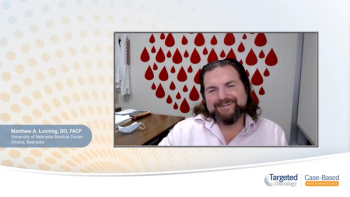
A comprehensive overview of third-line relapsed/refractory DLBCL treatment options, including CAR T-cell therapy and bispecific antibodies.
Expert Matthew Lunning, DO, FACP, reviews the case of a 73-year-old woman with R/R DLBCL, considering current and emerging treatment strategies in this setting.

Jeremy Abramson, MD, discusses what the findings from the phase 3 TRANSFORM study of lisocabtagene maraleucel mean for patients with relapsed large B-cell lymphoma.

The FDA has granted accelerated approval to pirtobrutinib for the treatment of patients with previously treated chronic lymphocytic leukemia or small lymphocytic lymphoma.

Combining the glutaminase-1 inhibitor CB-839 and BCL-2 inhibitor venetoclax could be a new avenue for the treatment of diffuse large B-cell lymphoma.

The FDA breakthrough drug designation for epcoritamab in follicular lymphoma was supported by findings from the phase 1/2 EPCORE NHL-1 study.
The FDA’s Oncologic Drugs Advisory Committee discussed delays that can occur when drugs are granted accelerated approval, and the post-approval confirmatory trials of pralatrexate and belinostat for peripheral T-cell lymphoma.
SIRPant-M has been granted orphan drug designation by the FDA for patients with T-cell lymphoma.

In an interview, Mwanasha Merrill discussed the implication of findings from a phase 2 trial of pembrolizumab after autologous stem cell transplantation for the treatment of patients with peripheral T-cell lymphoma.

Nirav Shah, MD, discusses long-term data from the phase 1/2 BRUIN study which evaluated pirtobrutinib in mantle cell lymphoma, and next steps for evaluating the agent.
The need for wider accessibility, equity, and affordability are significant factors to consider for advancement of these BiTE therapies.

With over half of the patients enrolled in the phase 2 trial evaluating paxalisib in relapsed/refractory primary central nervous system lymphoma, some partial responses and stable disease have already been seen.
A phase 2 clinical trial has demonstrated the potential of zanubrutinib combined with R-CHOP for the treatment of untreated diffuse large B-cell lymphoma with extranodal involvement.
SLS009 showed promising efficacy in a phase 1 trial and now has been granted a fast track designation by the FDA for the treatment of relapsed or refractory peripheral T-cell lymphoma.

At a live, virtual event, Farrukh Awan, MD, provided commentary on the current treatment algorithm for patients with relapsed/refractory diffuse large B-cell lymphoma and where the use of the combination regimen tafasitamab and lenalidomide fits in.

Advertisement
Advertisement
Trending on Targeted Oncology - Immunotherapy, Biomarkers, and Cancer Pathways
1
NCCN Survey Finds Persistent Cancer Drug Shortages Across US Centers
2
Risk-Adapted Quadruplet Therapy Sustains 5-Year Survival Benefit in High-Risk Myeloma
3
FDA Grants Final Approval to Cabozantinib Capsule Formulation
4
Subcostal Robotic Surgery Cuts Thoracic Pain
5