




LYMPHOMAS
Latest News
Advertisement
Video Series





Latest Videos




CME Content

































Advertisement
More News
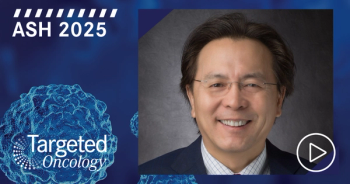
Dr. Michael Wang discusses ECHO long-term data, revealing that concurrent therapy for mantle cell lymphoma significantly outperforms sequential treatment.

Join Dr Krish Patel and discover groundbreaking updates in lymphoma and CLL treatments, including innovative therapies and promising trial results.
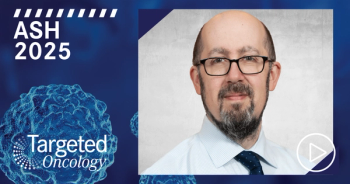
Matthew Matasar, MD, discusses real-world data on treatment options for diffuse large B-cell lymphoma.
Early results from the OLYMPIA-3 trial reveal odronextamab plus CHOP chemotherapy shows promising efficacy for untreated DLBCL patients, without rituximab.
The Olympia-3 study explores odronextamab as a promising chemo-free treatment for untreated diffuse B-cell lymphoma patients.

The FDA reviews nivolumab with chemotherapy as a potential new frontline treatment for advanced classical Hodgkin lymphoma, promising improved outcomes.

A recent study reveals critical insights on disease progression and survival rates in patients with relapsed/refractory large B-cell lymphoma treated with bispecific antibodies.

FDA and EMA approve AVC-203, a groundbreaking CAR-T therapy targeting B-cell malignancies, promising enhanced safety and scalability for patients.
A 6-month complete response predicts improved long-term survival in high-risk large B-cell lymphoma patients treated with axicabtagene ciloleucel.
Dexamethasone prophylaxis significantly reduces severe neurotoxicity in LBCL patients receiving axi-cel, enhancing safety without compromising efficacy.
Sonrotoclax shows promising efficacy and tolerability in treating relapsed mantle cell lymphoma, with ongoing trials to confirm its potential.
Circulating tumor DNA (ctDNA) emerges as a crucial prognostic tool for lymphoma, enhancing event-free survival predictions and treatment response insights.
A novel treatment regimen for high-risk mantle cell lymphoma shows impressive response rates and minimal residual disease in early trial results.
Long-term follow-up of the TRANSFORM study reveals liso-cel's impressive efficacy and safety in treating relapsed large B-cell lymphoma.
A phase 2 study reveals promising results for zanubrutinib combined with R-CHOP in treating untreated diffuse large B-cell lymphoma patients.
GLPG5101 shows promising efficacy and safety in treating relapsed/refractory non-Hodgkin lymphoma, achieving high response rates and rapid manufacturing.
A targeted therapy-first approach shows promise in reducing chemotherapy needs for newly diagnosed large B-cell lymphoma patients, maintaining high response rates.
Epcoritamab combined with rituximab and lenalidomide shows remarkable efficacy in treating relapsed follicular lymphoma, setting a new standard of care.
Epcoritamab combined with R-mini-CHOP shows promising efficacy and safety in elderly DLBCL patients, achieving high response rates and durable remissions.
Odronextamab shows promising efficacy in treating untreated DLBCL, achieving high response rates when combined with CHOP chemotherapy in early trials.
FDA approves liso-cel, the first CAR T-cell therapy for relapsed marginal zone lymphoma, offering hope for improved patient outcomes.
Sonrotoclax gains FDA priority review for relapsed mantle cell lymphoma, showcasing promising efficacy and safety in challenging patient populations.
The JULIET trial reveals long-term efficacy and safety of CAR-T therapy tisagenlecleucel in relapsed/refractory large B-cell lymphoma patients.
The FDA approves epcoritamab with rituximab and lenalidomide for relapsed follicular lymphoma, offering a new second-line treatment option.
MB-105 receives FDA RMAT designation, advancing treatment options for relapsed T-cell lymphoma and highlighting its promising clinical potential.
Advertisement
Advertisement
Trending on Targeted Oncology - Immunotherapy, Biomarkers, and Cancer Pathways
1
NCCN Survey Finds Persistent Cancer Drug Shortages Across US Centers
2
Risk-Adapted Quadruplet Therapy Sustains 5-Year Survival Benefit in High-Risk Myeloma
3
FDA Grants Final Approval to Cabozantinib Capsule Formulation
4
Subcostal Robotic Surgery Cuts Thoracic Pain
5