



Mantle Cell Lymphoma
Latest News
Advertisement
Latest Videos


CME Content

































Advertisement
More News

The autologous anti-CD19 CAR T-cell therapy KTE-X19 had a pharmacodynamic profile associated with efficacy and treatment-related neurological events in patients with relapsed/refractory mantle cell lymphoma, according to data from the ZUMA-2 clinical trial.
“Our study demonstrates that venetoclax is a potential salvage therapy in multiply relapsed patients with MCL. The majority (92%) patients in this study were exposed to BTKi, 66% were BTKi refractory, and these patients exhibited poor outcomes."
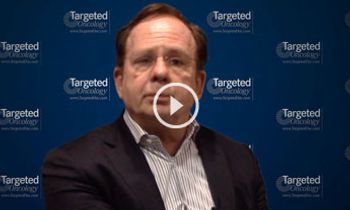
Andre Goy, MD, discusses the different BTK inhibitors as treatment of patients with relapsed/refractory mantle cell lymphoma.
In an interview with Targeted Oncology, David Ritchie, MD, PhD, discussed the findings from the substudy of the AIM clinical trial, which evaluated the combination of venetoclax and ibrutinib in patients with MCL.
“To the best of our knowledge, this is the first report about obinutuzumab and venetoclax induced CR in a rituximab-intolerant patient with an ibrutinib-resistant leukemic MCL."
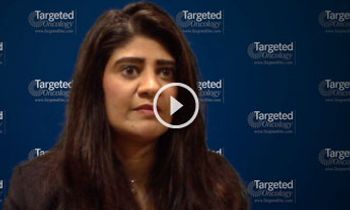
Sonali M. Smith, MD, discusses the current understanding of mantle cell lymphoma and how this understanding has evolved over recent years to understand different subsets of the disease that may require different frontline treatment for patients.
A high response rate was demonstrated with the rituximab, bendamustine, and cytarabine regimen as treatment of patients with relapsed or refractory mantle cell lymphoma following treatment with a Bruton tyrosine kinase inhibitor, hinting that the regimen may be an effective bridge to allogeneic stem cell transplantation in patients who are transplant eligible, according to data from a retrospective cohort study.
Bortezomib as maintenance therapy following autologous stem cell transplant did not demonstrate a positive effect as treatment of young newly diagnosed patients with mantle cell lymphoma, according to the results of the phase II HOVON trial.

Sonali M. Smith, MD, discusses how to handle patients with follicular lymphoma when they relapse, especially if they are early progressors.<br />
Efficacy analyses by cell of origin and by MYC and BCL2 double expression status showed a trend toward improved outcomes of patients treated on the polatuzumab vedotin-containing arm regardless of cell of origin or MYC and BCL2 doubkle expression status.
Treatment with SGX301 led to statistically significant responses in patients with cutaneous T-cell lymphoma, according to preliminary top-line results from the pivotal phase III FLASH trial released by Soligenix.

Andre Goy, MD, discusses the current treatments, specifically Bruton’s tyrosine kinase, for patients with mantle cell lymphoma and what the efficacy has been with this type of treatment.
In an interview with Targeted Oncology, Andre Goy, MD, discussed the evolving role of Bruton’s tyrosine kinase inhibitors for the treatment of patients with mantle cell lymphoma, as well as where this field is headed based on ongoing clinical trials in this space.

The FDA has placed a partial clinical hold on the phase I trial of ACTR707 in combination with rituximab in patients with relapsed/refractory B-cell lymphoma from Unum Therapeutics, following the submission of a safety report from the company. The FDA notified Unum of the hold verbally on March 4. Unum Therapeutics acknowledged the partial clinical hold in filings with the Securities and Exchange commission.
Cirmtuzumab in combination with ibrutinib induced a clinical benefit rate of 100% in a small cohort of patients with relapsed or refractory mantle cell lymphoma, according to interim results of the phase I/II CIRLL trial.
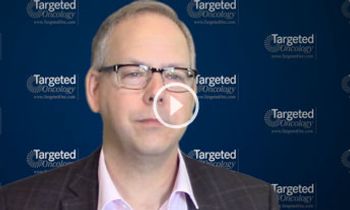
David Miklos, MD, PhD, describes the toxicity profile of KTE-X19, a chimeric antigen receptor T-cell therapy, in the ZUMA-2 trial.
Both autologous stem cell transplant and allogeneic stem cell transplant can be used as consolidation therapy in patients with mantle cell lymphoma, according to results from a single-center analysis, presented in a poster at the 2020 Transplantation & Cellular Therapy Meetings. However, the benefit of alloSCT is offset by an increased risk of transplant-related mortality and the development of graft-versus-host-disease.
To enhance outcomes for patients with indolent non-Hodgkin lymphoma, an in-depth review of the available data is required. As a start, Sonali M. Smith, MD, University of Chicago Medicine, reviewed the clinical trial findings that are currently informing treatment selection in the frontline iNHL paradigm, at 24th Annual International Congress on Hematologic Malignancies.
In an interview with Targeted Oncology at the 2019 ASH Annual Meeting, Diego Villa, MD, MPH, discussed the benefit of bendamustine plus rituximab versus R-CHOP in transplant-eligible and -ineligible patients with mantle cell lymphoma.
In an interview with Targeted Oncology, Kellie Ryan, MPH, discussed the data on how physicians are currently using acalabrutinib as treatment of patients with mantle cell lymphoma in the real-world setting. She highlighted where she sees this research evolving in time.
Evaluation of an expansion cohort of the pivotal phase I/II ZUMA-1 trial in patients with refractory large B-cell lymphoma revealed that early steroid intervention may have a positive impact on the toxicity profile of chimeric antigen receptor T-cell therapy with axicabtagene ciloleucel, according to findings presented during a poster session at the 2020 Transplantation & Cellular Therapy Meetings in Orlando, Florida.
David Miklos, MD, PhD, explains the rationale behind the ZUMA-2 trial of KTE-X19 as well as the efficacy of the drug.
A Biologics License Application for the investigational chimeric antigen receptor T-cell therapy agent, KTE-X19, was accepted by the FDA and granted Priority Review for the treatment of adult patients with relapsed or refractory mantle cell lymphoma, according to a press release from Kite, developer of KTE-X19.<sup> </sup>
Michael Wang, MD, discusses the approaches physicians can use when treating their patients with mantle cell lymphoma who have become resistant to cellular therapies, such as CAR T-cell therapy.
Salvage therapy with high‐dose cyclophosphamide showed meaningful clinical activity in a cohort of 6 patients with mantle cell lymphoma who were previously treated with ≥2 prior lines of therapy and had no other available options. These patients made up 14% of the 42 participants in a phase II study showing similar efficacy in adult patients with other relapsed or refractory B‐cell non‐Hodgkin lymphomas.
Advertisement
Advertisement
Trending on Targeted Oncology - Immunotherapy, Biomarkers, and Cancer Pathways
1
NCCN Survey Finds Persistent Cancer Drug Shortages Across US Centers
2
Risk-Adapted Quadruplet Therapy Sustains 5-Year Survival Benefit in High-Risk Myeloma
3
Rewriting the Playbook: How Biomarker-Driven Therapy Is Transforming Metastatic Prostate Cancer Care
4
FDA Delays Decision on Zanzalintinib Combo for mCRC
5