


Mantle Cell Lymphoma
Latest News
Advertisement
Latest Videos




CME Content

































Advertisement
More News

In findings reported during the 2018 ASH Annual Meeting, brentuximab vedotin with conventional chemotherapy significantly improved progression-free survival compared with standard therapy for nonpediatric patients with stage III/IV Hodgkin lymphoma.
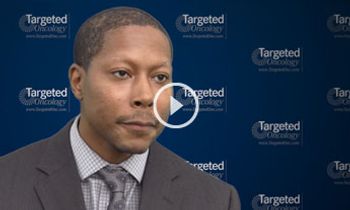
Tycel J. Phillips, MD, assistant professor at the University of Michigan Cancer Center, discusses an ongoing trial looking at acalabrutinib plus bendamustine and rituximab in patients with treatment-naive or relapsed/refractory mantle cell lymphoma.
The shift in the pattern of care in mantle cell lymphoma to bendamustine and rituximab in the frontline has resulted in an improvement in event-free survival compared with the era in which R-CHOP dominated front-line treatment.
Long-term follow-up of patients with relapsed or refractory mantle cell lymphoma treated with venetoclax monotherapy indicate that remissions are durable in a meaningful proportion and that late-onset toxicities are uncommon.
Combination therapy with acalabrutinib plus bendamustine and rituxumab showed an overall response rate in excess of 90% of patients with treatment-naïve mantle cell lymphoma and an ORR of 85% in patients with relapsed/refractory disease in an ongoing open-label phase Ib study.<sup> </sup>The safety profile was consistent with expected safety profiles for acalabrutinib and BR, said Tycel Phillips, MD, who presented the data at the 2018 American Society of Hematology Annual Meeting.
According to findings from the phase III ECHELON-2 trial presented at the 2018 ASH Annual Meeting, the use of brentuximab vedotin (Adcetris) in combination with chemotherapy demonstrated a clinically meaningful improvement in progression-free survival and overall survival in patients with CD30-expressing peripheral T-cell lymphoma. These data were also published online in <em>Lancet Oncology</em>.
Durable responses were achieved with acalabrutinib therapy for patients with relapsed/refractory mantle cell lymphoma, with 40% still on treatment for more than 2 years, according to long-term follow-up findings presented at the 2018 ASH Annual Meeting.
Zanubrutinib induced an overall response rate of 83.5% in patients with relapsed/refractory mantle cell lymphoma, with many responses demonstrating durability, according to the results of a phase II trial.<br />
In an interview with <em>Targeted Oncology</em>, Jonathon B. Cohen, MD, discussed the evolving treatment landscape of MCL.

The FDA has granted approval to the rituximab (Rituxan) biosimilar, CT-P10 (Truxima; rituximab-abbs), for the treatment of adult patients with CD20-positive, B-cell non-Hodgkin lymphoma (NHL) as a single agent or in combination with chemotherapy, making it the first biosimilar approved by the FDA for the treatment of patients with NHL.
Using the VR-CAP regimen instead of R-CHOP significantly improved median overall survival in previously untreated newly diagnosed patients with mantle cell lymphoma who were not eligible for transplant, according to results from the long-term follow-up phase of a randomized, open-label, phase III trial.
According to Robert Dean, MD, BTK inhibitors and CAR T cells may fulfill an unmet need in patients with mantle cell lymphoma. Experts have been hard-pressed to find long-lasting treatments like these that have the potential to impact this patient population.
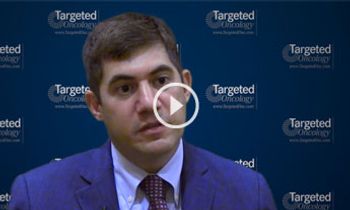
Jonathon B. Cohen, MD, discusses the biggest challenge in treating mantle cell lymphoma and how these challenges can be overcome.
During a presentation at the National Comprehensive Cancer Network 13th Annual Conference: Hematologic Malignancies Phillippe Armand, MD, PhD, discusses how novel agents could be used in the future either to postpone, permit, or even replace allogeneic stem cell transplantation.
A greater understanding of molecular pathogenesis in non-Hodgkin lymphoma has led to the identification of rational targets for novel small molecule inhibitors, according to Andrew D. Zelenetz, MD, PhD. Combinations of these therapies may also provide greater responses and the potential for therapy discontinuation.
Brentuximab vedotin (Adcetris) has been granted FDA approval for use in combination with chemotherapy for the frontline treatment of patients with CD30-expressing peripheral T-cell lymphoma, based on findings from the phase III ECHELON-2 trial.

During the 2018 Association of Community Cancer Centers National Oncology Conference, Olalekan Oluwole, MBBS, MPH, discusses some of the challenges he has encountered with chimeric antigen receptor T-cell therapy.
Based on findings from the phase III ECHELON-2 trial, brentuximab vedotin (Adcetris) has been submitted to the FDA for approval in combination with chemotherapy for the frontline treatment of patients with CD30-expressing peripheral T-cell lymphoma.
Simon Rule, MD, PhD, discusses the treatment options available for younger, fit patients with MCL, including the watch-and-wait approach and BTK inhibitors. He also highlights several clinical trials supporting these strategies, as well as other ongoing trials aiming to advance the treatment landscape for the older patient population.
The treatment landscapes of Hodgkin lymphoma and mantle cell lymphoma have progressed to a more personalized therapeutic approach in clinical practice due to the introduction of the latest novel regimens, according to Chaitra S. Ujjani, MD.

Simon Rule, MD, PhD, shares his treatment considerations for select patients with mantle cell lymphoma.

With 2 CAR T-cell therapies now approved and more moving quickly through early-phase clinical trials, 4 healthcare experts reflected on the evolving field of CAR T-cell therapy, their understanding of its current and future applicability for patients, the process for administration and the challenges and obstacles that remain unaddressed during an Association of Community Cancer Centers interactive panel.<br />
Michael Wang, MD, discusses the latest options for patients with relapsed MCL, while also addressing some of the challenges with these agents.
David G. Maloney, MD, PhD, reviews the latest developments with CAR T-cell therapy in patients with non-Hodgkin lymphoma.
In a 16-0 vote, the FDA’s Oncologic Drugs Advisory Committee has recommended the approval of the rituximab biosimilar CT-P10 for 3 of the anti-CD20 monoclonal antibody’s non-Hodgkin lymphoma indications.
Advertisement
Advertisement
Trending on Targeted Oncology - Immunotherapy, Biomarkers, and Cancer Pathways
1
NCCN Survey Finds Persistent Cancer Drug Shortages Across US Centers
2
Risk-Adapted Quadruplet Therapy Sustains 5-Year Survival Benefit in High-Risk Myeloma
3
Rewriting the Playbook: How Biomarker-Driven Therapy Is Transforming Metastatic Prostate Cancer Care
4
FDA Delays Decision on Zanzalintinib Combo for mCRC
5