

Mantle Cell Lymphoma
Latest News
Advertisement
Latest Videos
CME Content

































Advertisement
More News

Sattva S. Neelapu, MD, associate professor, Department of Lymphoma/Myeloma, Division of Cancer Medicine, at The University of Texas MD Anderson Cancer Center, discusses long-term findings of the ZUMA-1 trial investigating axicabtagene ciloleucel (axi-cel; Yescarta) in patients with refractory aggressive non-Hodgkin lymphoma.

Treatment with the CD19-targeted chimeric antigen receptor T-cell therapy lisocabtagene maraleucel (liso-cel, formally known as JCAR017) demonstrated a complete response rate of 63% and an objective response rate of 81% in patients with relapsed/refractory diffuse large B-cell lymphoma.
Peter Martin, MD, reflects on the MCL data presented at the 2017 ASH Annual Meeting, and shared his insight on the future of clinical trials in the disease.
Brian T. Hill, MD, PhD, shares more insight on acalabrutinib and ibrutinib’s efficacy in patients with MCL and highlights emerging novel strategies in the treatment landscape.
Lymphoma expert Andrew M. Evens, DO, MSc, FACP, has joined Rutgers Cancer Institute of New Jersey as associate director. He is also serving as medical director of the oncology service line at RWJBarnabas Health. Evens will focus on integrated cancer care delivery in his roles across both institutions.
Peter Martin, MD, discusses a phase I, open-label, multicenter trial of oral azacitidine (Vidaza) plus R-CHOP in people with high-risk, previously untreated DLBCL, grade 3B follicular lymphoma, or transformed lymphoma.

Peter Martin, MD, assistant professor of medicine in the Division of Hematology/Oncology at Weill Cornell Medical College, Weill Cornell Medicine/NewYork-Presbyterian Hospital, discusses a phase I, open-label, multicenter trial of oral azacitidine (CC-486) plus R-CHOP in patients with high-risk, previously untreated diffuse large B-cell lymphoma, grade 3B follicular lymphoma, or transformed lymphoma.
Mitchell R. Smith, MD, PhD, recently shared both the more and less intensive treatment considerations he makes when treating patients with MCL and the major factors that influence them. Smith explained such considerations based on 2 case scenarios during a <em>Targeted Oncology</em> live case-based peer perspectives presentation.
Narendranath Epperla, MD, discusses the phase III GALLIUM trial, and the evolving treatment landscape for patients with follicular lymphoma and mantle cell lymphoma.
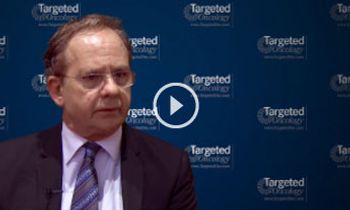
Andre Goy, MD, chairman and director, chief of Lymphoma, and director of Clinical and Translational Cancer Research at John Theurer Cancer Center, Hackensack Medical Center, discusses long-term follow-up results for ibrutinib (Imbruvica) in relapsed/refractory mantle cell lymphoma.
Michael Wang, MD, discusses the impact of acalabrutinib on patients with MCL, ongoing progress in the field, and The University of Texas MD Anderson Cancer Center’s Lymphoma Moonshot Program.
Andre Goy, MD, shed light on some of these studies as well as future treatment options for patients with MCL.

Patients with mantle cell lymphoma (MCL) are associated with a poor prognosis, though strides are being made in the treatment for younger populations of patients.
Treatment with the novel PD-1 inhibitor cemiplimab induced responses in half of the patients with Hodgkin lymphoma in a phase I study of patients with B-lymphoid malignancies; among patients with B-cell non-Hodgkin lymphoma treated with the monotherapy, the overall response rate was 11.1%, according to a poster presentation at the 2017 ASH Annual Meeting.
Treatment with tisagenlecleucel (Kymriah) continues to excite the possibilities seen with chimeric antigen receptor T-cell therapy with impressive responses seen with the therapy in patients with relapsed/refractory diffuse large B-cell lymphoma. In the phase II JULIET trial, an overall response rate of 53.1% was observed, according to findings presented at the ASH Annual Meeting.
Pembrolizumab (Keytruda) has received a priority review from the FDA for a supplemental biologics license application (sBLA) for the treatment of adult and pediatric patients with relapsed/refractory primary mediastinal large B-cell lymphoma (PMBCL), according to a press release from Merck, the manufacturer of pembrolizumab. The findings were first presented at the 14th International Conference on Malignant Lymphoma and updated data were recently presented at the 2017 ASH Annual Meeting.
The addition of brentuximab vedotin (Adcetris) to doxorubicin, vinblastine, and dacarbazine (A+AVD) reduced the risk of progression and death by 23% in patients with advanced-stage Hodgkin lymphoma (HL) compared with standard ABVD (doxorubicin [Adriamycin], bleomycin, vinblastine, and dacarbazine) chemotherapy, according to results of the phase III ECHELON-1 clinical trial.
Mogamulizumab improved progression-free survival in previously treated patients with cutaneous T-cell lymphoma by 4.6 months compared with vorinostat (Zolinza), according to findings from the phase III MAVORIC study.
For patients with mantle cell lymphoma, initial and maintenance treatment with the combination of lenalidomide (Revlimid) and rituximab (Rituxan) were found to be feasible, safe, and elicit clinical activity.

A biologics license application for mogamulizumab has been granted a priority review by the FDA for the treatment of patients with cutaneous T-cell lymphoma who have received at least 1 prior systemic therapy, Kyowa Hakko Kirin, the manufacturer of the anti-CCR4 monoclonal antibody, has announced.
Owen O'Connor, MD, PhD, professor of medicine and Experimental Therapeutics, director of the Center for Lymphoid Malignancies, Herbert Irving Comprehensive Cancer Center at Columbia University Medical Center, discusses the agents approved by the FDA for the treatment of mantle cell lymphoma (MCL), including acalabrutinib (Calquence) and bortezomib (Velcade).
According to results from the phase III phase III LyMa trial published in the <em>New England Journal of Medicine, </em>survival was improved for patients with mantle cell lymphoma with maintenance rituximab (Rituxan) following autologous stem-cell transplantation (ASCT).
Andre Goy, MD, discusses the excitement surrounding novel therapies on the horizon in mantle cell lymphoma, as well as how the treatment paradigm will shift in the next 5 to 10 years.
Acalabrutinib (Calquence) received an accelerated approval from the FDA for the treatment of adult patients with mantle cell lymphoma (MCL) who have received at least 1 prior regimen.
According to a multivariate analysis of the Nordic MCL2 and MCL3 trials, the presence of <em>TP53</em> mutations predicts overall survival in younger patients with mantle cell lymphoma.
Advertisement
Advertisement
Trending on Targeted Oncology - Immunotherapy, Biomarkers, and Cancer Pathways
1
NCCN Survey Finds Persistent Cancer Drug Shortages Across US Centers
2
Risk-Adapted Quadruplet Therapy Sustains 5-Year Survival Benefit in High-Risk Myeloma
3
Rewriting the Playbook: How Biomarker-Driven Therapy Is Transforming Metastatic Prostate Cancer Care
4
FDA Delays Decision on Zanzalintinib Combo for mCRC
5