

Mantle Cell Lymphoma
Latest News
Advertisement
Latest Videos


CME Content

































Advertisement
More News


The Evolving Landscape of Mantle Cell Lymphoma

A look back at all the FDA news that occurred in the month of August.
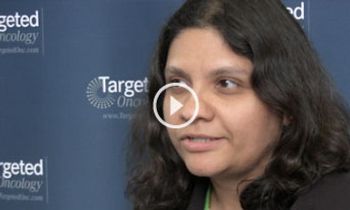
Rekha Rao, PhD, assistant professor, University of Kansas Medical Center, discusses the need to develop novel therapies in mantle cell lymphoma, including a study that explored the synergistic activity of p97 inhibitors with histone deacetylase 6 inhibitors.

A new drug application (NDA) for acalabrutinib has been granted a priority review by the FDA for patients with previously-treated mantle cell lymphoma (MCL), according to AstraZeneca, the manufacturer of the highly selective, potent BTK inhibitor.
Acalabrutinib has been granted a breakthrough therapy designation by the FDA for patients with previously-treated mantle cell lymphoma (MCL), according to AstraZeneca, the manufacturer of the highly selective, potent BTK inhibitor.
Martin Dreyling, MD, discusses results of the phase II CHRONOS-1 study in patients with relapsed or refractory indolent B-cell lymphoma.
Pembrolizumab has been approved by the European Commission for the treatment of adult patients with relapsed or refractory classical Hodgkin lymphoma.
Stephen M. Ansell, MD, PhD, discusses emerging combinations being investigated in patients with mantle cell lymphoma, the possible role of immunotherapy, and challenges oncologists are still struggling with in this population.
The chimeric antigen receptor (CAR) T-cell therapy axicabtagene ciloleucel has shown promising results in patients with diffuse large B-cell lymphoma, primary mediastinal lymphoma, and transformed follicular lymphoma, according to findings presented at the 2017 AACR Annual Meeting.
A majority of patients with relapsed or refractory indolent lymphoma responded to treatment with the PI3K dual-isoform inhibitor copanlisib, according to results from the phase II CHRONOS-1 trial.<br />
A biologics license application has been submitted for axicabtagene ciloleucel (KTE-C19) as a potential treatment for transplant ineligible patients with relapsed or refractory aggressive non-Hodgkin lymphoma.
Patients with lymphoma who are treated with brentuximab vedotin often experience peripheral neuropathy as an adverse event and potentially dose-limiting toxicity. A novel study has shown that, despite the prevalence of this toxicity, these patients report that the better outcomes yielded from treatment with brentuximab vedotin outweigh the risk of neuropathy.
Andre Goy, MD, highlights what researchers can expect next in the field of MCL in both the frontline and relapsed/refractory settings given the recent pivotal data from clinical trials.
The combination of rituximab, bendamustine, and low-dose cytarabine demonstrated a high complete response rate as an induction regimen for elderly patients with mantle cell lymphoma.
A review of various frontline treatment options in follicular lymphoma and an outline of an algorithm for approaching patients with newly diagnosed follicular lymphoma.
Results from the phase I portion of the first trial testing axicabtagene ciloleucel, an autologous CD3ζ/CD28-based CAR T-cell therapy, indicate that the regimen can safely be administered and lead to durable CR after more than 12 months in refractory diffuse large B-cell lymphoma.
According to results of a phase I trial, the addition of the CDK 4/6 inhibitor palbociclib can help patients with mantle cell lymphoma overcome resistance to the BTK inhibitor ibrutinib.
The FDA has granted an accelerated approval to ibrutinib as a treatment for patients who require systemic therapy with marginal zone lymphoma following at least one prior anti-CD20-based therapy.
Combining the PI3 kinase inhibitor TGR-1202 and ibrutinib (Imbruvica) for patients with relapsed/refractory chronic lymphocytic leukemia (CLL) and mantle cell lymphoma (MCL) demonstrated a high response rate without dose-limiting toxicities (DLTs).
Early data from a phase I/II study suggest that the combination of brentuximab vedotin and nivolumab may be an active and well-tolerated outpatient regimen in patients with relapsed/refractory classical Hodgkin lymphoma after failure of standard frontline chemotherapy.
Treatment with the CD19-directed CAR T-cell therapy KTE-C19 showed a complete remission rate of 73% for patients with aggressive, chemorefractory primary mediastinal B-cell lymphoma and transformed follicular lymphoma, according to findings from the multicenter phase II ZUMA-1 study.
Advertisement
Advertisement
Trending on Targeted Oncology - Immunotherapy, Biomarkers, and Cancer Pathways
1
NCCN Survey Finds Persistent Cancer Drug Shortages Across US Centers
2
Risk-Adapted Quadruplet Therapy Sustains 5-Year Survival Benefit in High-Risk Myeloma
3
Rewriting the Playbook: How Biomarker-Driven Therapy Is Transforming Metastatic Prostate Cancer Care
4
FDA Delays Decision on Zanzalintinib Combo for mCRC
5