


Mantle Cell Lymphoma
Latest News
Advertisement
Latest Videos





CME Content

































Advertisement
More News

Combining the PI3 kinase inhibitor TGR-1202 and ibrutinib (Imbruvica) for patients with relapsed/refractory chronic lymphocytic leukemia (CLL) and mantle cell lymphoma (MCL) demonstrated a high response rate without dose-limiting toxicities (DLTs).

Alex Herrera, MD, assistant professor, City of Hope, discusses a study investigating the use of brentuximab vedotin (Adcetris) and nivolumab (Opdivo) in the treatment of relapsed or treatment-resistant Hodgkin lymphoma during the American Society of Hematology (ASH) Annual Meeting.
Early data from a phase I/II study suggest that the combination of brentuximab vedotin and nivolumab may be an active and well-tolerated outpatient regimen in patients with relapsed/refractory classical Hodgkin lymphoma after failure of standard frontline chemotherapy.
Treatment with the CD19-directed CAR T-cell therapy KTE-C19 showed a complete remission rate of 73% for patients with aggressive, chemorefractory primary mediastinal B-cell lymphoma and transformed follicular lymphoma, according to findings from the multicenter phase II ZUMA-1 study.
Combining obinutuzumab (Gazyva) with chemotherapy in the first-line setting reduced the risk of disease progression or death by 34% versus rituximab (Rituxan) plus chemotherapy in patients with follicular lymphoma, according to findings from the phase III GALLIUM study.
Brentuximab vedotin (Adcetris) induced responses lasting at least 4 months in 56% of patients with cutaneous T-cell lymphoma versus 13% in patients receiving physician’s choice of standard therapies, according to findings from the phase III ALCANZA trial.
Younger patients with mantle cell lymphoma lived significantly longer and without disease progression or clinical events when they received rituximab maintenance therapy after stem cell transplantation.
The FDA has granted a priority review to a supplemental biologics license application (sBLA) for pembrolizumab (Keytruda) for use as a treatment for patients with refractory classical Hodgkin lymphoma.
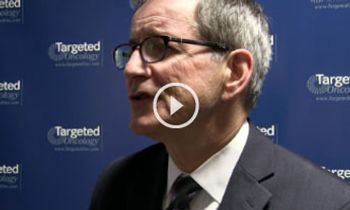
Thomas E. Witzig, MD, hematologist-oncologist, Mayo Clinic, discusses some of the issues that still need to be addressed in diffuse large B-cell lymphoma.
The FDA has granted a breakthrough therapy designation to the brentuximab vedotin for the treatment of patients with CD30-positive mycosis fungoides or primary cutaneous anaplastic large cell lymphoma following at least 1 prior systemic therapy. <br />
Studies testing immune checkpoint inhibitors in combination with other agents for the treatment of both Hodgkin and non-Hodgkin lymphoma are garnering attention among researchers.
Brad S. Kahl, MD, sheds light on the distinctive clinical features of MCL.
Loretta J. Nastoupil, MD, discusses ongoing lymphoma clinical trials and how practitioners can better identify high- and poor-risk patients with large cell lymphomas.
Two oncologists from Emory University School of Medicine faced off to determine if molecular markers should play a role in the treatment of subgroups of patients with diffuse large B-cell lymphoma.
According to findings from a multicenter randomized trial, chemoradiation for early-stage, low-grade follicular lymphoma led to significant improvement in progression-free survival (PFS) compared with involved-field radiotherapy alone (IFRT).
Pembrolizumab (Keytruda) is associated with an exceptional overall response rate (ORR) in patients with relapsed/refractory Hodgkin lymphoma.

A majority of patients (66%) with classical Hodgkin lymphoma (cHL) who had progressed after receiving autologous stem cell transplant (ASCT) and brentuximab vedotin (adcetris) experienced a response to nivolumab (Opdivo) monotherapy, findings from the phase II CheckMate-205 trial showed when presented at the 2016 ASCO Annual Meeting.
Michael E. Williams, MD, discusses emerging regimens on the horizon in mantle cell lymphoma, the potential of BCL-2 inhibition, and whether chemotherapy can be removed entirely from the treatment landscape.
The FDA has granted a breakthrough therapy designation to pembrolizumab (Keytruda) as a treatment for patients with relapsed or refractory classical Hodgkin lymphoma (cHL).
The FDA has granted nivolumab (Opdivo) a priority review for use in previously treated patients with classical Hodgkin lymphoma (cHL), giving the drug the potential to become the first PD-1 inhibitor approved for a hematologic malignancy.

Expanding on the efficacy shown in numerous single-group studies, a phase II study published in The Lancet Oncology showed lenalidomide significantly increased progression free survivalin patients with relapsed or refractory mantle cell lymphoma.
Six ongoing clinical trials investigating several idelalisib (Zydelig) combinations have been halted due to reports of increased adverse events such as death for patients with hematologic malignancies, according to an alert issued by the FDA.

Obinutuzumab (Gazyva) plus bendamustine, followed by obinutuzumab alone has been approved by the FDA as a treatment of patients with follicular lymphoma who were not responsive to a rituximab regimen, or who relapsed after rituximab-based therapy.

In this article, Shipra Gandhi, MD, Pallawi Torka, MD, and Francisco J. Hernandez Ilizaliturri, MD summarize the current clinical development of these novel agents in lymphoid malignancies.
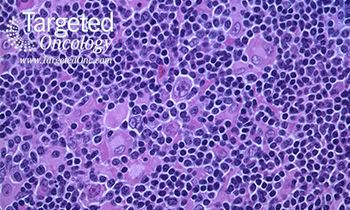
In this review, our authors discuss the mechanism of action and clinical development of various checkpoint inhibitors in lymphoma.
Advertisement
Advertisement
Trending on Targeted Oncology - Immunotherapy, Biomarkers, and Cancer Pathways
1
NCCN Survey Finds Persistent Cancer Drug Shortages Across US Centers
2
Risk-Adapted Quadruplet Therapy Sustains 5-Year Survival Benefit in High-Risk Myeloma
3
Rewriting the Playbook: How Biomarker-Driven Therapy Is Transforming Metastatic Prostate Cancer Care
4
FDA Delays Decision on Zanzalintinib Combo for mCRC
5