


Melanoma
Latest News
Advertisement
Latest Videos


























Advertisement
More News

Christian U. Blank, MD, PhD, discusses the most recent data from the phase 1b OpACIN trial of ipilimumab and nivolumab in patients with macroscopic stage III melanoma.

A retrospective 10-year analysis of 3 randomized clinical trials explored the question of whether BRAF V600E/K mutations or previous use of a BRAF inhibitor with or without a MEK inhibitor in patients with metastatic disease impacted patient response to pembrolizumab.
The phase 2 basket arm trial of IDE196 in patients with solid tumors harboring GNAQ or GNA11 hotspot mutations has met its clinical protocol criteria for cohort expansion.
In patients with advanced melanoma whose disease progressed on immunotherapy, the use of fecal microbiota transplant achieved objective responses, in a phase I study.

Axel Hauschild, MD, PhD, discusses the key findings from the phase 3 COMBI-AD clinical trial, which demonstrated sustained long-term relapse-free survival benefit with the combination of dabrafenib and trametinib compared with placebo in patients with resected, stage III BRAF V600E/K-mutated melanoma.

With a Fast Track designation, the development of seviprotimut-L will be facilitated and expeditiously reviewed by the FDA to address an unmet medical need for patients with stage IIB and IIIC melanoma,

Alexander M. Eggermont, MD, PhD, discusses the results of the KEYNOTE 054 trial of pembrolizumab versus placebo in patients with high-risk stage III melanoma after a complete resection.
"..These findings may be susceptible to selection bias since patients with more aggressive disease may be more likely to start dabrafenib and trametinib in the first line."

"We are very pleased to announce our pivotal cohort 4 early data from the C-144-01 clinical study in advanced melanoma today."
Encorafenib plus binimetinib show sustained overall survival and progression-free survival benefit in patients with BRAF V600–mutant melanoma, according to updated findings from the COLUMBUS study.
The long-term benefit of adjuvant dabrafenib plus trametinib as treatment of patients with resected, stage III BRAF V600E/K-mutant melanoma were validated by 5-year data from the phase 3 COMBI-AD study.

Charles L. Sawyers, MD, discusses the value of atezolizumab, cobimetinib, and vemurafenib in the melanoma treatment landscape.
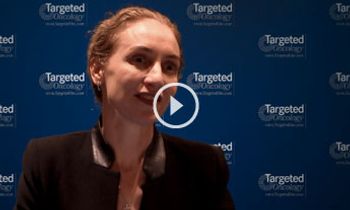
Georgina V. Long, BSc, PhD, MBBS, discusses the response rates in the CheckMate 067 trial, which evaluated the combination of ipilimumab and nivolumab in patients with advanced melanoma.
"Combining pembrolizumab with Tavo electroporation improved responses for these patients who were predicted to have very poor responses to single-agent immune checkpoint inhibition."
In an interview with Targeted Oncology, Bruce L. Levine, PhD, discussed hot topics in the treatment landscape of melanoma, including the development of chimeric antigen receptor T and NK cells.
In an interview with Targeted Oncology, Michael A. Davies, MD, PhD, discussed the current treatment landscape of melanoma and the recent advances that have provided a great level of optimism to what has been known to be a very challenging cancer setting.
"Atezolizumab combined with vemurafenib and cobimetinib showed a statistically significant and clinically meaningful in progression-free survival via investigator assessment when compared with placebo plus vemurafenib and cobimetinib."
In an interview with Targeted Oncology, Jeffrey S. Weber, MD, PhD, discussed the role of neoadjuvant and adjuvant therapy for the treatment of patients with melanoma. He also highlighted the role of immunotherapy, as well as other types of therapy, in this treatment landscape.
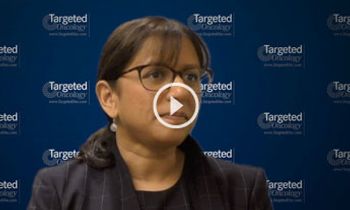
Ragini Kudchadkar, MD, discusses the overall prognosis of patients with ocular melanoma.
In an interview with Targeted Oncology, Richard D. Carvajal, MD, discussed the challenges of conducting clinical trials for the treatment of patients with uveal melanoma, as well as the excitement surrounding 2 potential therapies in this space.
The mortality rate for cutaneous melanoma was significantly reduced between 2013 to 2016 as a result of new targeted therapies for metastatic disease, according to a recent report in the American Journal of Public Health. It is the largest death decline ever recorded for skin cancer.
Adjuvant ipilimumab at a dose of 3 mg/kg demonstrated a survival benefit in patients with resected high-risk melanoma compared with high-dose interferon alfa-2b, according to the findings for a phase III E1609 clinical trial from the North American Intergroup.
David Polsky, MD, PhD, discusses methods to identify circulating tumor DNA in patients with melanoma.
From 2001 to 2017, the cancer death rates continued to decline in the United States, and these decreases were observed in all major racial and ethnic groups, as well as in males, females, adolescents, young adults, and children. However, the rates of cancer incidence for all cancers slightly increased in females from 2012 to 2016, according to the Annual Report to the Nation on the Status of Cancer, which was published in Cancer.<sup> </sup>
Adjuvant treatment with talimogene laherparepvec in patients with resectable advanced melanoma demonstrated better recurrence-free survival and overall survival compared with surgery alone, according to results of a study presented at a poster session at the 16th International Congress of the Society for Melanoma Research.
Advertisement
Advertisement
Trending on Targeted Oncology - Immunotherapy, Biomarkers, and Cancer Pathways
1
FDA Accepts NDA for Daraxonrasib in Metastatic Pancreatic Cancer
2
Advanced Renal Cell Carcinoma: Tailoring Second-Line Therapy After Prior Immunotherapy
3
FDA Approves Zidesamtinib for Previously Treated ROS1-Positive NSCLC
4
Teclistamab/Talquetamab Reduces Risk of Progression by 89% in R/R Multiple Myeloma
5