



Melanoma
Latest News
Advertisement
Video Series

Latest Videos







Shorts

1:30
Predicting Melanoma Treatment Success After 3-4 Weeks
4 months ago
by
Vincent Ma, MD
Podcasts




























Advertisement
More News

Five-year KEYNOTE-942 data show intismeran plus pembrolizumab delivers durable improvements in RFS and DMFS in high-risk resected melanoma.
The IGNYTE continues to show promising outcomes despite negative FDA decisions.

A combination regimen targeting LAG-3 and PD-1 did not significantly extend progression-free survival in advanced melanoma vs single-agent pembrolizumab.
The NEO-CYT trial began treating patients with melanoma in the perioperative setting, combining a novel agent with immune checkpoint inhibitor therapy.
First-in-class double-loaded patient-derived immunotherapy joins pancreatic cancer and glioblastoma in FDA Fast Track portfolio; phase 1/2 trial now recruiting.
The DNA ImmunoBody therapy improved efficacy when added to ipilimumab and nivolumab, with a registrational phase 3 trial expected to begin later this year.

With long-term follow-up, HLA-A*02:01–positive patients with metastatic uveal melanoma maintained survival benefit with the bispecific agent vs investigator's choice.

During a live event, participants discuss barriers to access and bridging strategies for tumor-infiltrating lymphocytes in melanoma.
mRNA-4359 demonstrated high response rates and antigen-specific T-cell activation in a small cohort of previously untreated patients.
Gut microbiome bacteria are linked to risk of recurrence after treatment with immunotherapy for resectable melanoma.
NST-628 Shows Early Promise in NRAS/BRAF+ Melanoma, Other Solid Tumors
Published: | Updated:
A brain-penetrant pan-RAF/MEK molecular glue demonstrated a 38% response rate in a heavily pretreated melanoma population that currently has no approved targeted therapies.
Darovasertib-Crizotinib Improves PFS in Metastatic Uveal Melanoma
Published: | Updated:
Oral darovasertib plus crizotinib doubled PFS and boosts responses in first-line HLA-A*02:01–negative metastatic uveal melanoma; FDA submission process is underway.
The FDA did not grant accelerated approval to the oncolytic virus-based therapy RP1 in combination with nivolumab for patients with advanced melanoma.
Results of a single-center study showed positive outcomes of reduced-intensity conditioning for tumor-infiltrating lymphocytes in melanoma.
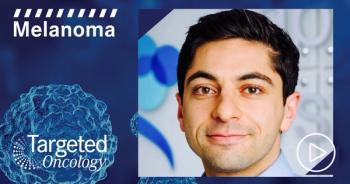
Benjamin Izar, MD, PhD, discusses unmet needs in melanoma including drug resistance and brain and liver metastases.
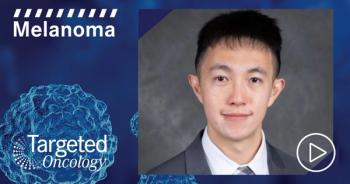
Vincent Ma, MD, discusses the next steps in proving the value of circulating tumor DNA in predicting outcomes of advanced melanoma treatment.
A 31-gene expression profile–based sentinel lymph node biopsy risk model, i31-SLNB, demonstrated a role in predicting lymph node positivity in T1b to T2a melanoma.
In an interview, Vincent Ma, MD, explores the clinical utility of circulating tumor DNA dynamics to assess early outcomes in patients with melanoma.
During a live event, Daniel Olson, MD, reviewed a patient case of recurrent melanoma with brain metastases and addressed treatment options.
Vincent Ma, MD, discusses a study evaluating circulating tumor DNA early in treatment of metastatic melanoma using immune checkpoint inhibitors.

In an interview, Vincent Ma, MD, discussed how ctDNA levels after the first cycle of immune checkpoint inhibitor in melanoma could shed light on clinical outcomes.

Adding nivolumab/ipilimumab to liver-directed melphalan improved outcomes in patients with metastatic uveal melanoma.
Experts discuss the SWOG S1512 trial of desmoplastic melanoma and the greater relevance of trials of immunotherapy in rare disease states.

During a live event, Daniel Olson, MD, discussed data and experience using tumor-infiltrating lymphocytes in melanoma.
The NCCN guidelines now include the Merlin CP-GEP assay as part of shared decision-making for a sentinel lymph node biopsy in patients with melanoma.
Advertisement
Advertisement
Trending on Targeted Oncology - Immunotherapy, Biomarkers, and Cancer Pathways
1
FDA Accepts NDA for Daraxonrasib in Metastatic Pancreatic Cancer
2
Advanced Renal Cell Carcinoma: Tailoring Second-Line Therapy After Prior Immunotherapy
3
FDA Approves Zidesamtinib for Previously Treated ROS1-Positive NSCLC
4
Teclistamab/Talquetamab Reduces Risk of Progression by 89% in R/R Multiple Myeloma
5