





























Despite improved efficacy with new therapies, both as monotherapy or in combinations, they provide new challenges to nurses in managing side effects and adjusting treatment.

Despite improved efficacy with new therapies, both as monotherapy or in combinations, they provide new challenges to nurses in managing side effects and adjusting treatment.
Jedd D. Wolchok, MD, PhD, from Memorial Sloan Kettering Cancer Center, discusses ongoing research regarding combinations of immunotherapies.
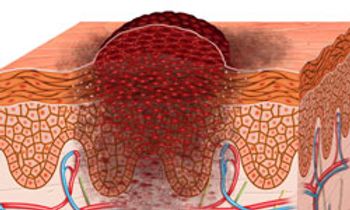
The combination of vemurafenib with the investigational MEK inhibitor cobimetinib demonstrated a 13.7-month median PFS and an ORR of 87% in treatment-naïve patients with BRAFV600 mutation-positive metastatic melanoma.
Michael A. Postow, MD, attending physician, Melanoma and Immunotherapeutics Service, Memorial Sloan Kettering Cancer Center, discusses using PD-L1 as a biomarker of response in melanoma.

The FDA has assigned a priority review designation to the PD-1 inhibitor pembrolizumab (MK-3475) as a treatment for patients with unresectable or metastatic melanoma following progression on ipilimumab.
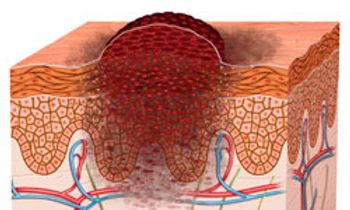
Many patients with melanoma are diagnosed with unresectable stage III or IV disease that requires systemic treatment. Treatment of melanoma depends largely on the stage at diagnosis.
This article provides an overview of clinical trials in melanoma.
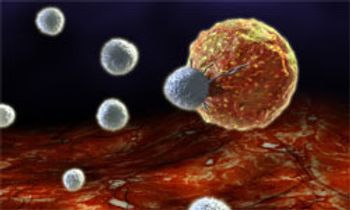
A novel immunotherapeutic known as IMCgp100 induced clinical responses with manageable toxicity in patients with advanced melanoma.

Valerie Francescutti, MD, FRCSC, assistant professor, Surgical Oncology, Roswell Park Cancer Institute (RPCI), discusses educating patients with melanoma on their disease.

Talimogene laherparepvec (T-VEC) significantly improved durable response rates (DRR) but failed to extend overall survival (OS) in patients with advanced melanoma.
Michael A. Postow, MD, attending physician, Melanoma and Immunotherapeutics Service, Memorial Sloan Kettering Cancer Center, discusses sequencing strategies in treating patients with melanoma.

More than 50% of melanoma involves mutation in the BRAF protein, which is part of the mitogen-activated protein kinase (MAPK) signal transduction pathway.

The first combination therapy for advanced melanoma received approval from the Food and Drug Administration (FDA) January 2014.
Jedd D. Wolchok, MD, PhD, chief, Melanoma and Immunotherapeutics Service, Lloyd J. Old Chair for Clinical Investigation, Memorial Sloan Kettering Cancer Center, explains immune checkpoint blockade.

Melanoma experts and researchers have gained ground in the development of novel and effective immunotherapies as well as targeted agents for those patients with metastatic melanoma who harbor specific tumor mutations.

Keith T. Flaherty, MD, discusses the latest and forthcoming research regarding MEK/BRAF combination therapies.
Ryan J. Sullivan, MD, medical oncologist, Massachusetts General Hospital, gives an overview of new and emerging therapies for the treatment of metastatic melanoma.
The American Cancer Society estimates that more than 75,000 new cases of melanoma will be diagnosed in 2014, and that nearly 10,000 people will die of melanoma this year.

Targeted therapy for patients with activating BRAF mutations has demonstrated the potential for personalized medicine in patients with metastatic melanoma. Initial study results were promising and dramatic.

PD-L1 levels adequately predict response and clinical outcomes for PD-1 inhibitor MK-3475 in patients with non-small cell lung cancer (NSCLC) and melanoma.

The oncolytic immunotherapeutic vaccine talimogene laherparepvec (T-VEC) promoted tumor shrinkage in 64% of patients with advanced melanoma, including a marked reduction in the size of uninjected metastatic lesions.

Nivolumab, a PD-1-specific antibody, has shown to produce long-term remissions with limited toxicity in patients with advanced melanoma, according to results from one of the longest follow ups to examine the drug.

While the concept of cancer-specific immunotherapy is not new, it recently has been proven feasible as a rational treatment for patients with some of the most challenging and difficult malignancies.

Harriet Kluger, MD, associate professor of medicine (medical oncology), associate director, Hematology/Oncology Fellowship Program, Yale Cancer Center, explains how immunotherapies are changing the treatment of melanoma.

Until recently, the cornerstone of therapy for metastatic melanoma had been chemotherapy with dacarbazine (DTIC) and immunotherapy with high-dose interleukin-2 (HD IL-2) or interferon- (IFN- ).