

Melanoma
Latest News
Advertisement
Latest Videos





























Advertisement
More News

Instead of adjuvant treatment, Andtbacka suggests treating patients with melanoma in the neoadjuvant setting. The benefit of neoadjuvant treatment versus adjuvant treatment is that oncologists can see the effect on the tumor, as well as perform biopsies and be able to determine changes in the tumor to develop certain biomarkers.

Weber says these treatments, such as ipilimumab plus nivolumab, or dabrafenib and trametinib, have seen marked improvements since 2009, and continue to become more important in the treatment paradigm of melanoma.
Fischkoff says the goal of Lion Biotechnologies is to utilize a central manufacturing facility where medical professionals can submit tumor samples of their patients, and received the proper TIL-based treatment back from the manufacturing facility.

A recent publication from The Cancer Genome Atlas (TCGA) has opened the door wide for a slew of new, non-BRAF targeted agents in melanoma, according to Jason J. Luke, MD, FACP.

With the proven efficacy of both BREF/MEK inhibitors and immunotherapies, Jeffrey S. Weber, MD, PhD, discusses which to use first in patients with melanoma.
Hamid says the future will hold adding more tolerable regimens in to the treatment paradigm of melanoma, based on the past success of the treatments already utilized and approved.
Postow says there have been algorithms developed over recently years to determine patient's toxicities and prescribe certain immunosupressive treatments to help abate the symptoms.
The purpose of this article is to discuss the efficacy, indications for use, and safety of oral Hh pathway inhibitors for locally advanced BCC (LABCC) and for metastatic BCC (MBCC) through a review of the literature.
With a growing armamentarium for treating metastatic BRAF-mutated melanoma, choosing the right regimen can be difficult, says Jeffrey S. Weber, MD, PhD.
Sharpe, whose lab aided in the discover of the pathway, says blocking the pathway in order to treat cancers is important because it allows T cells to work better.
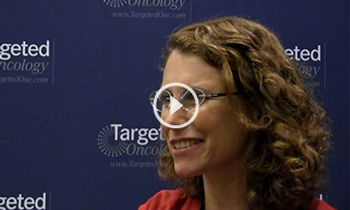
Yardena Samuels, PhD, on the ineffectiveness of targeting a single gene of proteins in patients with melanoma. Samuels says this strategy may work for the short term for treatment, but patients would tend to develop a resistance much quicker to treatment strategies using this method.

Despite limited information on treatment options for mucosal melanoma, Richard Joseph, MD, says immunotherapies could be a rewarding challenge for oncologists to undertake in the field.

Holmen says that utilizing targeted therapies could potentially be the answer, though clinically-tested combinations have historically not done as well as clinicians had hoped.

Weber says overactivity of these EGFR receptors may cause SCC tumors to become more aggressive. He adds that in a recent, small-scale study, effectively blocking the EGFR receptor in the tumor with anti-EGFR therapy proved to be successful.
Tumor infiltrating lymphocyte (TIL) technology represents an intriguing way of overcoming the immunosuppressive power of cancer, according to Jeffrey S. Weber, MD, PhD.
With the field of immunotherapy growing at a rapid rate, and its increasing incorporation in the armamentarium of treatments in melanoma, Jeffrey S. Weber, MD, PhD, discusses where the field is going and how oncologists can be using the therapies.

Nivolumab's new FDA expanded approval putsthe drug in the frontline for all patients with advanced melanoma, which Jedd D. Wolchok, MD, PhD, says will be beneficial for patients.
Single-dose fosaprepitant dimeglumine (Emend for injection) in combination with antiemetic agents has been approved by the FDA for the preventing

The frontline melanoma indications for nivolumab (Opdivo), as both a single agent and in combination with ipilimumab (Yervoy), have been expanded by the FDA to include patients with BRAF V600 mutations. This expansion was based on data from the phase III CheckMate-067 trial.

​Michael A. Davies, MD, PhD, discusses the importance of identifying which patients diagnosed with melanoma are at the highest risk for developing brain metastases.

Ashani T. Weeraratna, PhD, discusses the similarities in treatment between younger and older patients with melanoma. She says this lack of differentiation between treatment regimens could pose a problem in the future. One such issue is that older patients tend to react less well to treatments like vemurafenib.

A team in Australia have revealed the clinicopathological phenotypes and clinical activities of rarer BRAF mutations, namely BRAFK601E (K601E) and BRAFL597 (L597).
Sheri Holmen, PhD, discusses treating metastases in melanoma. Holmen says the treatment of metastases in melanoma is currently the cancer's biggest unmet clinical need, specifically brain metastases.
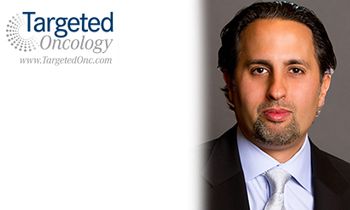
Omid Hamid, MD, discusses the upcoming Annual International Symposium on Melanoma and Other Cutaneous Malignancies.

With the continuously expanding landscape of treatment options for advanced and/or metastatic melanoma, it is becoming increasingly important to understand the patient-specific oncogenic drivers as a means of selecting treatments.
Advertisement
Advertisement
Trending on Targeted Oncology - Immunotherapy, Biomarkers, and Cancer Pathways
1
FDA Accepts NDA for Daraxonrasib in Metastatic Pancreatic Cancer
2
Advanced Renal Cell Carcinoma: Tailoring Second-Line Therapy After Prior Immunotherapy
3
FDA Approves Zidesamtinib for Previously Treated ROS1-Positive NSCLC
4
Teclistamab/Talquetamab Reduces Risk of Progression by 89% in R/R Multiple Myeloma
5