






Melanoma
Latest News
Advertisement
Latest Videos


























Advertisement
More News

Mario E. Lacouture, MD, dermatologist, Memorial Sloan Kettering Cancer Center, discusses the impact on quality of life of dermatologic adverse events.
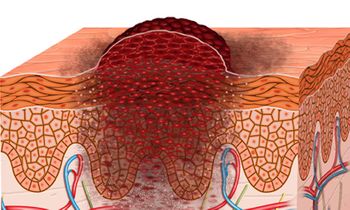
A trial comparing frontline pembrolizumab with ipilimumab for the treatment of advanced melanoma has met its progression-free survival (PFS) and overall survival (OS) endpoints and will be stopped early.

Immunotherapy is a rapidly expanding approach to the treatment of melanoma, employing a number of strategies evident in the pipeline for immunotherapeutics.
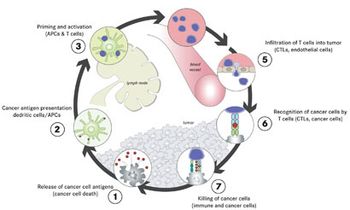
Melanoma is the most deadly skin cancer. According to data collected between 2004 and 2010, only 16% of Americans with metastatic melanoma, including people of all ages and races, and both genders, survive for 5 years or more after diagnosis.

Jason J. Luke, MD, assistant professor of medicine, The University of Chicago, discusses PD-1 inhibitors for the treatment of patients with melanoma.

Omid Hamid, MD, discusses sequencing and combining targeted therapies in the treatment of melanoma.

In an analysis of adverse events following treatment of patients with advanced melanoma with ipilimumab and nivolumab, combination therapy was associated with a 22% incidence of either thyroiditis or hypothyroidism and a 9% incidence of hypophysitis.

The FDA has accepted a supplemental Biologics License Application (sBLA) for ipilimumab (Yervoy) as an adjuvant treatment of patients with stage III melanoma at high risk of recurrence following complete resection.

The MEK inhibitor cobimetinib has received an FDA priority review for use in combination with the BRAF inhibitor vemurafenib (Zelboraf) to treat patients with BRAF V600–positive advanced melanoma.

An international team of scientists has shed additional light on the important role of Yes-associated protein (YAP) in tumor development and in treatment response.

The FDA has scheduled a hearing to discuss the biologics license application (BLA) for the immunotherapy talimogene laherparepvec (T-VEC) as a treatment for patients with metastatic melanoma.

The risk of death was significantly reduced for patients with BRAFV600E/K mutation-positive metastatic melanoma treated with dabrafenib and trametinib compared with dabrafenib alone.

Epigenetic and genetic biomarkers are potential methods of early detection of melanoma and other types of skin cancer. Earlier diagnosis alone would improve survival, even in the absence of novel therapies.
Metastatic disease accounts for the vast majority of cancer-related deaths. Ensuring a definitive diagnosis and the most effective treatment in a timely fashion is essential for extending life expectancy.

Reported results from the coBRIM study have shown that combining the BRAF inhibitor vemurafenib with cobimetinib, a MEK inhibitor, increases progression-free survival (PFS) in patients with BRAF-mutated advanced melanoma compared with vemurafenib alone.
Researchers are finding new ways to diagnose melanoma using machine learning methods.
Cytavis Biopharma GmbH, a Germany-based pharmaceutical company, is developing a natural protein, aviscumine (CY-503), as an immunostimulatory agent to improve response to immunotherapeutic treatment of melanoma.

The FDA approved nivolumab for patients with advanced melanoma in December 2014, joining 6 other melanoma treatments approved in the past 3 years, including monoclonal antibodies pembrolizumab and ipilimumab.
The FDA has approved nivolumab (Opdivo) for patients with unresectable or metastatic melanoma following treatment with ipilimumab or a BRAF inhibitor, based on data from the phase III CheckMate-037 trial.

The programmed death receptor-1 (PD-1) ligand, PD-L1, has become a viable target for immunotherapy in cancer, with multiple antibodies now in development.
Checkpoint inhibition has demonstrated efficacy for the treatment of melanoma in several clinical trials. However, biomarkers to predict safety and efficacy of immunotherapies in individual melanoma patients are lacking.

Scientists are beginning to find that combination therapy improves outcomes for patients, particularly with ipilimumab-nivolumab combination therapy.

Knowledge of genetic expression of melanocytic lesions significantly reduced the number of indeterminate diagnoses made by dermatopathologists.

Pembrolizumab (Keytruda) significantly improved progression-free survival (PFS) by over 43% compared with chemotherapy as a treatment for patients with metastatic melanoma who were refractory to ipilimumab (Yervoy).

Frontline treatment with nivolumab (Opdivo) significantly extended overall survival (OS) and progression-free survival (PFS) when compared with dacarbazine in patients with untreated BRAF wild-type advanced melanoma.
Advertisement
Advertisement
Trending on Targeted Oncology - Immunotherapy, Biomarkers, and Cancer Pathways
1
FDA Accepts NDA for Daraxonrasib in Metastatic Pancreatic Cancer
2
Advanced Renal Cell Carcinoma: Tailoring Second-Line Therapy After Prior Immunotherapy
3
FDA Approves Zidesamtinib for Previously Treated ROS1-Positive NSCLC
4
Teclistamab/Talquetamab Reduces Risk of Progression by 89% in R/R Multiple Myeloma
5