


MULTIPLE MYELOMA
Latest News
Advertisement
Latest Videos











































Advertisement
More News

Following the recent approvals of ide-cel and cilta-cel CAR T-cell therapy for patients with relapsed/refractory multiple myeloma, a hematologist-oncologist discusses clinical research supporting their utilization.
Caitlin Costello, MD, presents the case of a 60-year-old woman with later relapsed/refractory multiple myeloma and discusses how the treatment landscape has evolved, highlighting remaining unmet needs.

During a Case-Based Roundtable® event, Jack Khouri, MD, and participants discussed the use of selinexor with dose modifications to manage toxicity in patients with relapsed/refractory multiple myeloma.

Taiga Nishihori, MD, discusses a study in which investigators evaluated patients with relapsed/refractory multiple myeloma who were hospitalized and treated with commercial ciltacabtagene autoleucel at Moffitt Cancer Center between May 2022 and May 2023.
During a Case-Based Roundtable® event, Timothy Schmidt, MD, and participants discussed treatment selection for a 54-year-old patient with transplant eligible R-ISS stage 2/R2-ISS stage 3 IgG-κ myeloma.

During a Case-Based Roundtable® event, Andrew Yee, MD, discussed the use of carfilzomib-based regimens compared with other options for patients with multiple myeloma, including those refractory to lenalidomide in the first article of a 2-part series.

Taiga Nishihori, MD, discussed the current outpatient administration model of cilta-cel among patients with relapsed/refractory multiple myeloma.

During a Case-Based Roundtable® event, Adam D. Cohen, MD, discussed triplet vs quadruplet options for a patient with transplant eligible multiple myeloma and NCCN recommendations in the first article of a 2-part series.
A cohort study of the KarMMa-2 trial discovered durable responses in patients with high-risk multiple myeloma treated with ide-cel.
Binod Dhakal, MD, MS, discusses selecting patients for chimeric antigen receptor T-cell therapy by considering each patient’s condition and logistics.
The CARTITUDE-4 study that found that treatment with cilta-cel led to a statistically significant and clinically meaningful improvement in overall survival among patients with relapsed and lenalidomide-refractory multiple myeloma who received 1 to 3 prior lines of therapy.
During a Case-Based Roundtable® event, Surbhi Sidana, MD, discussed the KarMMa-3 trial of earlier-line CAR T-cell therapy in patients with relapsed/refractory multiple myeloma in the first article of a 2-part series.
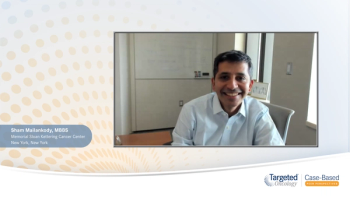
Sham Mailankody, MBBS, looks to the future treatment landscape for early relapsed/refractory multiple myeloma and addresses ways to improve patient access to care.
A medical oncologist discusses the significance of recent data and CAR T-cell therapy approvals in early relapsed/refractory multiple myeloma.
An expert on multiple myeloma provides a comprehensive overview of adverse events associated with CAR T-cell therapy and highlights strategies to monitor and manage AEs effectively.
Sham Mailankody, MBBS, summarizes recent data from the KarMMa-3 trial investigating ide-cel in patients with early relapsed/refractory multiple myeloma.
A myeloma specialist reviews the latest efficacy outcomes from the CARTITUDE-4 trial evaluating cilta-cel in patients with relapsed/refractory multiple and discusses how the results are informing treatment decisions.
Sham Mailankody, MBBS, provides an overview of challenges associated with CAR T-cell therapy in relapsed/refractory multiple myeloma, including location and financial considerations.
A medical oncologist discusses the referral process for patients being considered for CAR T-cell therapy in early relapsed/refractory multiple myeloma, highlighting factors that inform treatment selection.
An expert on multiple myeloma outlines key considerations for selecting early-line treatments for high-risk patients with relapsed/refractory multiple myeloma.
During a Case-Based Roundtable® event, Jack Khouri, MD, looked at selinexor trial data for a patient with relapsed/refractory multiple myeloma in the first article of a 2-part series.
Sham Mailankody, MBBS, presents the case of a 70-year-old man with early relapse multiple myeloma and outlines clinical practices for identifying patients with high risk.
Paula Rodríguez Otero, MD, PhD, discussed the deepening of response and minimal residual negativity during maintenance in the PERSEUS study for patients with multiple myeloma.
A deep and durable response rate was seen with linvoseltamab for the treatment of patients with relapsed/refractory multiple myeloma.
During a Case-Based Roundtable® event, Ariel Grajales-Cruz, MD, discussed the long-term results of the phase 3 IKEMA study that build the rationale for use of the triplet therapy isatuximab, carfilzomib, and dexamethasone, in patients with relapsed/refractory multiple myeloma in the second article of a 2-part series.
Advertisement
Advertisement
Trending on Targeted Oncology - Immunotherapy, Biomarkers, and Cancer Pathways
1
Anito-Cel Delivers Durable Responses With Low Neurotoxicity in RRMM
2
Risk, Histology, and Metastatic Site Guide First-Line RCC Treatment Choices
3
FDA Application Withdrawn for I-DXd in Small Cell Lung Cancer
4
Frontline CAR T and Bispecific Antibodies Are the Next Frontier in Myeloma
5