

MULTIPLE MYELOMA
Latest News
Advertisement
Latest Videos










































Advertisement
More News
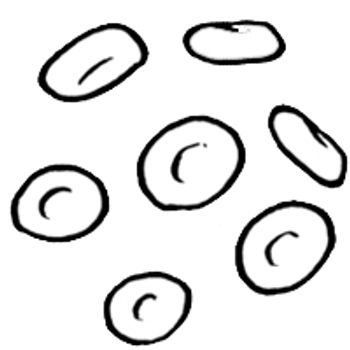
High response rates were observed in patients with newly diagnosed multiple myeloma with induction treatment of bortezomib and lenalidomide plus dexamethasone after autologous stem cell transplant.

Shaji K. Kumar, MD, discusses how patients with multiple myeloma respond to different types of therapy.
In the epicenter of the coronavirus disease 2019—Wuhan, China—a 60-year-old patient with multiple myeloma presented with chest tightness with no fever or cough, in early February. The patient was successfully treated with the anti–interleukin-6 receptor antibody tocilizumab, according to a case study published in Blood Advances.

A Biologics License Application has been submitted to the FDA for the investigational B-cell maturation antigen-directed chimeric antigen receptor T cell immunotherapy idecabtagene vicleucel as treatment of patients with multiple myeloma who have received at least 3 prior therapies.
The upcoming 4th Annual Medical Crossfire Hematologic Malignancies, hosted by Physicians’ Education Resource, LLC, promises a lively exchange between experts in multiple myeloma, leukemia, and lymphoma and physician attendees who are on the front lines of patient care. This educational format moves away from didactic lectures and instead focuses on discussions on scientific advances and their impact on real-world patient cases.
Subcutaneous daratumumab, a monoclonal antibody was determined to be non-inferior to FDA approved intravenous daratumumab in terms of efficacy and pharmacokinetics as treatment of patients with relapsed or refractory multiple myeloma, according to results from the phase III COLUMBA trial. The study also showed an improved safety profile with SC versus IV daratumumab.
An updated analysis from the ALCYONE trial has found that adding daratumumab to a standard-of-care regimen significantly prolonged survival in patients with transplant-ineligible multiple myeloma, according to a recent paper in The Lancet.
Melphalan flufenamide in combination with dexamethasone achieved an overall response rate of 26% in patients with relapsed/refractory multiple myeloma, according to results from the pivotal phase II HORIZON study. The achievement serves as basis for the submission of a New Drug Application to the FDA.
In an interview with Targeted Oncology, Gurbakhah Kaur, MD, discussed the evolution of the multiple myeloma treatment landscape. She also highlighted other agents that are being evaluated in this patient population, both with BCMA targets and different targets.
Progression-free survival failed to meet the threshold for statistical significance with the addition of ixazomib to lenalidomide and dexamethasone in patients with newly diagnosed, transplant-ineligible multiple myeloma in the phase III TOURMALINE-MM2 trial, not meeting the primary endpoint.
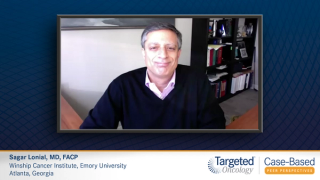
Sagar Lonial, MD, FACP, explains the 2 main challenges physicians face when they are treating patients with smoldering multiple myeloma.
The combination of elotuzumab plus lenalidomide and dexamethasone did not demonstrate a statistically significant improvement in progression-free survival compared with lenalidomide and dexamethasone alone in newly diagnosed patients with multiple myeloma who are transplant ineligible, missing the primary end point of the phase III ELOQUENT-1 trial.<br />
The triplet combination of selinexor, bortezomib, and dexamethasone demonstrated an improved median progression-free survival rate over the standard regimen of bortezomib and dexamethasone in treating patients with multiple myeloma in the BOSTON trial
The FDA has approved the combination of isatuximab-irfc with pomalidomide and dexamethasone as treatment of adult patients with multiple myeloma who have received at least two prior therapies including lenalidomide and a proteasome inhibitor.
In an interview with Targeted Oncology at the 2020 International Congress on Hematologic Malignancies, Noopur Raje, MD, discussed emerging CAR T-cell therapies in multiple myeloma. She also explained how CAR NK cells differ from other CAR agents.

Andrew J. Cowan, MD, explains the rationale for a phase I clinical trial in which a gamma-secretase inhibitor was combined with CAR T-cell therapy as treatment for heavily pretreated patients with multiple myeloma.
A supplemental Biologics License Application for daratumumab in combination with carfilzomib and dexamethasone was submitted to the FDA for consideration as treatment for relapsed/refractory multiple myeloma, according to a press release from Janssen Pharmaceuticals.
In January 2020, the FDA approved new treatment options in gastrointestinal stromal tumors, bladder cancer, and epithelioid sarcoma. The FDA also granted several Priority Review Designations, orphan drug designations, and a Fast Track designation, as well as a Breakthrough Therapy designation.

Across therapy vehicles, agents targeting the B-cell maturation antigen have emerged as promising potential therapies in the multiple myeloma treatment paradigm. Following the 2019 American Society of Hematology Annual Meeting & Exposition, experts reflect on what these new advances mean for the field of oncology care.
In an interview with Targeted Oncology, Noa Biran, MD, discussed the findings from 2 clinical trials evaluating consolidation therapy post-transplant in patients with high-risk multiple myeloma.
The FDA granted Priority Review to the Biologics License Application for belantamab mafodotin, an anti–B cell maturation antigen monoclonal antibody for the treatment of patients with relapsed or refractory multiple myeloma whose prior therapies included an immunomodulatory agent, a proteasome inhibitor, and an anti-CD38 antibody, GlaxoSmithKline plc announced in a press release.<br />
Nina Shah, MD, discusses the question of whether CAR T-cell therapy is ready for primetime in patients with multiple myeloma.
In an interview with Targeted Oncology, Andrew J. Cowan, MD, discussed the findings from the first-in-human clinical trial evaluating the combination of a GSI and BCMA CAR T cells in patients with heavily pretreated multiple myeloma. He highlighted the next steps for this research and how he sees CAR T-cell therapy evolving over the coming years.


Advertisement
Advertisement
Trending on Targeted Oncology - Immunotherapy, Biomarkers, and Cancer Pathways
1
Anito-Cel Delivers Durable Responses With Low Neurotoxicity in RRMM
2
Risk, Histology, and Metastatic Site Guide First-Line RCC Treatment Choices
3
FDA Application Withdrawn for I-DXd in Small Cell Lung Cancer
4
Elinzanetant Gets Priority Review for VMS From Breast Cancer Endocrine Therapy
5