




Renal Cell Carcinoma
Latest News
Advertisement
Latest Videos







































Advertisement
More News
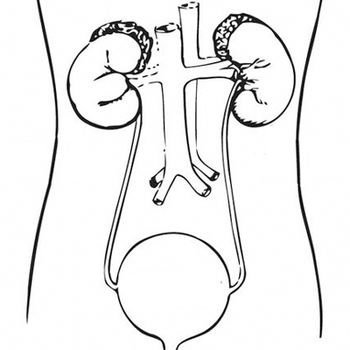
Sunitinib (Sutent) has been granted a priority review designation by the FDA for use as an adjuvant therapy in patients with renal cell carcinoma who have received nephrectomy and are high risk for recurrence.
Much research has been done to define the role of neoadjuvant and adjuvant therapies in metastatic renal cell carcinoma patients who have diseease recurrence after surgical resection, but the standard of care has not significantly changed.
Bradley C. Leibovich, MD, discusses the benefits of surgery and the need for more effective drug treatments for patients with metastatic renal cell carcinoma.

Daniel James George, MD, professor of Medicine, professor in Surgery, Duke University School of Medicine, discusses how cabozantinib (Cabometyx) is currently being used in practice for patients with renal cell carcinoma (RCC).

Amit Singal, MD, discusses the recent successes in the HCC treatment landscape and the challenges that still remain.
According to an assessment of a large global dataset reported at the 2017 International Liver Congress, log<sub>10</sub> alpha fetoprotein level in the blood directly corresponded to the years of posttreatment survival in patients with hepatocellular carcinoma.
Patients with advanced hepatocellular carcinoma who were previously treated with sorafenib had long-term responses to nivolumab of more than 1 year.
In patients with hepatocellular carcinoma, liver-targeting treatment with selective internal radiation therapy more effectively controlled liver tumor progression and was better tolerated, but the therapy did not improve rates of overall or progression-free survival over sorafenib.
Mipsagargin, a first-in-class prodrug, showed promising antitumor activity and enabled patients with advanced sorafenib-refractory hepatocellular carcinoma to achieve disease stabilization.
Jordi Bruix, MD, discusses findings of a comparison of modified (m)RECIST and RECIST 1.1 assessments in the RESORCE trial.
In updated results presented at the 2017 International Liver Congress, Spanish researchers raised a red flag regarding observations of unexpected higher rates of hepatocellular carcinoma recurrence following treatment with direct-acting antivirals for hepatitis C virus infection.
Researchers have identified higher levels of hepatocytes positive for pERK immunostaining and greater microvascular invasion as independent prognostic factors of recurrence in patients treated with sorafenib Nexavar for hepatocellular carcinoma.
Results from a study of microRNA-34a and natural killer cells presented at the 2017 International Liver Congress suggest that microRNA-34a, one of the most documented tumor suppressor microRNAs, could have a role in regulating cytotoxicity and development of the effector NK cells and their target cells.
Hans J. Hammers, MD, PhD, discusses findings from a phase I study of alpha-1, 3 galactosyltransferase-expressing allogeneic RCC immunotherapy.
Patients were at no elevated risk of developing hepatocellular carcinoma after achieving sustained virologic response following treatment with direct-acting antiviral therapy for hepatitis C compared to interferon therapy.
Eric Jonasch, MD, professor, The University of Texas MD Anderson Cancer Center, discusses the phase II study of alternative sunitinib (Sutent) scheduling in patients with metastatic renal cell carcinoma (mRCC).

Metastatic RCC, Progressing on Multiple Therapies


Choosing Second-Line Therapy for Metastatic Kidney Cancer
Advertisement
Advertisement
Trending on Targeted Oncology - Immunotherapy, Biomarkers, and Cancer Pathways
1
Denosumab Biosimilar Approved For Existing Oncology Indications
2
Plinabulin Receives FDA Fast Track Designation in Post-ICI NSCLC
3
FDA Oncology Recap: Approvals, Designations, and Decisions in September 2026
4
Giredestrant Plus Everolimus Improves PFS in ER+ Advanced Breast Cancer
5