



Renal Cell Carcinoma
Latest News
Advertisement
Latest Videos












































Advertisement
More News
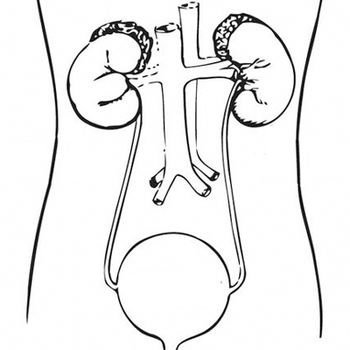
Bradley McGregor, MD, discusses the impact of combination therapies on the treatment landscape of renal cell carcinoma.

<br /> Shilpa Gupta, MD, assistant professor in the Hematology, Oncology, and Transplantation Division at the University of Minnesota, discusses the potential for triplet regimens in the treatment of patients with renal cell carcinoma.
Long-term metastatic control is an important goal for patients with high-risk renal cell carcinoma after nephrectomy. In recent years, adjuvant therapy with tyrosine kinase inhibitors has entered the picture to potentially fill this unmet need.
Progression-free survival was significantly improved in treatment-naïve patients with advanced renal cell carcinoma by combining the PD-L1 inhibitor avelumab (Bavencio) with the VEGF inhibitor axitinib (Inlyta) compared with sunitinib, according to findings from the phase III JAVELIN Renal 101 study.
The presence of biomarkers including SDF-1, VEGF-A, and sVEGFR1 and 2 at baseline were associated with poorer progression-free survival and overall survival in patients with metastatic renal cell carcinoma treated with sunitinib prior to nephrectomy.

Daniel J. George, MD, professor of medicine and surgery at Duke Cancer Institute, discusses his rationale for choosing patients with renal cell carcinoma that should receive adjuvant sunitinib therapy.



Perspective on the Treatment of Advanced Renal Cell Cancer


Treatment of Refractory Metastatic Renal Cell Carcinoma
Timothy M. Kuzel, MD, recently spoke on the treatment decisions and consideration he makes when treating patients with renal cell carcinoma. Kuzel, chief of the Division of Hematology/Oncology, deputy director of Rush Cancer Center, Rush University Medical Center, explained his treatment decisions based on 2 case scenarios during a <em>Targeted Oncology </em>live case-based peer perspectives presentation.
Treatment with pembrolizumab and bevacizumab proved to be a promising combination regimen for patients with metastatic renal cell carcinoma, according to phase Ib/II data presented at the 2018 ASCO Annual Meeting.
Advertisement
Advertisement
Trending on Targeted Oncology - Immunotherapy, Biomarkers, and Cancer Pathways
1
Denosumab Biosimilar Approved For Existing Oncology Indications
2
FDA Oncology Recap: Approvals, Designations, and Decisions in September 2026
3
Giredestrant Plus Everolimus Improves PFS in ER+ Advanced Breast Cancer
4
Plinabulin Receives FDA Fast Track Designation in Post-ICI NSCLC
5