



THYROID CANCERS
Latest News
Advertisement
Latest Videos








































Advertisement
More News

The FDA has approved selpercatinib capsules for the treatment of patients with lung cancer or thyroid cancer harboring RET alterations. This marks the first treatment approved to target RET gene alterations.
The FDA has accepted and granted a priority review to a supplemental Biologics License Application for pembrolizumab for the treatment of adult and pediatric patients with unresectable or metastatic solid tumors with tissue tumor mutational burden-high who have progressed following prior treatment and who have no satisfactory alternative treatment options.

An association was found between a lower risk of grade 3 or higher chemotherapy toxicity with higher body mass indexes and normal albumin, a protein made in the liver, levels in older adult patients with solid tumors, according to an analysis of a prospective, multicenter study.
A sudden surge in the cases of COVID-19 due to pandemic, along with efforts to contain it, has led to multiple challenges that no country has experienced in the last several decades. The global pandemic from COVID-19 poses a unique set of challenges not only for patients with cancer who need their treatment, but also for caregivers, oncologists, and the overall care team.
In an interview with Targeted Oncology, Kashyap Patel, MD, discussed the COVID-19 pandemic and the implementation of new precautions in his practice as the number of COVID-19 infected persons rises in the state.<br />
Patients harboring IDH1/2 muta­tions may receive benefit by the use of PARP inhibitors, with investigators initi­ating clinical trials in patients across multiple different tumor types to determine the efficacy of this strategy.
Treatment with pembrolizumab demonstrated antitumor activity along with tolerable toxicity in patients with 4 different rare and hard-to-treat malignancies, according to results from a phase II study led by The University of Texas MD Anderson Cancer Center researchers and published in the Journal for ImmunoTherapy of Cancer.
The FDA has accepted a Biologics License Application for MYL-1402O, a proposed biosimilar to bevacizumab, according to a press release from co-developers Biocon and Mylan. The BLA is seeking approval for the biosimilar as a treatment for multiple types of cancer and the FDA has set an action date goal of December 27, 2020, for a decision on the BLA.
As the new coronavirus disease 2019 creates problems internationally, health-wise and economically, it is also becoming a cause for concern throughout the oncology community.
In February 2020, the FDA gave indications to multiple therapies meant for treatment of solid tumor and hematologic malignancies. FDA action included 10 Priority Reviews, 2 Breakthrough Therapy designations, and 2 Fast Track designations.
To help clinicians cope with an increasing number of geriatric patients with cancer, the Association of Community Cancer Centers is addressing this problem with a 2-pronged approach that focuses on the delivery of care and diagnostic assessment.
The New Drug Application for selpercatinib was granted FDA Priority Review for the treatment of patients with advanced RET fusion–positive non–small cell lung cancer, RET-mutant medullary thyroid cancer, and RET fusion–positive thyroid cancer, based on data from the phase I/II LIBRETTO-001 trial, Eli Lilly and Company announced in a press release.
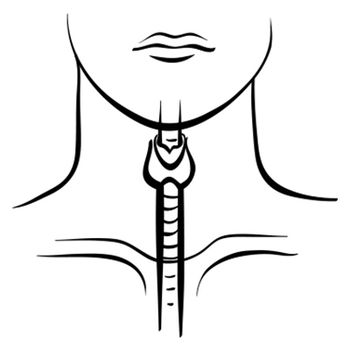
A new retrospective exploratory analysis has found no association between treatment with sorafenib and the development of sarcopenia among patients with locally advanced or metastatic radioactive iodine-refractory differentiated thyroid cancer. However, this analysis, which was published recently in Thyroid, did find that sorafenib had a significant effect on muscle mass.
Lenvatinib demonstrated a longer median overall survival compared with palliative therapy in patients with stage IVC anaplastic thyroid cancer, a rare disease for which the survival rate has not improved in roughly 20 years. The introduction of targeted therapy to the treatment landscape for anaplastic thyroid cancer has been challenging in the past because some patients do not have time to undergo therapy on a clinical trial because the process is time-consuming, and the procedure for study enrollment may exceed time to progression.
Integrating a geriatric assessment into the care of older adults who are receiving cancer treatment in communi­ty oncology practices improves patient and caregiver satisfaction and encourages commu­nication about aging-related concerns, accord­ing to results of a clinical trial that enrolled 541 patients with advanced cancer.
The present and future benefits of telehealth in oncology can be observed through Tahoe For­est Cancer Center and its affiliation with the UC Davis Cancer Center, use of other remote clinics, and participation in virtual tumor boards. Even though there are roadblocks to telehealth reaching more locations and more patients, the potential benefit warrants the time needed to get over those hurdles.
The incidence of thyroid cancer in the United States may be on decline since the rise in thyroid cancer diagnoses observed between 1974 and 2013. This finding is based on observational analysis of data from the Surveillance, Epidemiology, and End Results 13 registry, which were recently published in JAMA.<br />
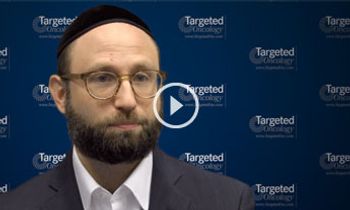
Shlomo Koyfman, MD, discusses registry data on thyroid cancer and how data from the registry can improve practice for oncologists.

Lenvatinib is now indicated for the treatment of differentiated thyroid cancer in China as a result of application acceptance by the National Medical Products Administration of China, according to a press release from Eisai Co., Ltd.<br />
In patients whose solid<strong> </strong>tumors harbor a mutation in <em>KRAS </em>G12C, therapy with MRTX849 has produced promising responses and acceptable toxicity across 3 tumors types, according to data presented at the 2019 American Association for Cancer Research–National Cancer Institute–European Organization for Research and Treatment of Cancer International Conference on Molecular Targets and Cancer Therapeutics.
In an interview with Targeted Oncology, at the 2019 Chemotherapy Foundation Symposium, Marcia Brose, MD, PhD, discussed the cases of thyroid cancer in which molecular testing can be initiated upfront to aid in the treatment decisions of oncologists. She also advised physicians on how to decide when to test patients with the disease.
A new analysis of a multicenter, retrospective cohort study has found that first-line sorafenib improved overall survival in patients with progressive radioactive iodine-refractory differentiated thyroid carcinoma. Additionally, salvage therapy with lenvatinib improved OS in patients with disease progression after first-line sorafenib.<br />
In an interview with Targeted Oncology, Winston Tan, MD, discussed advances in thyroid cancer that may be competitors to the current standard of care. He also shared ongoing challenges that he has experienced in treating patients with thyroid cancer.
Advertisement
Advertisement
Trending on Targeted Oncology - Immunotherapy, Biomarkers, and Cancer Pathways
1
Anito-Cel Delivers Durable Responses With Low Neurotoxicity in RRMM
2
Risk, Histology, and Metastatic Site Guide First-Line RCC Treatment Choices
3
FDA Application Withdrawn for I-DXd in Small Cell Lung Cancer
4
Frontline CAR T and Bispecific Antibodies Are the Next Frontier in Myeloma
5