

THYROID CANCERS
Latest News
Advertisement
Latest Videos










































Advertisement
More News



General Cancer
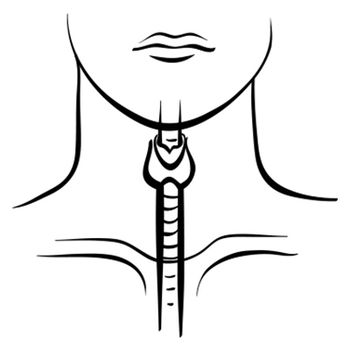
A prospective, observational study recently published in the <em>European Journal of Cancer </em>helped to clarify the prognostic role of <em>TERT </em>promoter mutations among patients with localized thyroid cancer, revealing that <em>TERT </em>mutations were associated with poor outcomes among patients with nonmetastatic disease that do not have an aggressive histology.
David S. Hong, MD, discusses the use of larotrectinib in patients with thyroid cancer, as well as what is on the horizon with this agent and other TRK inhibitors.
Alexander E. Drilon, MD, discusses the prevalence of <em>RET</em> fusions and mutations in patients with cancer, including lung and thyroid cancers.
Minimizing Dose Interruptions With Lenvatinib Improves PFS in Thyroid Cancer, Posthoc Analysis Shows
Minimizing dose interruptions of lenvantinib improved progression-free survival in patients with radioiodine-refractory differentiated thyroid cancer (RR-DTC), according to an exploratory post-hoc analysis from a phase III randomized trial.
Promising efficacy was seen with anlotinib therapy in patients with unresectable locally advanced or metastatic medullary thyroid cancer in the form of durable antitumor responses, according to the results of a Chinese phase II study recently published in the journal <em>Thyroid</em>.

The FDA has granted an accelerated approval to larotrectinib (Vitrakvi) for use in adult and pediatric patients with solid tumors that have an <em>NTRK</em> gene fusion without a known acquired resistance mutation, are metastatic or where surgical resection is likely to result in severe morbidity, and have no satisfactory alternative treatments or that have progressed following treatment.
Targeted agents have produced new treatment options for patients with advanced thyroid cancers, with significant advances being seen this year in moving toward precision medicine for various thyroid cancer subtypes, according to Marcia S. Brose, MD, PhD.
Patients with thyroid cancer classified as having low risk of disease recurrence can be treated safely with a lower dose of radiation following surgery, compared with the standard higher dose, according to long-term findings from the HiLo trial presented at the National Cancer Research Institute (NCRI) Cancer Conference.
More research is still needed to determine the risk of developing a subsequent malignant neoplasm following radioactive iodine treatment for thyroid cancer, according to findings that were presented during the Annual Meeting of the American Thyroid Association and published in <em>Thyroid</em>.
Lori J. Wirth, MD, discusses the promising results seen so far with LOXO-292 in patients with thyroid cancer.

A look back at all the FDA news that happened in the month of October 2018, including several new FDA approvals, priority reviews, a breakthrough therapy designation, and more, in a variety of cancer types.<br />
James L. Wade III, MD, FACP, FASCO, discusses the importance of clinical trials in the community.
Marcia S. Brose, MD, PhD, discussed the clinical benefit of larotrectinib in treating patients with <em>TRK</em> fusion–positive papillary thyroid cancer.
I think one of the most important advancements in biomedical technology that has improved our understanding of the complexities of cancer is the ability to sequence the cancer genome for any individual patient, in a rapid and cost-effective manner, to help us make treatment decisions in the clinic.
Lori J. Wirth, MD, discusses the role of lenvatinib in the treatment landscape of differentiated thyroid cancer and how this might evolve in the future.
Groundbreaking developments in cancer therapies can change lives, extending survival and sending patients who previously thought their chances were slim into remission. But these therapies come at a cost, and many patients reel at the prospect of heavy financial burdens. To help patients and programs meet the challenges of affording cancer treatments, community cancer centers are expanding the role of financial advocates in their organizations.

Thomas A. Gallo, MS, MDA, president of the Association of Community Cancer Centers, discusses his mission as president to “reflect, renew, and reignite” in order to create a more resilient oncology team for the community.
Among patients with advanced solid tumors associated with <em>NTRK</em> gene fusions, more than half had responses to the small-molecule inhibitor entrectinib, according to an integrated analysis of 3 clinical trials presented at the 2018 ESMO Annual Congress.
Larotrectinib induced an objective response rate of 80% in patients with advanced solid tumors who harbored <em>NTRK </em>gene fusions, according to results pooled from 3 small trials of the TRK inhibitor. Results were presented during the 2018 ESMO Congress.
Advertisement
Advertisement
Trending on Targeted Oncology - Immunotherapy, Biomarkers, and Cancer Pathways
1
Anito-Cel Delivers Durable Responses With Low Neurotoxicity in RRMM
2
Risk, Histology, and Metastatic Site Guide First-Line RCC Treatment Choices
3
FDA Application Withdrawn for I-DXd in Small Cell Lung Cancer
4
Frontline CAR T and Bispecific Antibodies Are the Next Frontier in Myeloma
5