
THYROID CANCERS
Latest News
Advertisement
Latest Videos










































Advertisement
More News

Danae Delivanis, MD, Division of Endocrinology, Diabetes, Metabolism, and Nutrition at Mayo Clinic, discusses pembrolizumab-induced thyroiditis in patients with cancer.
BRAF V600E is essential to the survival of many tumors and has been the focus of targeted therapeutics like a new BRAF V600E-selective inhibitor, which has been used for papillary thyroid carcinomas.
Keith Bible, MD, PhD, Mayo Clinic professor of oncology goes into detail about the current status of using VEGFR tyrosine kinase inhibitors to treat thyroid cancer.

Cabozantinib, an oral multikinase inhibitor, showed promise as second- or third-line therapy in patients with advanced differentiated thyroid cancer (DTC).

Dr. Sylvia Asa, MD, PhD, pathologist with the Toronto General Hospital/Research Institute (UHN) and a professor at the University of Toronto, discusses genotyping and the role it can play in diagnosing and selecting targeted treatments for thyroid cancer.
Dr. Nicole O. Vietor presented a report assessing practice discordances related to previously published guidelines published from the American Thyroid Association and the American Association of Clinical Endocrinologists.
Patients in a lenvatinib treatment arm with radioiodine-refractory differentiated thyroid cancer and certain metastasis experienced a much better overall median progression-free survival compared with a placebo arm.
Abstracts highlighting the latest clinical data on lenvatinib are expected at the 2015 European Cancer Congress in Vienna, Austria.

Matthew H. Taylor, MD, Oregon Health and Science University, discusses the toxicities and impact of lenvatinib in the SELECT trial, which treated patients with 131I-refractory differentiated thyroid cancer.
Marcia S. Brose, MD, PhD, discusses the SELECT trial, which looks at lenvatinib for patients with 131I-refractory differentiated thyroid cancer.

Therapy that targets angiogenesis has been extensively investigated in differentiated thyroid cancer (DTC) and has demonstrated significant antitumor activity.

A Mayo Clinic Laboratory, which discovered that upregulation of ras homolog gene family member B (RhoB), in combination with paclitaxel results in enhanced antitumor activity, has uncovered the molecular mechanisms underlying combination therapy for anaplastic thyroid cancer (ATC).
Lori J. Wirth, MD, hematology/oncology, Department of Medicine, Massachusetts General Hospital, discusses the SELECT trial, which examined the effect of age and lenvatinib treatment on overall survival (OS) for patients with 131I-refractory differentiated thyroid cancer.

Matthew H. Taylor, MD, Oregon Health and Science University, discusses the efficacy and safety of lenvatinib for the treatment of patients with 131I-refractory differentiated thyroid cancer with and without prior VEGF-targeted therapy.
Adding Everolimus to Sorafenib Improves PFS by 14 Months in Refractory Differentiated Thyroid Cancer
The addition of everolimus to sorafenib extended progression-free survival (PFS) in patients with metastatic differentiated thyroid carcinoma (DTC) that had progressed on sorafenib alone, according to findings from a single-arm open-label phase II study.
Marcia S. Brose, MD, PhD, associate professor of Otorhinolaryngology: Head and Neck Surgery at the Hospital of the University of Pennsylvania, discusses the effect of age and lenvatinib treatment on overall survival for patients with 131I-refractory differentiated thyroid cancer in the SELECT trial.

Patients of all ages with iodine-refractory thyroid cancer lived significantly longer when treated with the targeted agent lenvatinib, a new analysis of a randomized trial showed.

Despite their promise, checkpoint inhibitors are not effective in every patient, and research suggests the STING (stimulator of interferon genes) pathway may hold important clues as to why some tumors fail to respond.

Jennifer H. Kuo, MD, director, Thyroid Biopsy Program, Columbia University, discusses a study looking at the incidence of thyroid cancer among breast cancer survivors.

Growth in healthcare spending in the United States continues to outpace growth in European countries that enjoy a similar standard of living.
Lori J. Wirth, MD, discusses an open-label extension of the phase III SELECT trial, which looked at lenvatinib versus placebo for differentiated thyroid cancer.
Steven I. Sherman, MD, discusses the relationship between thyroid-stimulating hormone levels and outcomes from the phase III SELECT trial.
On February 13, 2015, the FDA approved lenvatinib for treatment of locally recurrent or metastatic differentiated thyroid cancer that is refractory to radioactive iodine therapy.

Frances Carr, PhD, professor, Department of Pharmacology, The University of Vermont, discusses the relationship between the thyroid hormone receptor and Runx2 expression in thyroid cancer cells.
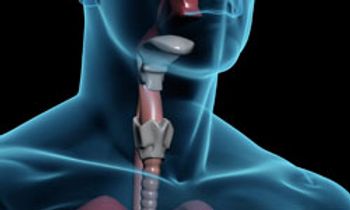
According to a recent descriptive analysis of the VA Corporate Data Warehouse, veterans who reported Agent Orange exposure had higher rates of thyroid cancer compared to the overall national VA health care patient population.
Advertisement
Advertisement
Trending on Targeted Oncology - Immunotherapy, Biomarkers, and Cancer Pathways
1
Anito-Cel Delivers Durable Responses With Low Neurotoxicity in RRMM
2
Risk, Histology, and Metastatic Site Guide First-Line RCC Treatment Choices
3
FDA Application Withdrawn for I-DXd in Small Cell Lung Cancer
4
Elinzanetant Gets Priority Review for VMS From Breast Cancer Endocrine Therapy
5