

THYROID CANCERS
Latest News

Advertisement
Latest Videos










































Advertisement
More News
An international team of scientists has shed additional light on the important role of Yes-associated protein (YAP) in tumor development and in treatment response.

Representatives Diana DeGette (D, Colorado) and Fred Upton (R, Michigan) recently released a "discussion draft" of the 21st Century Cures Act.

TKIs have been an invaluable addition to the treatment of thyroid cancers, including medullary thyroid cancer, but adverse events must be effectively monitored and managed.

Advances in molecular testing have enabled families of those with thyroid cancers to determine whether or not they may be at increased risk for developing thyroid cancer.

With appropriate treatment, individuals with thyroid cancer have good odds for survival—the 5-year survival rate is 98%. Many factors influence the risk of survival after thyroid cancer is diagnosed.

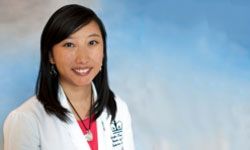
Carrie C. Lubitz, MD, MPH, assistant professor, Massachusetts General Hospital, discusses the diagnosis of thyroid cancer.
Metastatic disease accounts for the vast majority of cancer-related deaths. Ensuring a definitive diagnosis and the most effective treatment in a timely fashion is essential for extending life expectancy.

Each year approximately 63,000 persons in the US will be diagnosed with thyroid cancer, placing it among the top 10 most common cancers in the country.
Keith C. Bible, MD, PhD, professor of oncology, Mayo Clinic, discusses the challenges associated with treating patients with follicular cell-derived thyroid carcinoma.

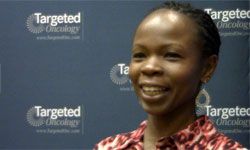
Lily Kwatampora, MD, discusses the relationship between body composition and targeted therapies in patients with thyroid cancer.

Amgen and Kite Pharma have announced that they will collaborate on the development of novel CAR T-cell immunotherapies, with Amgen providing cancer targets and Kite offering its engineered autologous cell therapy platform.
The anti-CD19 chimeric antigen receptor (CAR)-modified T-cell therapy CTL019 demonstrated a 92% complete response (CR) rate in pediatric patients with relapsed/refractory acute lymphoblastic leukemia (ALL).
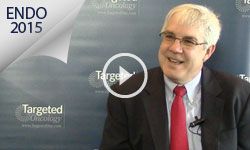
Marcia S. Brose, MD, PhD, assistant professor, Abramson Cancer Center at the University of Pennsylvania, discusses next-generation sequencing in thyroid cancer.
As its CAR T cell and high-affinity TCR products continue to advance in clinical trials, Juno Therapeutics, Inc, filed a registration statement for an initial public offering (IPO) of its common stock on November 17.
Recent news stories profiling a cancer patient whose last hope rests on treatment by injections of the virus that causes AIDS may have created some misconceptions regarding a new cancer immunotherapy.

Brittany N. Bohinc, MD, Division of Endocrinology, Duke University, discusses the potential to use LGR5 as a biomarker in papillary thyroid cancer.
The FDA has granted a priority review to the oral multiple tyrosine kinase receptor inhibitor lenvatinib as a treatment for patients with progressive, radioactive iodine (RAI)-refractory differentiated thyroid cancer (DTC).
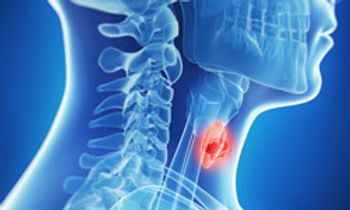
While medullary thyroid cancer (MTC) is an uncommon malignancy, accounting for about 5% of thyroid cancers, progressive forms of the disease are poorly responsive to chemotherapy and radiation.
Marcia S. Brose, MD, PhD, discusses using both sorafenib and lenvatinib as treatment options for thyroid cancer.
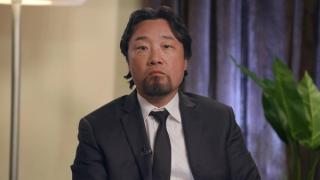
Lori J. Wirth, MD, medical director, Center for Head and Neck Cancers, Massachusetts General Hospital, assistant professor, Harvard Medical School, discusses the side effects of lenvatinib in patients with thyroid cancer.
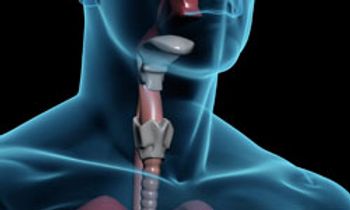
The incidence of thyroid cancer in Pennsylvania has grown at a rate significantly higher than that observed in the rest of the country.
Lori J. Wirth, MD, medical director, Center for Head and Neck Cancers, Massachusetts General Hospital, assistant professor, Harvard Medical School, discusses areas of unmet need in the field of thyroid cancer.

Although prognostic biomarkers have become increasingly important in the treatment of many types of cancer, no such markers have yet been identified and validated for thyroid cancer.

A better understanding of the molecular pathways that confer resistance to RAI in the treatment of differentiated thyroid cancer has led to success in targeting the VEGF and the VEGF receptor pathways.

Martin Schlumberger, MD, Institut Gustave Roussy, Villejuif Cedex, professor of oncology, University Paris-Sud, France, discusses the takeaway points for a community oncologist from the SELECT trial.
Advertisement
Advertisement
Trending on Targeted Oncology - Immunotherapy, Biomarkers, and Cancer Pathways
1
Anito-Cel Delivers Durable Responses With Low Neurotoxicity in RRMM
2
Risk, Histology, and Metastatic Site Guide First-Line RCC Treatment Choices
3
FDA Application Withdrawn for I-DXd in Small Cell Lung Cancer
4
Frontline CAR T and Bispecific Antibodies Are the Next Frontier in Myeloma
5