

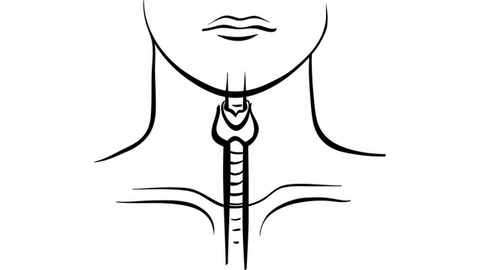

THYROID CANCERS
Latest News


OS Not Improved With Tremelimumab/Durvalumab/SBRT in Anaplastic Thyroid Cancer
By Jordyn Sava
Increased Hemithyroidectomy Use in Thyroid Cancer Not Linked With ATA Guidelines
By Jordyn Sava
Advertisement
Latest Videos













































Advertisement
More News

Vivek Subbiah, MD, discusses the adverse events that come with the use of kinase inhibitors to treat patients with thyroid cancer.

Nathan Pennell, MD, PhD, discusses a first-in-human trial of a novel RET inhibitor for patients with non–small cell lung cancer and medullary thyroid cancer.

Lori J. Wirth, MD, discusses the treatment options now available for patients with iodine-refractory differentiated thyroid cancer.
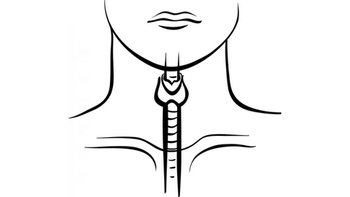
During a Targeted Oncology case-based roundtable event, Krzysztof J. Misiukiewicz, MD, discussed deciding to use NTRK inhibitor for the treatment of a 67-year-old woman with thyroid cancer.
Continuing to monitor trends will be important in regard to the American Thyroid Association developing other updates to its thyroid cancer treatment guidelines and trends.

In this companion article, David S. Hong, MD, considers the safety and efficacy of the first-generation TRK inhibitor larotrectinib and discusses how acquired resistance may affect research into second-generation agents.
Lori Wirth, MD, discusses her experience with NTRK-targeted therapies for patients with thyroid cancer.

Increased risks of several solid tumors found to be associated with radioactive iodine treatment for patients with childhood and young-adulthood differentiated thyroid cancer.

Yuliya Mikheeva, MD, PhD, discusses the design of the phase 2 ANAPLAST-NEO study
In the second interview of the series, Marcia Brose, MD, PhD, reviews currently available therapies for NTRK fusion-positive thyroid cancer and highlights clinical factors affecting treatment decision-making.
Selpercatinib is a promising treatment option for Chinese patients with RET-altered thyroid cancer, according to LIBRETTO-321 results.
In the second video of the series, Marcia Brose, MD, PhD, from the Sidney Kimmel Cancer Center – Jefferson Health shares key insights into factors affecting treatment decisions for patients with TRK fusion-positive cancers including the consideration of comorbidities and adverse event profiles.

Vivek Subbiah, MD, discusses what sets medullary thyroid cancer apart from other thyroid histologies.

Theodore W. Laetsch, MD, discusses various trials examining larotrectinib in patients with TRK fusion positive thyroid cancer.
Marcia S. Brose, MD, PhD, concludes by listing some future directions she’d like to see within the treatment landscape, as well unmet needs that she hopes will be considered.
An expert briefly discusses the second-line treatment options for patients with DTC that have progressed on first-line therapy.
A medical professional explains how the size of lung metastases affect the treatment of DTC and clinician decision-making.
Marcia S. Brose, MD, PhD, introduces our second patient case, a 57-year-old man with DTC.
Dr Brose elaborates on treating patients with DTC with lenvatinib, including starting dosage and toxicities/adverse events.
A medical professional discusses Study 211 data and HRQoL analyses for patients with DTC on lenvatinib.
An expert explains the impact of patient age when taking lenvatinib for treatment.
Dr Brose reviews frontline treatment options for radioiodine-refractory differentiated thyroid cancer (RR-DTC).
Marcia S. Brose, MD, PhD, introduces our first patient case, a 70-year-old woman with differentiated thyroid cancer (DTC).

Yuliya Mikheeva, MD, discusses the phase 2 ANAPLAST-NEO study for patients with anaplastic thyroid cancer.

Vivek Subbiah discusses the phase 1/2 LIBRETTO-001 study which sought to evaluate the safety, tolerability, pharmacokinetics, and preliminary anti-tumor activity of selpercatinib in patients with advanced solid tumors.
Advertisement
Advertisement
Trending on Targeted Oncology - Immunotherapy, Biomarkers, and Cancer Pathways
1
Anito-Cel Delivers Durable Responses With Low Neurotoxicity in RRMM
2
Risk, Histology, and Metastatic Site Guide First-Line RCC Treatment Choices
3
FDA Application Withdrawn for I-DXd in Small Cell Lung Cancer
4
Frontline CAR T and Bispecific Antibodies Are the Next Frontier in Myeloma
5