
Erika Hamilton, MD, shares key insights from the 2025 ASCO Annual Meeting that are set to impact breast cancer treatment.

Erika Hamilton, MD, shares key insights from the 2025 ASCO Annual Meeting that are set to impact breast cancer treatment.

Jeremy S. Abramson, MD, discusses pivotal advancements in DLBCL from the 2025 American Society of Clinical Oncology Annual Meeting.
Alicia Morgans, MD, MPH, discusses a potentially practice-changing abstract from the 2025 American Society of Clinical Oncology Annual Meeting: the AMPLITUDE trial.

A groundbreaking trial explores pembrolizumab's role in enhancing treatment outcomes for advanced head and neck cancer, promising significant advancements in patient care.

Interim results reveal promising efficacy and safety of sacituzumab govitecan and pembrolizumab for muscle-invasive bladder cancer, enabling bladder preservation.
UGN-102 shows promising results in treating recurrent low-grade, intermediate-risk bladder cancer, with high response rates and manageable side effects.

Vepdegestrant shows significant progression-free survival benefits over fulvestrant in advanced breast cancer, highlighting its potential as a targeted treatment option.
Interim results reveal padeliporfin VTP therapy as a promising, safe treatment for low-grade upper tract urothelial cancer, preserving kidney function.

Combination therapy with BPd shows significant progression-free survival benefits in relapsed/refractory multiple myeloma patients with high-risk cytogenetic abnormalities.
Nivolumab and relatlimab show promising intracranial activity in melanoma brain metastases, highlighting potential for further research in resistant cases.

Cervical cancer prevention advances with new immunotherapy findings, addressing disparities and improving outcomes for underserved women globally.

Massimo Cristofanilli, MD, discusses the role of cell-free DNA in breast cancer.
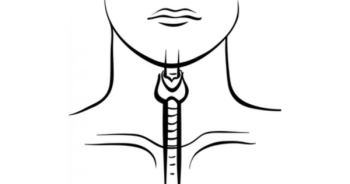
An updated analysis on larotrectinib showed compelling data in TRK fusion thyroid carcinoma.


Zipalertinib shows promising efficacy and safety for advanced NSCLC with EGFR exon 20 mutations, offering a much-needed oral treatment option.
A recent study reveals promising outcomes for lung cancer patients who undergo rechallenge with different RET inhibitors after initial treatment failure.
New findings reveal RP1 combined with nivolumab enhances response rates in advanced melanoma, especially with deep tumor injections, showing promising safety and efficacy.
Epcoritamab shows promising long-term remission and survival rates for relapsed/refractory large B-cell lymphoma, highlighting its potential in advanced treatment settings.
David A. Braun, MD, PhD, reveals how integrating tumor and circulating biomarkers enhances treatment response predictions in advanced renal cell carcinoma.
Ipatasertib combined with fulvestrant significantly extends progression-free survival in ER-positive, HER2-negative metastatic breast cancer patients post-CDK4/6 therapy.

A novel bispecific antibody, BNT327/PM8002, shows promising efficacy in treating unresectable mesothelioma, combining well with chemotherapy for durable responses.
A phase 2 trial shows promising results for pembrolizumab combined with cisplatin and radiation in treating unresectable vulvar cancer.
A novel combination therapy shows promise for advanced lung cancer patients resistant to standard treatments, offering hope for improved survival rates.

Abhishek Maiti, MD, discussed the EVICTION trial in AML and results presented during the 2025 American Society of Clinical Oncology (ASCO) Annual Meeting.
Encorafenib and binimetinib show promise in reducing recurrence risk for high-risk BRAF V600-mutant melanoma, demonstrating a manageable safety profile.
In an interview, Rana McKay, MD, discusses findings from the COMRADE trial evaluating olaparib plus radium-223 in prostate cancer presented at the 2025 ASCO Annual Meeting.