Long-term follow-up of the TRANSFORM study reveals liso-cel's impressive efficacy and safety in treating relapsed large B-cell lymphoma.

Long-term follow-up of the TRANSFORM study reveals liso-cel's impressive efficacy and safety in treating relapsed large B-cell lymphoma.

The SAVE regimen demonstrates promising efficacy in newly diagnosed AML, achieving high response rates but raises concerns about myelosuppression.
AZD0120 demonstrates impressive early efficacy and safety in treating relapsed/refractory multiple myeloma, with a 96% response rate and rapid manufacturing.
A promising trial reveals high response rates and survival outcomes for decitabine/cedazuridine and venetoclax in high-risk hematologic malignancies.
A phase 2 study reveals promising results for zanubrutinib combined with R-CHOP in treating untreated diffuse large B-cell lymphoma patients.
GLPG5101 shows promising efficacy and safety in treating relapsed/refractory non-Hodgkin lymphoma, achieving high response rates and rapid manufacturing.
Linvoseltamab shows promising efficacy and safety as a monotherapy for newly diagnosed multiple myeloma, offering a simpler treatment alternative.
Cevostamab shows promising efficacy and manageable safety in treating relapsed/refractory multiple myeloma, offering a convenient subcutaneous administration option.
New research highlights measurable residual disease (MRD) as a key predictor of survival in acute myeloid leukemia, potentially transforming treatment strategies.
A targeted therapy-first approach shows promise in reducing chemotherapy needs for newly diagnosed large B-cell lymphoma patients, maintaining high response rates.
Pirtobrutinib demonstrates an impressive 81.6% response rate in CLL/SLL patients previously treated with BTK inhibitors, showcasing its efficacy and safety.
Zanubrutinib shows sustained efficacy and safety in relapsed/refractory CLL, with a median progression-free survival of 52.5 months in long-term follow-up.
Pirtobrutinib shows superior overall response rates and promising progression-free survival compared to ibrutinib in treating chronic lymphocytic leukemia.
Epcoritamab combined with rituximab and lenalidomide shows remarkable efficacy in treating relapsed follicular lymphoma, setting a new standard of care.
Azacitidine plus venetoclax significantly enhances event-free survival and quality of life in acute myeloid leukemia patients compared with traditional chemotherapy.
Gintemetostat shows promising efficacy and safety in heavily pretreated multiple myeloma patients, paving the way for future combination therapies.
Epcoritamab combined with R-mini-CHOP shows promising efficacy and safety in elderly DLBCL patients, achieving high response rates and durable remissions.
Rusfertide shows sustained hematocrit control and high phlebotomy ineligibility in polycythemia vera patients, demonstrating safety and efficacy through 52 weeks.
New findings reveal the feasibility and safety of transitioning axatilimab dosing for chronic graft-vs-host disease, showing promising response rates.
New research reveals KRd therapy significantly enhances progression-free survival in newly diagnosed multiple myeloma compared to traditional VRd treatment.
Odronextamab shows promising efficacy in treating untreated DLBCL, achieving high response rates when combined with CHOP chemotherapy in early trials.
Cilta-cel therapy shows improved outcomes in earlier treatment lines for relapsed/refractory multiple myeloma, enhancing immune fitness and survival rates.
Lisaftoclax shows promising efficacy and safety in treating relapsed/refractory CLL/SLL, achieving a 62.5% response rate and 23.89 months progression-free survival.

Discover the most anticipated breast cancer research at SABCS 2025, featuring groundbreaking abstracts in HR+, HER2+, and TNBC. Vote now!
Discover the most anticipated abstracts in hematologic malignancies at the 2025 ASH Meeting, featuring groundbreaking studies and innovative therapies.
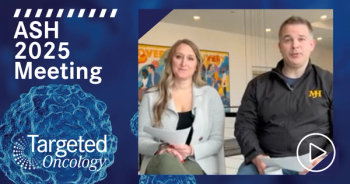
Co-hosts Kristie L. Kahl and Andrew Svonavec highlight what to look forward to at the 67th Annual ASH Meeting in Orlando.