
New findings from the monarchE trial reveal long-term benefits of abemaciclib in reducing recurrence risk for high-risk early breast cancer patients.

New findings from the monarchE trial reveal long-term benefits of abemaciclib in reducing recurrence risk for high-risk early breast cancer patients.

Discover the most anticipated abstracts on renal cell carcinoma and bladder cancer at the 2025 ESMO Congress in Berlin.
Discover the most anticipated abstracts on gastrointestinal cancers at the 2025 ESMO Congress, featuring groundbreaking studies and innovative treatments.

A new study reveals a groundbreaking treatment for newly diagnosed multiple myeloma, achieving 100% response rates and minimal residual disease negativity.
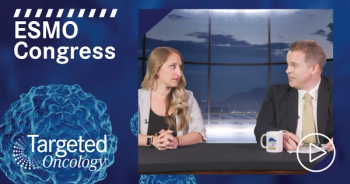
Co-hosts Kristie L. Kahl and Andrew Svonavec highlight what to look forward to at the 2025 ESMO Annual Congress, from hot topics and emerging trends to travel recommendations.

New trial data shows ivonescimab combined with chemotherapy significantly improves progression-free survival in EGFR-mutated non-small cell lung cancer patients.
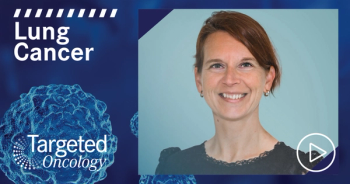
Dr. Gerrina Ruiter discusses zongertinib's promising efficacy in treating HER2-mutant NSCLC, highlighting its unique effectiveness against brain metastases.
Gerrina Ruiter, MD, PhD, highlights the Beamion LUNG-1 study's impact on treating HER2-mutant non-small cell lung cancer with brain metastases.
Vote on the latest breakthroughs in renal and bladder cancer at ESMO 2025, featuring pivotal late-breaking abstracts.
Discover the most anticipated late-breaking abstracts in gastrointestinal cancers at ESMO 2025 and influence the conversation in oncology research.
New findings reveal zongertinib's effectiveness against brain metastases in HER2-mutant non–small cell lung cancer, offering hope for better treatment options.
Experts explore innovative therapies for high-risk smoldering multiple myeloma, aiming to delay progression and enhance patient outcomes through early intervention.
Daratumumab-based regimens show significant clinical benefits for newly diagnosed, transplant-ineligible multiple myeloma patients, regardless of frailty changes.
Paula Rodriguez Otero, MD, PhD, discusses promising results of linvoseltamab in high-risk smoldering multiple myeloma, highlighting its potential to prevent disease progression.
Paula Rodriguez Otero, MD, PhD, discusses linvoseltamab's manageable safety profile in high-risk smoldering multiple myeloma, highlighting promising study results.
A phase 2 study evaluates linvoseltamab's safety and efficacy in high-risk smoldering myeloma, focusing on response rates and MRD negativity.
Experts explore the evolving treatment strategies for high-risk smoldering multiple myeloma, highlighting studies that show early intervention can improve patient outcomes.
Research explores innovative treatments for high-risk smoldering multiple myeloma, highlighting promising results from the bispecific antibody linvoseltamab.
New findings reveal tarlatamab combined with anti–PD-L1 agents significantly improves survival in extensive-stage small cell lung cancer, prompting further research.

A new subcutaneous formulation of amivantamab shows high efficacy and improved safety for advanced NSCLC patients, enhancing treatment convenience.

The COCOON study reveals a new dermatology management strategy that significantly reduces skin-related adverse effects in patients with lung cancer patients undergoing treatment with amivantamab and lazertinib.
ABBV-706 shows promising efficacy and manageable safety in relapsed/refractory small cell lung cancer, offering hope for heavily treated patients.
Firmonertinib shows significant antitumor activity in EGFR PACC-mutated NSCLC, with promising results in CNS penetration and manageable safety profiles.
Ifinatamab deruxtecan shows promising antitumor activity in extensive-stage small cell lung cancer, with high response rates and durable outcomes.
Osimertinib combined with chemotherapy significantly enhances overall survival in advanced EGFR-mutated non-small cell lung cancer, according to FLAURA2 trial results.

Anita Turk, MD, discusses abstracts from ASCO 2025 highlight the evolving role of ctDNA in the management of colorectal cancer.

Discover groundbreaking advancements in GI cancer treatments from ASCO 2025, highlighting innovative therapies and improved patient outcomes.
Arturo Loaiza-Bonilla, MD, MSEd, discusses 5-year data from the phase 3 CheckMate 577 trial, presented at the 2025 ASCO Annual Meeting.

The QUILT-88 study reveals promising survival rates for advanced pancreatic cancer patients using a multimodal treatment approach, combining chemotherapy and immunotherapy.