
CAR T-cell therapy showed efficacy in relapsed large B-cell lymphoma across age groups, including patients 70 and 80 years or older.

CAR T-cell therapy showed efficacy in relapsed large B-cell lymphoma across age groups, including patients 70 and 80 years or older.
Avelumab maintenance with axitinib interruption was feasible in metastatic renal cell carcinoma responders, according to updated phase 2 TIDE-A study results.
Proactive onco-coaching did not improve quality of life but was linked to better overall survival in patients with metastatic renal cell carcinoma.
Tivozanib at 1.34 mg showed greater antitumor activity than 0.89 mg, with similar hypertension rates, in kidney cancer.

Over 90% adherence to relugolix in patients with Medicare with prostate cancer for 24 months supports its use as androgen deprivation therapy, per real-world study data.
Avelumab plus best supportive care improved survival vs best supportive care alone in advanced urothelial carcinoma, regardless of diabetes status.
Third-line enfortumab vedotin improved outcomes in metastatic urothelial carcinoma, per real-world data from the EV-301 trial.
OPTYX study shows many patients with advanced prostate cancer preferred oral relugolix over injectables for androgen deprivation therapy.
Lenvatinib plus pembrolizumab showed activity and a favorable safety profile in nonmetastatic clear cell renal cell carcinoma, per phase 2 study results.
Cemiplimab plus chemotherapy showed efficacy and consistent safety in advanced penile cancer in the phase 2 EPIC trial.
Idecabtagene vicleucel induced high complete response and minimal residual disease negativity rates in multiple myeloma after suboptimal first-line therapy.
Tivozanib plus nivolumab had similar patient-reported outcomes to tivozanib alone in advanced kidney cancer after prior treatment, according to the TiNivo-2 study.
Belzutifan plus cabozantinib maintained durable antitumor activity in advanced clear cell renal cell carcinoma, per phase 3 LITESPARK-003 data.
Cabozantinib plus nivolumab and ipilimumab maintained a progression-free survival benefit at 45 months vs placebo in advanced kidney cancer.
Orca-T improved overall survival vs post-transplant cyclophosphamide in a retrospective analysis.
Nivolumab plus cabozantinib improved long-term efficacy and safety vs sunitinib in advanced renal cell carcinoma, per final CheckMate 9ER trial results.
Lenvatinib plus belzutifan showed durable activity and a consistent safety profile in advanced clear cell renal cell carcinoma after prior treatment.
Ciltacabtagene autoleucel improved minimal residual disease negativity and sustained responses vs standard care in lenalidomide-refractory multiple myeloma.
Obecabtagene autoleucel improved survival and response durability in B-cell acute lymphoblastic leukemia patients with minimal residual disease–negative remission.
Orca-T with reduced-intensity stem cell transplantation was a safe, feasible alternative to conventional transplant in blood cancers, per phase 1 data.
Enfortumab vedotin plus pembrolizumab doubled progression-free survival vs chemotherapy in urothelial cancer.
Datopotamab deruxtecan showed promising activity in advanced urothelial cancer in a phase 1 study.
UGN-102 led to durable responses in low-grade, intermediate-risk bladder cancer, per phase 3 study findings at the 2025 Genitourinary Cancers Symposium.
A review of 50 studies confirmed the safety and efficacy of radium-223 for metastatic castration-resistant prostate cancer treatment.
A phase 2 study evaluated the use of ruxolitinib plus standard GVHD prophylaxis in patients with myelofibrosis undergoing transplant.
Axatilimab demonstrated consistent response and durability in chronic graft-versus-host disease, regardless of prior treatments, in a phase 1 AGAVE-201 trial analysis.
Prostate-specific antigen responses were similar between transdermal estradiol and hormone therapy combined with androgen receptor inhibitors in prostate cancer.
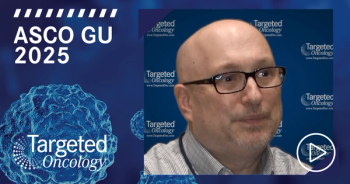
Thomas Hutson, DO, PharmD, discusses key takeaways from the phase 3 CLEAR trial evaluating lenvatinib plus pembrolizumab in patients with advanced renal cell carcinoma.
In a retrospective cohort of patients with severe chronic GVHD, combination axatilimab with other GVHD therapies led to clinical benefit.
Defibrotide prophylaxis after HSCT did not reduce sinusoidal obstructive syndrome incidence in high-risk pediatric patients, per retrospective study at 2025 Tandem Meeting.