Circulating tumor DNA has improved risk stratification, increased minimal residual disease in patients with early-stage gastrointestinal cancers.

Circulating tumor DNA has improved risk stratification, increased minimal residual disease in patients with early-stage gastrointestinal cancers.
According to Benjamin P. Levy, MD, clinicians can use the information currently available to best decide the treatment sequence of immunotherapy vs targeted agents in locally advanced non–small cell lung cancer.
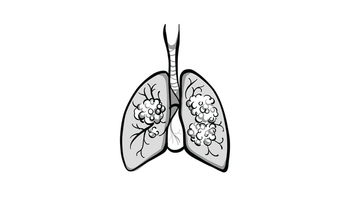
In non–small cell lung cancer, EGFR mutations, MET exon 14 skipping mutations, and HER2 mutations are common mutation for which directed therapies are available.

The generation in development offers reasons for excitement about improved outcomes for patients with breast cancer.
New clinical trial data have shown that patients with IHC 1+ or IHC 2+/ISH– disease, but no ERBB2 amplification, could still benefit from HER2 targeted therapies.
Radionuclides, such as radium-223 dichloride and lutetium Lu 177 vipivotide tetraxetan, now have an added overall survival benefit in metastatic castrate-resistant prostate cancer.
Findings from phase 3 adjuvant immuno-oncology trials in renal cell carcinoma have demonstrated some benefit in disease-free survival, but questions about overall survival remain.

The combination of polatuzumab vedotin plus rituximab, cyclophosphamide, doxorubicin, and prednisone is moving into the frontline setting for patients with diffuse large B-cell lymphoma.

One of the most promising innovations in the multiple myeloma space has been the development of bispecific antibodies.