Melhem Solh, MD, discusses his research on post-transplant outcomes of patients with TP53-mutant acute myeloid leukemia and myelodysplastic syndrome.

Melhem Solh, MD, discusses his research on post-transplant outcomes of patients with TP53-mutant acute myeloid leukemia and myelodysplastic syndrome.
Closing out her discussion on the management of recurrent metastatic endometrial cancer, Bhavana Pothuri, MD, highlights ongoing clinical trials and novel treatment modalities.
Bhavana Pothuri, MD provides a perspective on the management of immune-related adverse events that can be seen in patients treated for recurrent metastatic endometrial cancer, as well as a focused discussion on the conversations she has with her patients.
Focusing on patients with recurrent metastatic endometrial cancer, an expert oncologist identifies factors that help inform the selection of second-line targeted therapy.
Centering discussion on safety and efficacy data from the GARNET trial, Bhavana Pothuri, MD, reflects on the role of dostarlimab therapy in patients with recurrent metastatic endometrial cancer.
Comprehensive insight to the systemic treatment armamentarium available to patients with metastatic EC.
Expert perspective on the presentation of endometrial cancer, followed by advice on providing optimal workup and diagnosis.
Expert oncologist Bhavana Pothuri, MD, reviews the diagnosis and treatment of a 64-year-old woman who presents and recurs with mismatch repair-deficient (dMMR) endometrial cancer (EC).

Chenyu Lin, MD, discusses the significance of a 10-year follow up of a study of patients who underwent allogeneic stem cell transplant with the novel cell therapy omidubicel.
Shared insight on optimal dosing strategies with first-line tyrosine kinase inhibitor and immunotherapy combinations for patients with advanced clear cell renal cell carcinoma.
Sumanta Pal, MD, an expert hematologist/oncologist, evaluates the combination of cabozantinib + nivolumab as first-line therapy for advanced clear cell renal cell carcinoma.
Jonathan E. Rosenberg, MD, discusses what the frontline treatment landscape for metastatic urothelial cancer currently looks like.
Alexander Drilon, MD, discusses what community oncologists should know about testing for NTRK gene fusions in patients with solid tumors.
Genevieve Boland, MD, PhD, discusses the latest updates to the melanoma treatment landscape.
An oncologist explains his dosing strategies for lenvatinib in advanced clear cell RCC, with reference to the design of the KEYNOTE-426 trial.
Dr Moshe Ornstein shares his take on the survival, efficacy, and toxicity data of the CLEAR trial in advanced clear cell RCC.

William J. Gradishar, MD, discusses the questions ongoing studies are looking to answer in the breast cancer space.
Christopher J. Melani, MD, discusses the combination investigated in the ViPOR study of patients with relapsed/refractory or untreated mantle cell lymphoma.

Andreana Holowatyj, PhD, MSCI, discusses the rationale for her research on the growing increase of early-onset appendiceal cancer in the United States.
Srdan Verstovsek, MD, PhD, discusses some of the best practices to try and prevent thrombosis in patients with polycythemia vera.

Helen H. Moon, MD, discusses the results of the TIVO-3 trial of tivozanib for patients with recurrent clear cell renal cell carcinoma.

Nathan A. Pennell, MD, PhD, discusses the importance of developing new RET inhibitors for patients with non–small cell lung cancer.
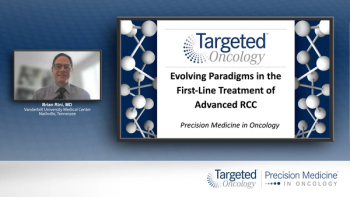
Centering discussion around the combination of lenvatinib + pembrolizumab in advanced clear cell RCC, Hans Hammers, MD, considers the role of this combination regimen in the first-line treatment setting.
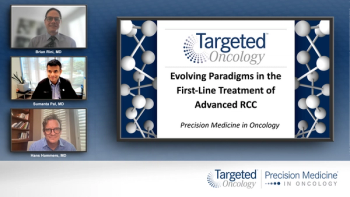
Expert hematologist/oncologist Brian Rini, MD, spearheads a comprehensive discussion on the broad treatment landscape for advanced clear cell renal cell carcinoma.
Adam Cohen, MD, discusses the current FDA-approved BCMA-directed therapies in the multiple myeloma space and the clinical data supporting each agent.

Krzysztof J. Misiukiewicz, MD, discusses when targeted therapy may be used for patients with NTRK-positive thyroid cancer.

Rachel Wuerstein, MD, discusses the KAMILLA trial of trastuzumab emtansine in metastatic breast cancer for both a global and Asian cohort.
David S. Hong, MD, discusses what he sees for the future of the NTRK inhibitor larotrectinib.

Adam Weiner, MD, discusses the results of his research on molecular subtyping in prostate cancer.

Wojciech Jurczak, MD, PhD, discusses the available treatment options for patients with relapsed/refractory chronic lymphocytic leukemia who relapsed on BCL2 inhibitors.