
Opinion|Videos|August 6, 2025
Breaking Barriers: Next Steps in CAR T and Unmet Needs in R/R LBCL
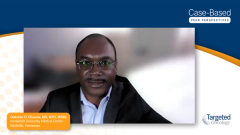
Author(s)Olalekan O. Oluwole, MD, MPH, MBBS
An expert highlights how optimizing CAR T-cell therapy requires simplifying the treatment process, reducing insurance delays, addressing that 40% to 50% of patients may need further therapy, managing long-term immune and safety concerns, investigating risks like second malignancies, and enhancing collaboration between treatment centers and local providers to improve patient experience and outcomes.
Advertisement
There are several key areas where improvements are needed to optimize chimeric antigen receptor (CAR) T-cell therapy for patients. Firstly the current treatment process is often complicated and burdensome, requiring patients to relocate to another city for an extended period. While recent efforts have begun to streamline these requirements, more progress is necessary to make the process more patient-friendly. Another challenge involves delays caused by insurance approvals and other administrative hurdles, which can postpone timely treatment. Addressing these delays would significantly improve the patient experience and outcomes.
Importantly, CAR T therapy is not curative for everyone; roughly 40% to 50% of patients may need additional treatments later. This highlights the ongoing need to develop new therapies that can either cure those who don’t respond to CAR T or serve as effective consolidations to boost response rates closer to 100%. Safety concerns also remain, particularly long-term immune system complications. Questions about optimal timing and frequency of vaccinations, management of low immunoglobulin levels, and monitoring for persistent cytopenias are still unresolved. These issues matter because some patients who achieve remission after CAR T may still succumb to infections. Improved long-term follow-up clinics and stronger partnerships between treatment centers and local oncologists could help monitor and support patients more effectively.
Another emerging concern is the development of second malignancies, especially myeloid neoplasms, after CAR T therapy. It remains unclear whether these arise because patients live longer after lymphoma treatment or due to the biological effects of CAR T on bone marrow. Understanding and addressing this risk will require further research. On the regulatory front, recent updates easing some patient travel restrictions and monitoring requirements show that agencies are listening and responsive to patient needs. These changes allow more flexibility for centers to tailor care, potentially enabling patients to return home sooner while maintaining safety and quality. Strengthening collaborations between treatment centers and local providers will be key to supporting this shift.
Advertisement
Related to this article

Giredestrant plus everolimus reduced the risk of progression or death by 44% in the ITT population and 62% in ESR1-mutated disease in phase 3 evERA data published in NEJM.

The oral azacitidine/cedazuridine combination was compared with subcutaneous azacitidine in the phase 3 portion of the AZTOUND trial.

Adding zabilugene almadenorepvec to standard gemcitabine/nab-paclitaxel extends survival and response in newly diagnosed metastatic pancreatic cancer, with manageable safety signals.

Late 2026 FDA oncology rulings may reshape care—from CSF-1R and ALK drugs to oral SERDs and BCMA CAR T breakthroughs.
Resubmitted FDA filing advances off-the-shelf EBV-specific T-cell therapy tab-cel for relapsed EBV+ PTLD after transplant, with longer follow-up.
Resection with cesium-131 tile-based radiation therapy prolonged time to surgical bed recurrence vs resection with stereotactic radiation in the phase 3 ROADS trial.
Degevma was approved for skeletal-related events in adults with bone metastases, giant cell tumor of bone, and the treatment of hypercalcemia of malignancy.
FDA fast-tracks plinabulin plus docetaxel for post-immunotherapy non-squamous NSCLC, as DUBLIN-4 phase 3 targets survival gains.
Advertisement
Advertisement
Trending on Targeted Oncology - Immunotherapy, Biomarkers, and Cancer Pathways
1
Denosumab Biosimilar Approved For Existing Oncology Indications
2
Plinabulin Receives FDA Fast Track Designation in Post-ICI NSCLC
3
FDA Oncology Recap: Approvals, Designations, and Decisions in September 2026
4
Giredestrant Plus Everolimus Improves PFS in ER+ Advanced Breast Cancer
5