
Opinion|Videos|July 30, 2025
CAR T in Practice: Translating ZUMA-7 Trial Data for Axi-Cel in Second-Line Treatment Decisions
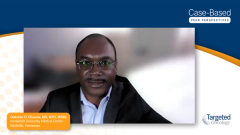
Author(s)Olalekan O. Oluwole, MD, MPH, MBBS
An expert discusses how the ZUMA-7 trial marked a pivotal shift in the treatment of primary refractory diffuse large B-cell lymphoma by demonstrating that second-line CAR T-cell therapy not only improves overall survival compared with standard care but also leads to faster functional recovery, reinforcing the importance of early referral and positioning CAR T as a preferred curative-intent option rather than a last resort.
Advertisement
One of the most impactful developments in the treatment of primary refractory diffuse large B-cell lymphoma has been the results of the ZUMA-7 trial. This landmark study remains the only randomized chimeric antigen receptor (CAR) T-cell therapy trial to show an overall survival benefit compared to standard of care. While other CAR T products are also effective, the strength of this trial lies in its robust design and clear demonstration that these therapies do more than provide a novel option—they can actually save lives and may offer a curative potential for some patients. The ZUMA-7 data are mature, with nearly 4 years of follow-up supporting the long-term benefit of second-line CAR T therapy.
An important insight from this trial was the observation that patients who initially received standard chemotherapy with the intention of proceeding to transplant but later relapsed and went on to receive CAR T in the third line had worse outcomes than those who received it earlier. This highlights the importance of early intervention; delaying CAR T until later lines of therapy can significantly reduce its effectiveness. The study reinforces the idea that if a patient is eligible, it is best to pursue CAR T as the second-line option, rather than exhausting traditional chemotherapy first.
Another key takeaway from the trial was the difference in recovery trajectory between patients receiving CAR T and those undergoing high-dose chemotherapy and autologous transplant. Patients in the CAR T arm were able to return to their baseline quality of life more quickly. The treatment process was shorter and less physically taxing, allowing for faster functional recovery. These real-world outcomes—improved survival, reduced disease burden, and quicker return to normal life—make a strong case for considering CAR T therapy not just as a salvage option, but as a preferred second-line treatment for eligible patients.
Advertisement
Related to this article

David DiBardino, MD, explains how intratumoral radioenhancer therapy works, why standardization remains a challenge, and what early CONVERGE study data suggest for locally advanced NSCLC.

Oncologists weigh second-line options after IO/TKI failure in metastatic ccRCC, highlighting tolerability, mechanism shifts, and belzutifan’s broader role.
In the phase 3 EMBER-3 trial, imlunestrant plus abemaciclib doubled median progression-free survival vs imlunestrant alone in ESR1-mutated advanced breast cancer.

CELESTIMO trial shows mosunetuzumab plus lenalidomide boosts PFS in relapsed follicular lymphoma, supporting earlier-line outpatient, chemo-free care.

The FDA's Expedited Investigational New Drug (IND) Pilot Program pairs trial sponsors and research institutions to promote phase 1 trials in the US.

During a live event, Sikander Ailawadhi, MD, and participants considered a case patient with relapsed multiple myeloma after a quadruplet induction who declined CAR T-cell therapy.
FDA clears Triton 1 robotic colonoscopy for screening and advanced therapy, backed by first-in-human data showing high detection rates and reduced clinician workload.

Results from the phase 3 MAVERICK trial (SWOG S1827) show MRI surveillance alone improved cognitive failure-free survival vs adding PCI in SCLC.
Advertisement
Advertisement
Trending on Targeted Oncology - Immunotherapy, Biomarkers, and Cancer Pathways
1
FDA Approves Imlunestrant Plus Abemaciclib in ESR1-Mutated Breast Cancer
2
Daraxonrasib Combo Receives FDA Breakthrough Status in First-Line PDAC
3
Mosunetuzumab Combo Improves PFS in R/R Follicular Lymphoma
4
FDA Clears Robotic System for Endoscopic Procedures in the Colon
5