
Opinion|Videos|November 4, 2024
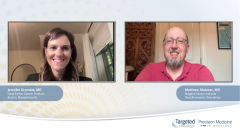
Community Oncologist Perspective: Initiation, Hospitalization, and Monitoring of Bispecifics
Dr Graff discusses her standard approach when initiating bispecific antibody treatment for patients, including whether to refer to an academic center or provide treatment in the community setting and how to manage hospitalization if required.
Advertisement
Video content above is prompted by the following:
- What is your standard approach when bispecific antibody treatment is initiated for a patient?
- For initial treatment, do you refer to an academic center or treat in the community setting?
How do you handle the hospitalization, if required, especially in the community setting?
Advertisement
Related to this article

Arvind Dasari, MD, MS, reviews key advances in neuroendocrine tumors, including new PRRT options, alpha emitters, cabozantinib, and clinical trials.

Arvind N. Dasari, MD, MS, reviews a year in neuroendocrine tumors marked by expanding radioligand options, improved classification, and disappointing combination therapies.
Older age, kidney disease, and prior irradiation were linked to elevated myeloid neoplasm risk after lutetium Lu 177 dotatate in a real-world NET analysis.
Aman Chauhan, MD, discusses combining intratumoral Seneca Valley virus (SVV-001) with ipilimumab and nivolumab in neuroendocrine cancer.
Claire K. Mulvey, MD, explains how patient-reported outcomes and QOL assessments reveal NEN symptom burden and help guide treatment.
Nikolaos Trikalinos, MD, reviews CABINET data showing cabozantinib improved PFS in functional and nonfunctional NETs without added grade 3 toxicity.
Liver transplant led to durable survival in unresectable NET liver metastases; tumor burden predicted outcomes, and recurrence was common but treatable.
Mark A. Lewis, MD, explains how oral cabozantinib reduces time toxicity for patients with previously treated, well-differentiated neuroendocrine tumors.
Advertisement
Advertisement
Trending on Targeted Onc
1
NETs Year in Review: RLT Advances as Combo Strategies and ICIs Show Limited Benefit
2
Dr Chauhan on Oncolytic Virus SVV-001 Plus Ipi/Nivo in Neuroendocrine Cancers
3
Dr Dasari on Emerging PRRT Options and New Therapeutic Targets in NETs
4
Real-World Data Reveal Risk Factors for Myeloid Neoplasm After Lutetium Lu 177 Dotatate
5