
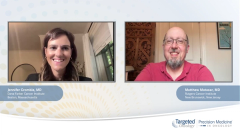
Opinion|Videos|November 4, 2024
Community Oncologist Perspective: Future of Bispecific Therapies for NHL
Dr Graff discusses perceptions of the future for patients treated with bispecific antibodies for non-Hodgkin lymphoma, highlighting key unmet needs and sharing clinical pearls for community oncologists.
Advertisement
Video content above is prompted by the following:
- What do you perceive the future to look like for patients being treated with bispecific antibodies for non-Hodgkin lymphoma?
- What remain the key unmet needs?
- Do you have any clinical pearls for the community oncologist?
Newsletter
Stay up to date on practice-changing data in community practice.
SubscribeAdvertisement
Related to this article
The FDA granted FTD to opantistomig, a PD-L1/4-1BB bispecific antibody, for first-line treatment of biliary tract cancer.

Texas Oncology’s virtual care navigation pilot supported 740 patients on oral oncolytics across 11 community sites, offering a scalable model for at-home care.
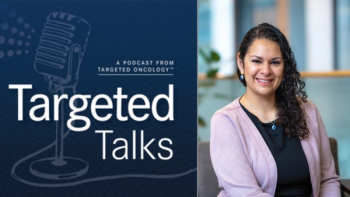
For Hispanic Heritage Month, Narjust Florez, MD, discusses lung cancer risk, biomarker testing, and trial access in Hispanic and Latinx patients.

During a live event, Seth M. Pollack, MD, and participants discussed 2 investigational agents for recurrent diffuse tenosynovial giant cell tumor.
A phase 2 trial is planned for an allogeneic CAR T-cell product in patients with lung or breast cancer with brain metastases.

RYZ101, a targeted alpha radiopharmaceutical, boosts progression-free survival in SSTR+ GEP-NETs after progression, offering a promising post-¹⁷⁷Lu option.

Natera’s blood test analyzes cell-free DNA to screen for several cancer types from a single sample.

A Japanese study found favorable sensitivity and specificity for recurrence of melanoma based on presence of melanoma-specific markers in circulating tumor DNA.
Advertisement
Advertisement
Trending on Targeted Oncology - Immunotherapy, Biomarkers, and Cancer Pathways
1
FDA Grants Breakthrough Status to Multi-Cancer Early Detection Blood Test
2
FDA Clears Phase 2 Trial of B7-H3 CAR T MT027 for Brain Metastases
3
As New TGCT Therapies Advance, Route, Duration, and Coverage Shape CSF1R Inhibitor Choice
4
Alpha-Emitting RYZ101 Meets Phase 3 PFS End Point in Advanced GEP-NETs
5