
Opinion|Videos|November 4, 2024
Perceptions on the Future of Bispecific Therapies for NHL
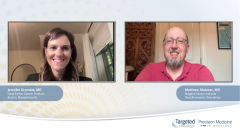
Panelists discuss their perceptions of the future for patients treated with bispecific antibodies for non-Hodgkin lymphoma, highlighting key unmet needs and sharing clinical pearls for community oncologists.
Advertisement
Video content above is prompted by the following:
- What do you perceive the future to look like for patients being treated with bispecific antibodies for non-Hodgkin lymphoma?
- What remain the key unmet needs?
Do you have any clinical pearls for the community oncologist?
Newsletter
Stay up to date on practice-changing data in community practice.
SubscribeAdvertisement
Related to this article

A Japanese study found favorable sensitivity and specificity for recurrence of melanoma based on presence of melanoma-specific markers in circulating tumor DNA.

Theodore Wagener, PhD, of Ohio State discusses the design of the phase 2 DREAM LUNG study of psilocybin-assisted therapy for depression in non–small cell lung cancer.

"AI will not replace oncologists; it will help interpret complex data and design more precise, adaptive, personalized cancer treatment," the authors write.

The phase 2 NRG-BR002 failed to improve outcomes with targeted radiotherapy to oligometastases; the phase 3 portion will not proceed.
ER status and HER2DX score predict complete response to neoadjuvant THP in HER2-positive breast cancer, guiding smarter, less intensive chemo selection.

VIR-5500 and [²¹²Pb]PSV359 received FDA fast track designations for prostate cancer and solitary fibrous tumors, respectively.
The approval of the adjuvant atezolizumab combination in dMMR colon cancer is supported by the phase 3 ATOMIC trial.

During a roundtable event, Amit R. Mehta, MD, and participants discussed treatment selection for a patient with immune thrombocytopenia whose quality of life is impaired even as her platelet count recovers.
Advertisement
Advertisement