
Opinion|Videos|May 28, 2026
Safety Profiles and Proactive Therapy Management of First-Line Regimens in EGFR-Mutant NSCLC
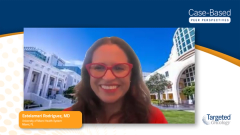
Author(s)Estelamari Rodriguez, MD, MPH
Dr. Rodriguez addresses the wife’s concern about managing side effects at home. She frames the main toxicities of amivantamab in two categories. The first is infusion-related reactions (IRRs), which are reduced with the subcutaneous formulation. The second is the combination of cutaneous toxicity (rash, paronychia) and venous thromboembolism (VTE), which requires structured prophylaxis and a proactive plan for at-home management.
Advertisement
Episodes in this series
Dr. Rodriguez addresses the wife’s concern about managing side effects at home. She frames the main toxicities of amivantamab in two categories. The first is infusion-related reactions (IRRs), which are reduced with the subcutaneous formulation. The second is the combination of cutaneous toxicity (rash, paronychia) and venous thromboembolism (VTE), which requires structured prophylaxis and a proactive plan for at-home management. Weekly clinic visits during cycle 1 support that monitoring even with the SC formulation.
For VTE prophylaxis, Dr. Rodriguez initiates anticoagulation at treatment start and continues it for approximately 3 to 4 months, noting that anticoagulation is safe in patients with brain metastases provided disease is controlled and there is no intracranial hemorrhage. The PALOMA-3 mandatory-prophylaxis approach reduced VTE rates to approximately 7%, in line with the baseline lung-cancer population. For cutaneous toxicity, she counsels patients to have antibiotics on hand from day 1, use sun protection, apply topical antibiotics, and use a chlorhexidine solution on the nails and toes to prevent paronychia. The COCOON regimen reduced grade ≥2 dermatologic adverse events from 75% to 42%; it includes minocycline 100 mg twice daily (or doxycycline) for the first 12 weeks, clindamycin 1% lotion to the scalp through week 52, daily chlorhexidine to the nails, and a daily ceramide-based moisturizer.
She compares grade ≥3 adverse event rates: approximately 52% with osimertinib monotherapy and up to 80% with amivantamab plus lazertinib in the original IV-era MARIPOSA cohort (where not all patients received prophylaxis); the ongoing COCOON study is evaluating prophylaxis-on-protocol with the SC formulation. For FLAURA2, grade ≥3 events were approximately 70% versus 34% with monotherapy, driven by hematologic toxicity (cytopenias, anemia) and gastrointestinal effects. Importantly, amivantamab-related adverse events cluster in the first 4 months and decline thereafter, and patients who require dose reductions still derive benefit; 38% of MARIPOSA patients remained on amivantamab plus lazertinib at the clinical cutoff versus 28% on osimertinib.
In the next episode, “Subcutaneous Amivantamab and Q4W Dosing for First-Line EGFR-Mutant NSCLC,” Dr. Rodriguez translates administration logistics into what they mean for Mr. Smith and his care partner.
Advertisement
Related to this article

J. Thaddeus Beck, MD, discusses how the shift from intravenous to subcutaneous formulations is changing oncology practice, from clinic logistics to patient preferences.

Experts debate second-line tivozanib for advanced renal cell carcinoma, weighing PFS gains, tolerability, and whether continuing immunotherapy adds real benefit.
The designation expands the investigational immunotherapy’s development across tumor types for patients whose disease progresses after prior treatment, including immune checkpoint inhibition.

Phase 2b data show iopofosine I-131 drives deep, durable responses in relapsed Waldenström macroglobulinemia after BTK inhibitors, with manageable cytopenias.

The RELIGHT study found that adding retlirafusp alfa to chemotherapy extended overall and progression-free survival in previously untreated gastric and GEJ cancers.

Gary Simmons, DO, MSHA, discusses outpatient CAR T-cell therapy in the community, the operational and payer bottlenecks his practice has faced, and advice for colleagues.

During a virtual event, Neil M. Iyengar, MD, and participants discussed how approvals for trastuzumab deruxtecan before and after surgery complicate sequencing for patients with HER2-positive early breast cancer.
The oral KRAS G12D inhibitor VS-7375 elicited clinical responses across patients with KRAS G12D–mutant pancreatic, lung, and colorectal cancer.
Advertisement
Advertisement