
Opinion|Videos|December 12, 2025 (Updated: May 1, 2026)
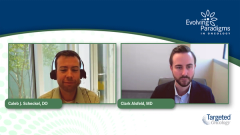
Utilizing ESAs in Clinical Practice
Author(s)Caleb J. Scheckel, DO , Clark Alsfeld, MD
Red blood cell transfusions enhance quality of life for MDS patients but require careful management due to potential risks and long-term effects.
Advertisement
Episodes in this series
Erythropoiesis-stimulating agents (ESAs) remain a first-line treatment for anemia in patients with low-risk MDS, especially those with lower endogenous erythropoietin levels and modest transfusion requirements. In practice, a meaningful proportion of patients ultimately prove unresponsive or lose response over time. Clinically, lack of response is assessed through persistent anemia, continued transfusion needs, and limited improvement in hemoglobin levels despite adequate dosing. While some clinicians may trial a different ESA formulation, switching rarely produces substantial benefit once primary resistance is evident. Identifying non-responders early allows for timely transition to alternative therapies and more personalized anemia management strategies.
Advertisement
Related to this article

Adding zabilugene almadenorepvec to standard gemcitabine/nab-paclitaxel extends survival and response in newly diagnosed metastatic pancreatic cancer, with manageable safety signals.

Late 2026 FDA oncology rulings may reshape care—from CSF-1R and ALK drugs to oral SERDs and BCMA CAR T breakthroughs.
Resubmitted FDA filing advances off-the-shelf EBV-specific T-cell therapy tab-cel for relapsed EBV+ PTLD after transplant, with longer follow-up.

Resection with cesium-131 tile-based radiation therapy prolonged time to surgical bed recurrence vs resection with stereotactic radiation in the phase 3 ROADS trial.

Degevma was approved for skeletal-related events in adults with bone metastases, giant cell tumor of bone, and the treatment of hypercalcemia of malignancy.
FDA fast-tracks plinabulin plus docetaxel for post-immunotherapy non-squamous NSCLC, as DUBLIN-4 phase 3 targets survival gains.

September brought accelerated approvals in ESR1-mutant breast cancer and HER2-mutant non–small cell lung cancer, a Galleri panel vote, and a withdrawn I-DXd application.
The application is supported by the phase 3 SAFFRON trial, in which savolitinib plus osimertinib improved progression-free and overall survival vs chemotherapy.
Advertisement
Advertisement
Trending on Targeted Oncology - Immunotherapy, Biomarkers, and Cancer Pathways
1
Plinabulin Receives FDA Fast Track Designation in Post-ICI NSCLC
2
FDA Oncology Recap: Approvals, Designations, and Decisions in September 2026
3
Denosumab Biosimilar Approved For Existing Oncology Indications
4
CEPHEUS and Frontline Treatment in Newly Diagnosed Multiple Myeloma
5