





Bladder Cancer
Latest News

Advertisement
Latest Videos
















































Advertisement
More News







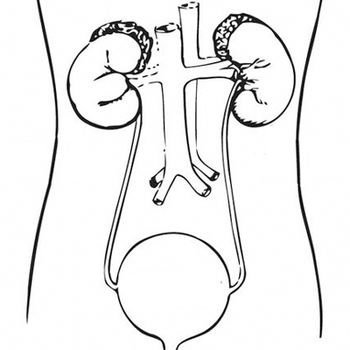
Neoadjuvant chemotherapy with a dose-dense, or accelerated, course of methotrexate, vinblastine, doxorubicin, and cisplatin was more likely to produce a complete pathologic response and extend overall survival than any other chemotherapy regimen in patients with bladder cancer treated with cystectomy, according to a study published in <em>JAMA Oncology</em>.
This week the FDA granted a fast track designation to the novel targeted therapy vofatamab for the treatment of patients with advanced or metastatic urothelial carcinoma who harbor an <em>FGFR3 </em>alteration, according to Rainier Therapeutics, the company developing vofatamab.
Joaquim Bellmunt, MD, PhD, discusses recent immunotherapy advancements in bladder cancer and what future research will look like.
UroGen has announced topline findings from the ongoing phase III OLYMPUS trial, in which the investigational mitomycin formulation UGN-101 (mitomycin gel) demonstrated a 57% complete response rate in patients with low-grade upper-tract urothelial cancer.
A randomized phase II trial found that both fluorouracil plus cisplatin and twice-daily radiation and gemcitabine plus once-daily radiation achieved freedom from distant metastasis at 3 years in at least 75% of patients with muscle-invasive bladder cancer.
Thomas Powles, MBBS, MRCP, MD, discusses recent changes to the frontline landscape of bladder cancer and where research should focus moving forward.
Since 2016, the FDA has approved 5 immune checkpoint inhibitors to treat urologic cancers. Although that is unquestionably a good thing for patients, the rise of these agents means that the role of the urologist in cancer care is changing, said Noah M. Hahn, MD, during the 2018 Large Urology Group Practice Association Annual Meeting.

In this editorial note from Arjun V. Balar, MD, he discusses how the KEYNOTE-57 findings have impacted the treatment landscape for Bacillus Calmette-Guérin—refractory, high-risk nonmuscle invasive bladder cancer.

Patients with metastatic renal and urothelial bladder cancer who receive antibiotics concomitantly with immune checkpoint inhibitors have shorter progression-free survival and overall survival rates than patients who do not, according to a poster presented at the European Congress on Immunotherapies in Cancer™ conference, hosted by Physicians’ Education Resource®, LLC, September 21 and 22, 2018, in Barcelona, Spain.
CheckMate-032 investigator Jonathan E. Rosenberg, MD, discusses extended follow-up findings from the trial, as well as the future of immunotherapy in urothelial carcinoma.
Petros Grivas, MD, PhD, discusses recent immunotherapy advancements in bladder cancer and ongoing research in the field.
Ronald de Wit, MD, PhD, discusses the clinical implications of pembrolizumab in patients with nonmuscle–invasive bladder cancer.
Padmanee Sharma, MD, PhD, discusses the development of checkpoint inhibitors in several cancers, including urothelial carcinoma, RCC, and prostate cancer. She also addresses the challenges in resistance to these agents and where some clinical trials are moving forward in the field.
According to results from an interim analysis of an ongoing single-arm open-label phase II study, pembrolizumab demonstrated promising antitumor activity in patients with high-risk nonmuscle invasive bladder cancer that are unresponsive to Bacillus Calmette-Guérin and refused or were ineligible for cystectomy.
I think one of the most important advancements in biomedical technology that has improved our understanding of the complexities of cancer is the ability to sequence the cancer genome for any individual patient, in a rapid and cost-effective manner, to help us make treatment decisions in the clinic.
Advertisement
Advertisement
Trending on Targeted Oncology - Immunotherapy, Biomarkers, and Cancer Pathways
1
Plinabulin Receives FDA Fast Track Designation in Post-ICI NSCLC
2
Denosumab Biosimilar Approved For Existing Oncology Indications
3
FDA Oncology Recap: Approvals, Designations, and Decisions in September 2026
4
Tile-Based Radiation Improves Local Control in Resected Brain Metastases
5