




BREAST CANCER
Latest News
Advertisement
Latest Videos
































Advertisement
More News
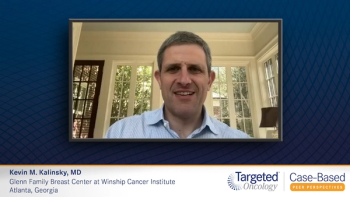
Comprehensive insight to the treatment armamentarium for patients with HR+/HER2-low metastatic breast cancer and factors that help inform optimal sequencing.
Expert oncologist Kevin Kalinsky, MD, reviews the diagnosis and management of a 65-year old woman with HR+/HER2-low metastatic breast cancer.

Ruta D. Rao, MD, discussed the trial design and final efficacy results of the ASCENT trial of sacituzumab govitecan in patients with metastatic triple-negative breast cancer.

A phase 2, open-label clinical trial is evaluating treatment with QBS72S in patients with histologically-confirmed breast cancer that has developed brain metastases after a prior cytotoxic chemotherapy regimen.

Sara Hurvitz, MD, discusses updates of the EMERALD trial investigating elacstrant vs the standard of care, including the subgroups of patients who received prior CDK4/6 inhibition for 6, 12, or 18 months.

While results of the PALOMA-2 study did not show a survival benefit for the overall population on the combination of palbociclib and letrozole but did show an overall survival benefit in Black patients on the combination therapy.

Lajos Pusztai, MD, DPhil, discusses the methods and design of the phase 3 KEYNOTE-522 trial.
During a Targeted Oncology™ Case-Based Roundtable™ event, Hope S. Rugo, MD, discussed with participants their experiences treating patients with triple-negative breast cancer.

Matthew P. Goetz, MD, discusses the next steps for evaluating treatment with lasofoxifene.
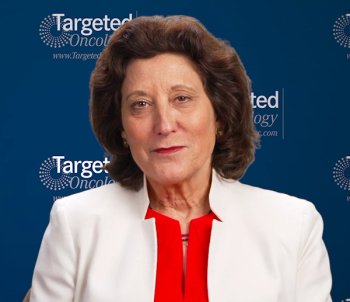
Closing out her discussion on the treatment and management of HR+/HER2- mBC, Hope Rugo, MD, FASCO, highlights unmet needs and future directions in the field.
Dr Hope Rugo shares insight on how she approaches second-line and higher treatment selection in patients with HR+/HER2- metastatic breast cancer who experience disease progression on first-line therapy.
Centering discussion on the EMERALD trial, Dr Hope Rugo, reflects on the safety and efficacy of elacestrant in patients with HR+/HER2- mBC.
A comprehensive review of treatment options for patients with HR+/HER2- metastatic breast cancer who experience disease progression on standard-of-care therapies such as combination CDK4/6 and aromatase inhibitors.
Expert perspective on the role of ESR1 mutations in HR+/HER2- mBC and best practices on biomarker testing for patients experiencing disease progression on endocrine therapy.
Expert oncologist Hope Rugo, MD, FASCO, reviews the diagnosis and treatment of a 57-year-old woman with HR+/HER2- metastatic breast cancer (mBC).

Two studies of patritumab deruxtecan in patients with EGFR-mutated metastatic non–small cell lung cancer and HER3-expressing metastatic breast cancer revealed promising overall response, disease control, progression-free survival rates, and more.

Sara Hurvitz, MD, discusses recent updates for selective estrogen receptor degraders in the treatment of patients with metastatic breast cancer and how it has impacted clinical decisions.

Neoadjuvant chemotherapy with carboplatin has been shown to improve the pathologic complete response rate for patients with triple negative breast cancer.

During a Targeted Oncology™ Case-Based Roundtable™ event, Hope S. Rugo, MD, discussed adverse event management in patients treated with sacituzumab govitecan for triple-negative breast cancer and other therapy options. This is the second of 2 articles based on this event.
Aditya Bardia, MD, MPH, discussed potential second-line therapies for patients with metastatic triple-negative breast cancer.

With a broadened FDA label for abemaciclib, patients high-risk breast cancer can now be categorized based only on nodal status, tumor size, and tumor grade.

Miguel Pelayo, MD, discusses what he sees as practice-changing treatments for patients with triple-negative breast cancer and how he helps patients feel confident in these new treatments.

Looking at a subgroup analysis of patients with hormone receptor-positive and HER2-negative breast cancer on endocrine therapy, researchers saw promising results but worrying disparities between non-Hispanic White patients and non-Hispanic Black patients.
Retrospective research shows a link behind low household income and recurrence score and survival, but there is more to uncover behind the association between socioeconomic determinants of health and tumor biology.
Treatment with (Z)-endoxifen in combination with exemestane plus goserelin in the phase 2 EVANGELINE is now underway.
Advertisement
Advertisement
Trending on Targeted Oncology - Immunotherapy, Biomarkers, and Cancer Pathways
1
FDA Accepts NDA for Daraxonrasib in Metastatic Pancreatic Cancer
2
Advanced Renal Cell Carcinoma: Tailoring Second-Line Therapy After Prior Immunotherapy
3
FDA Approves Zidesamtinib for Previously Treated ROS1-Positive NSCLC
4
Teclistamab/Talquetamab Reduces Risk of Progression by 89% in R/R Multiple Myeloma
5