


BREAST CANCER
Latest News

Advertisement
Latest Videos































Advertisement
More News

Joyce O’Shaughnessy, MD, provides an update on existing research in metastatic triple-negative breast cancer, and novel agents on the horizon.
In an interview with <em>Targeted Oncology, </em>Arti Hurria, MD, shares the treatment considerations she makes when treating older patients with breast cancer, the unique challenges that come with treating this patient population, and the exciting future she envisions for this space.

MYL-1401O, the trastuzumab (Herceptin) biosimilar manufactured by Mylan Pharmaceuticals, has been recommended for approval by the FDA's Oncologic Drugs Advisory Committee (ODAC) in a 16-0 vote.
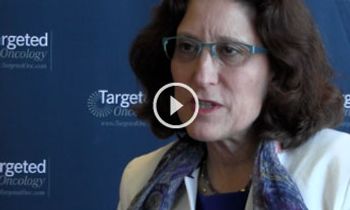
Hope S. Rugo, MD, professor of medicine and director of the Breast Oncology Clinical Trials Program at the UCSF Helen Diller Family Comprehensive Cancer Center, discusses extended adjuvant endocrine therapy for patients with HR+ breast cancer.
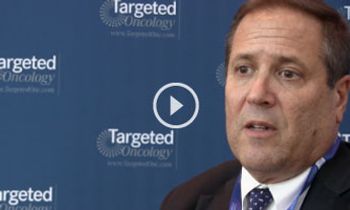
Adam M. Brufsky, MD, PhD, professor of Medicine, associate chief of Hematology/Oncology, co-director of the Comprehensive Breast Care Center, associate director of Clinical Investigation, University of Pittsburgh, discusses the utility of molecular signatures in managing early-stage breast cancer.
Neratinib (Nerlynx) has been approved by the FDA for the extended adjuvant treatment of patients with early stage HER2-positive breast cancer following postoperative treatment with trastuzumab (Herceptin).
A new drug application (NDA) for abemaciclib has been granted a priority review by the FDA as a treatment for patients with advanced hormone receptor (HR)­­–positive, HER2-negative breast cancer.
Rita Nanda, MD, assistant professor of Medicine, assistant director, Breast Medical Oncology, discusses results from I-SPY 2, which explored pembrolizumab plus standard neoadjuvant therapy for high-risk breast cancer.
The Breast Cancer Weight Loss Study is looking to identify the relationship between obesity and recurrence in breast cancer through a phone-based weight loss intervention program.
Abemaciclib penetrated brain metastases and had antitumor activity in patients with hormone receptor (HR)-positive, HER2-negative metastatic breast cancer, preliminary evidence suggests.

Gunter von Minckwitz, MD, PhD, president of the German Breast Group in Neu-Isenburg, Germany, discusses results from the large phase III APHINITY trial, which explored the addition of pertuzumab (Perjeta) to adjuvant trastuzumab and chemotherapy for patients with HER2-positive early breast cancer.
Rachel A. Freedman, MD, MPH, discusses a phase II trial of neratinib plus capecitabine for patients with HER2-positive breast cancer brain metastases.
In patients with heavily pretreated metastatic triple-negative breast cancer, pembrolizumab showed durable antitumor activity, according to findings from cohort A of the phase II KEYNOTE-086 trial.
Harold J. Burstein, MD, PhD, institute physician, Dana-Farber Cancer Institute, associate professor of Medicine, Harvard Medical School, discusses a survey of how clinicians use genomic assays to assist in decision-making regarding the use of neoadjuvant and adjuvant chemotherapy for patients with ER-positive/HER2-negative early breast cancer.
Alexandra S. Zimmer, MD, staff clinician, Women's Malignancies Branch, National Cancer Institute Center for Cancer Research, discusses the promising data seen thus far with olaparib (Lynparza) for the treatment of HER2-negative breast cancer.
Psychological intervention can substantially lower fear of cancer recurrence (FCR) in survivors, improving their quality of life, anxiety, and cancer-specific distress.
Ribociclib has been recommended for approval by the Committee for Medicinal Products for Human Use, a part of the European Medicines Agency, for use in combination with an aromatase inhibitor as a first-line treatment for postmenopausal women with HR-positive /HER2-negative locally advanced or metastatic breast cancer.<br />
Targeted therapy through the use of antibody–drug conjugates holds great promise for the treatment of many malignancies, in particular, breast cancer.
Sylvia Adams, MD, associate professor, Department of Medicine, NYU Langone Medical Center, discusses phase II results from cohort A of the KEYNOTE-086 trial, which explored pembrolizumab monotherapy for previously treated metastatic triple-negative breast cancer.
C. Kent Osborne, MD, outlines current strategies for overcoming resistance to HER2-targeted agents in early breast cancer.
According to early results from the phase III APHINITY trial, the addition of pertuzumab (Perjeta) to standard postoperative trastuzumab (Herceptin) therapy for patients with HER2-positive early breast cancer slightly improved the rate of recurrence overall but had a greater benefit for individuals with higher-risk disease.
A retrospective, multicenter study of 1207 women treated for non-metastatic breast cancer who then became pregnant showed that these survivors faced no greater risk of recurrence or death than their counterparts who underwent treatment but did not become pregnant.
Adding the PD-1 inhibitor pembrolizumab (Keytruda) to standard neoadjuvant chemotherapy tripled the pathologic complete response (pCR) rate in multiple subtypes of HER2-negative breast cancer, according to results from the ongoing phase II I-SPY-2 clinical research program presented during the 2017 ASCO Annual Meeting.
Peter Kaufman, MD, associate professor of Medicine, Norris Cotton Cancer Center, Dartmouth-Hitchcock Medical Center, discusses the significance of the MONARCH 2 trial, which explored abemaciclib in combination with fulvestrant in patients with hormone receptor-positive, HER2-negative advanced breast cancer who progressed on endocrine therapy during the 2017 ASCO Annual Meeting.<br />

Sunil Verma, MD, department head, Clinical Department of Oncology, Calgary Zone, medical director, Tom Baker Cancer Centre, discusses updated results of the phase III MONALEESA-2 trial of first-line ribociclib plus letrozole in hormone receptor-positive, HER2-negative advanced breast cancer during the 2017 ASCO Annual Meeting.
Advertisement
Advertisement
Trending on Targeted Oncology - Immunotherapy, Biomarkers, and Cancer Pathways
1
FDA Accepts NDA for Daraxonrasib in Metastatic Pancreatic Cancer
2
Advanced Renal Cell Carcinoma: Tailoring Second-Line Therapy After Prior Immunotherapy
3
Teclistamab/Talquetamab Reduces Risk of Progression by 89% in R/R Multiple Myeloma
4
IMNN-001 Plus Chemo Cuts MRD Rate in Frontline Ovarian Cancer
5