




BREAST CANCER
Latest News

Advertisement
Latest Videos


































Advertisement
More News

Joanne Blum, MD, PhD, discusses the function of the oral PARP inhibitor talazoparib (BMN 673) in BRCA mutation subjects with locally advanced and/or metastatic breast cancer.

Sabine Siesling discusses breast conserving surgery versus mastectomy. Siesling says her and her team found that internationally, the survival rate of breast cancer patients is lower when a mastectomy is performed, as compared to breast conserving surgery.

​Andrew D. Seidman, MD, attending physician, Breast Cancer Medicine Service, Memorial Sloan-Kettering Cancer Center, discusses the shift paradigm of breast cancer treatment and the development of targeted agents that disrupt certain pathways.

Eric P. Winer, MD, discusses the survival rates of women with early stage breast cancer who received bevacizumab and/or carboplatin.

Peter Beitsch, MD, breast surgeon, Medical City Dallas Hospital, discusses a triplet of chemotherapy, trastuzumab, and pertuzumab in the adjuvant and neoadjuvant settings.

​Amanda L. Kong, MD, MS, FACS, discusses breast cancer care at high volume hospitals versus low volume hospitals. Kong says the study is the first one that looks at processes as a bundle and takes into account socioeconomic statuses of patients.

Dr. Clifford A. Hudis on the Importance of In-Breast Response Rates in Triple-Negative Breast Cancer
Clifford A. Hudis, MD, FACP, Vice President for Government Relations and Chief Advocacy Officer, Chief, Breast Medicine Service at Memorial Sloan Kettering Cancer Center, discusses carboplatin in triple-negative breast cancer and in-breast response rates.

The phase III METRIC trial is an ongoing randomized trial in triple-negative breast cancer that evaluated the safety and efficacy of the antibody-drug conjugate glembatumumab vedotin.

Breast-conserving therapy (BCT) and radiation in early-stage breast cancer has been shown to give patients about a 20% better chance of survival over the course of 10 years, moreso than their counterparts who opted had mastectomy.
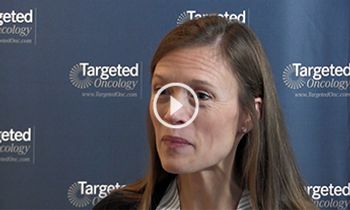
Carey Anders, MD, assistant professor for the Department of Medicine, Division of Hematology and Oncology, UNC Chapel Hill, on the challenge of treating brain metastases in breast cancer. Anders says brain metastases generally portend a poor prognosis and treatment for them are currently scarce.

William Sikov, MD, associate director of Clinical Research, Program in Women

Matthew J. Ellis, MD, PhD, director, Sue Smith Breast Center at Baylor College of Medicine, discusses a recent study of palbociclib in primary breast cancer.

The PD-L1 inhibitor avelumab showcased promising overall response rates in patients with PD-L1-positive metastatic breast cancer, especially in patients with triple-negative breast cancer.

Risk complications from mastectomy plus reconstruction was doubled when compared to lumpectomy plus whole breast irradiation after adjustment for other treatment differences.

Treatment with standard neoadjuvant chemotherapy plus carboplatin and/or bevacizumab resulting in a pathologic complete response has been associated with improvement in event-free and overall survival in patients with triple-negative breast cancer.

Pembrolizumab, a PD-1 inhibitor, had an overall response rate of 12% in patients with PD-L1-positive, ER+/HER2 advanced breast cancer, according to data from the phase Ib KEYNOTE-028 trial.

Neratinib continued to show similar rates of disease-free survival for patients with HER2-positive early-stage breast cancer, according to a 3-year exploratory analysis of the ExteNET trial.

A team of researchers with the University of Texas MD Anderson Cancer Center found that adjuvant chemotherapy has a significant impact on patient survival, especially in patients with triple-negative breast cancer.

Carboplatin combined with neoadjuvant chemotherapy improves disease-free survival significantly in women with triple-negative breast cancer but not HER2-positive breast cancer.
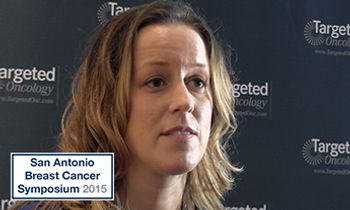
Erika P. Hamilton, MD, discusses the current treatment paradigm, and upcoming treatments, for HER2-positive breast cancer.

A follow-up benefits analysis of adding denosumab to aromatase inhibitor (AI) therapy shows the agent not only helps prevent fractures, it also reduces risk of recurrence and death in postmenopausal women with HR-positive breast cancer.

Palbociclib (Ibrance) has been given a priority review by the FDA. The treatment will be looked at as a combination with fulvestrant in pretreated patients with HR-positive, HER2-negative metastatic breast cancer, said Pfizer, the manufacturer of the CDK 4/6 inhibitor.

A combination of capecitabine and adjuvant therapy dropped the risk of recurrence by 30% and prolonged survival by 40% for patients with residual breast cancer post-neoadjuvant chemotherapy and surgery, according to phase III data.

Jimmie Holland, MD, Wayne E. Chapman Chair in Psychiatric Oncology, Memorial Sloan Kettering Cancer Center, on the development of genomic medicine in oncology.

Ilaria Muller, PhD student, Cardiff University, on a possible common antigen between thyroid cancer and breast cancer.
Advertisement
Advertisement
Trending on Targeted Oncology - Immunotherapy, Biomarkers, and Cancer Pathways
1
FDA Accepts NDA for Daraxonrasib in Metastatic Pancreatic Cancer
2
Advanced Renal Cell Carcinoma: Tailoring Second-Line Therapy After Prior Immunotherapy
3
FDA Approves Zidesamtinib for Previously Treated ROS1-Positive NSCLC
4
Teclistamab/Talquetamab Reduces Risk of Progression by 89% in R/R Multiple Myeloma
5