



BREAST CANCER
Latest News
Advertisement
Latest Videos
































Advertisement
More News
A recent meta-analysis published in The Oncologist found that metformin use in patients with simultaneous diabetes and breast cancer improved overall survival (OS) and cancer-specific survival.

Howard A. "Skip" Burris, III, MD, president, Clinical Operations, chief medical officer and executive director of Drug Development, Sarah Cannon, talks about chemotherapy in the era of personalized medicine.

Mohammad Jahanzeb, MD, medical director, Sylvester Comprehensive Cancer Center at Deerfield Beach, talks about the future of treatment for patients with HER2-positive breast cancer with drugs like neratinib and trastuzumab.

Despite the small size of the pigeon brain, our Columba livia counterparts have performed just as well as humans in distinguishing between normal tissue and breast cancer tissue in a study performed by researchers at the University of Iowa and the University of California, Davis.
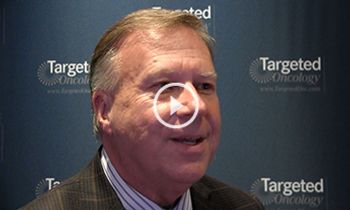
Patrick Borgen, MD, says this is due to earlier diagnoses, better class prediction through genomic profiling and characteristics of the disease, as well as targeted therapies.

Sylvia Adams, MD, medical oncologist, NYU Langone Medical Center, talks about the the importance of tumor-infiltrating lymphocytes (TILS) and how they can mark which patients will respond to immunotherapy use in triple negative breast cancer (TNBC). She discussed this topic at the recent Chemotherapy Foundation Symposium.
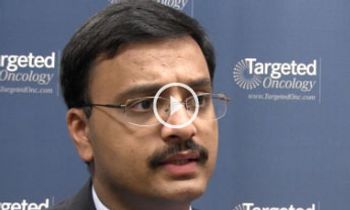
Findings from a recent study suggest that women whose breast cancers have a higher proportion of blood vessels may benefit more from neoadjuvant treatment with bevacizumab than women whose tumors have a lower density of blood vessels.
Dr. Judy C. Boughey talks about a study examining all patients at Mayo Clinic that underwent a nipple-sparing mastectomy for breast cancer and comparing those with positive lymph nodes to those with negative lymph nodes.
Christiane Kuhl, MD, Professor of Radiology and Vice Chairman of the Radiological department, Director of the Division of Oncologic Imaging and Interventional Therapy, Bonn University, talks about the over diagnosis of breast cancer through mammography screenings.
Dr. Hans-Christian Kolberg on Safer Chemotherapy for Patients with HER2-positive Early Breast Cancer
Hans-Christian Kolberg, MD, doctor of Medicine, Marien Hospital Bottrop in Bottrop, Germany, discusses neoadjuvant chemotherapy with docetaxel, carboplatin, and weekly trastuzumab for patients with HER2-positive early breast cancer.

A new chemotherapy regimen demonstrated significant clinical activity in patients with HER2-positive, early-stage breast cancer, according to long-term follow-up data.
Clifford A. Hudis, MD, FACP, Vice President for Government Relations and Chief Advocacy Officer, Chief, Breast Medicine Service at Memorial Sloan Kettering Cancer Center, talks about the vague understanding medical professional currently have of HER-2 breast cancer and its resistance to certain therapies.

Kimberly L. Blackwell, MD, professor of Medicine, assistant professor of Radiation Oncology, Duke Cancer Institute, discusses upcoming trials for the HER2-antibody margetuximab.

Rebecca Feldman, PhD, molecular science liaison/research scientist, Caris Life Sciences, discusses caveolin-1, which has the potential to play a major role in the treatment of breast cancer.

Researchers have begun examining the latest round of studies for a minimally invasive breast cancer therapy freezing the cancer cells as a means of killing the tumor.

Julie Gralow, MD, Professor, Medical Oncology Division, University of Washington School of Medicine, talks about the importance of women knowing which genetic tests they�ve previously had done for breast cancer.

Raquell Reinbolt, MD, assistant professor, Internal Medicine at Ohio State University College of Medicine, talks about potential further studies into the lifestyles of women with breast cancer.
A phase III study shows noninferiority of accelerated partial breast irradiation as compared to conventional whole breast irradiation.

Jennifer Montes, MD, NYU Langone Medical Center, discusses a recent study evaluating the relationship between race and breast cancer findings in magnetic resonance imaging (MRI) tests.

The CDK4/6 inhibitor abemaciclib (LY2835219) has been granted FDA breakthrough therapy designation as monotherapy for heavily pretreated patients with refractory hormone-receptor-positive advanced breast cancer.

Christiane K. Kuhl, MD, Department of Diagnostic and Interventional Radiology, RWTH University of Aachen, discusses an observational cohort study looking at breast MRI screening of women at average risk of breast cancer.
The treatment of TNBC continues to be a challenge for physicians because of its limited treatment options, the dearth of approved targeted therapies, high mortality, and poor prognosis.
While TNBC is a heterogeneous group of breast cancers there is increasing effort to subdivide it into more homogenous groups that may help in more accurate prognosis and response to therapy.
Breast cancer is a leading cause of cancer death in women, with 12% to 20% of cases classified as triple-negative breast cancer (TNBC).

Oncoviruses have been implicated to cause 17.8% of human cancers.
Advertisement
Advertisement
Trending on Targeted Oncology - Immunotherapy, Biomarkers, and Cancer Pathways
1
FDA Accepts NDA for Daraxonrasib in Metastatic Pancreatic Cancer
2
Advanced Renal Cell Carcinoma: Tailoring Second-Line Therapy After Prior Immunotherapy
3
FDA Approves Zidesamtinib for Previously Treated ROS1-Positive NSCLC
4
Teclistamab/Talquetamab Reduces Risk of Progression by 89% in R/R Multiple Myeloma
5