




BREAST CANCER
Latest News
Advertisement
Latest Videos



































Advertisement
More News

Melvin J. Silverstein, MD, FACS, Hoag Memorial Hospital Presbyterian, discusses the benefits of oncoplastic surgery for patients with breast cancer.

Anthony D. Elias, MD, professor, Division of Medical Oncology, University of Colorado Denver, discusses the future of androgen receptors in breast cancer.

Erika P. Hamilton, MD, associate director, Breast Cancer and Gynecologic Cancer Research Program, principal investigator, Sarah Cannon Research Institute, discusses the challenges associated with utilizing new agents in HER2-positive breast cancer.

Young black women have a higher prevalence of BRCA mutations compared with that previously reported among non-Hispanic white women.
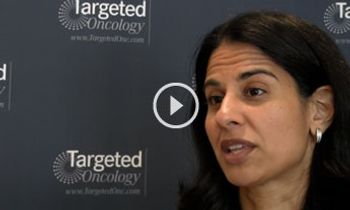
Sara M. Tolaney, MD, MPH, physician, instructor in medicine, Harvard Medical School, medical oncologist, Dana-Farber Cancer Institute, discusses patient selection for platinum-based therapy in triple-negative breast cancer (TNBC).

Early detection of metastasis in patients with breast cancer, which is critical for designing effective targeted therapies, has unfortunate limitations with prevalent screening methods. A study published in Nature Communications has shown promise for extending the detection limit of the current clinical imaging technology

A publication in Scientific Reports has identified a novel biomarker, diaphanous-related formin-3 (DIAPH3), which may help predict response to taxane-based chemotherapies in patients with metastatic breast or prostate cancer.

Evidence is mounting for multigene panel testing in women with suspected familial breast and/or ovarian cancer.

Almost 10 years following a study that proved intraperitoneal (IP), or abdominal, chemotherapy, along with intravenous (IV) therapy, may add 16 months or more to the lives of women with ovarian cancer, less than half of these patients at US hospitals receive this type of treatment

Rita Nanda, MD, assistant professor of Medicine, associate director, Breast Medical Oncology, The University of Chicago Medicine, discusses the treatment of metastatic triple-negative breast cancer (TNBC).

Rowan T. Chlebowski, MD, PhD, professor and chief, Harbor-University of California Los Angeles Medical Center, Department of Internal Medicine, Medical Oncology/Hematology, discusses breast cancer prevention.

While targeting HER2 mutations is mainly associated with breast cancer, there could be therapeutic potential with anti-HER2 agents in non-small cell lung cancer (NSCLC).

Douglas Yee, MD, professor of medicine and pharmacology, Hematology, Oncology and Transplantation, Department of Medicine, medical oncologist, University of Minnesota, discusses the results of the phase II ADAPT trial.

Pertuzumab (Perjeta), in combination with trastuzumab (Herceptin) and chemotherapy, was approved by the European Commission (EC) as a neoadjuvant therapy for adult patients who have HER2-positive, locally advanced, inflammatory, or early stage breast cancer and are at high risk of recurrence.

Major disparities in compliance, follow-up, and access have been identified in the Appalachian region of the United States, according to researchers from the University of Virginia School of Medicine.

A recent combined analysis of the BOLERO-1 and -3 studies showed that PIK3CA mutations and low/no expression of PTEN linked to an extension in progression-free survival (PFS) for patients who have metastatic HER2-positive breast cancer and are treated with a combination of everolimus, trastuzumab, and paclitaxel.

Results from the phase III METEOR study showed that treatment with cabozantinib (Cometriq) improved progression-free survival (PFS) and overall survival (OS) compared with everolimus (Afinitor) in previously treated patients with metastatic renal cell carcinoma (mRCC).

Adam M. Brufsky, MD, PhD, ​professor of medicine, University of Pittsburgh School of Medicine, associate director of clinical investigation, University of Pittsburgh Cancer Institute, discusses the adverse effects, as well as future treatments, of anastrozole in patients with ductal carcinoma In situ (DCIS).
Howard A. “Skip†Burris, III, MD, president, Clinical Operations, chief medical officer and executive director, Drug Development Program, Sarah Cannon, discusses the novel agents in breast cancer and monoclonal antibodies.

An ongoing randomized trial in triple-negative breast cancer (TNBC) is evaluating the safety and efficacy of an antibody-drug conjugate that targets glycoprotein NMB (gpNMB), which is associated with reduced metastasis-free and overall survival.

Shannon Puhalla, MD, assistant professor of medicine, Division of Hematology/Oncology, University of Pittsburgh, discusses a phase III study examining the combination of palbociclib and fulvestrant for the treatment of patients with relapsed metastatic hormone receptor-positive, HER2-negative breast cancer.

CIB1 could represent a novel target for the development of targeted therapies in triple-negative breast cancer.

The National Comprehensive Cancer Network guidelines support genetic testing in individuals who are genetically predisposed to cancer.

The oral selective small molecule HER2 inhibitor ONT-380 in combination with other therapies demonstrated promising activity in previously treated patients with HER2-positive metastatic breast cancer, including those with CNS metastases.

Neoadjuvant ado-trastuzumab emtansine demonstrated promising complete pathological response in patients with hormone receptor-positive and HER2-positive early stage breast cancer
Advertisement
Advertisement
Trending on Targeted Oncology - Immunotherapy, Biomarkers, and Cancer Pathways
1
FDA Accepts NDA for Daraxonrasib in Metastatic Pancreatic Cancer
2
Advanced Renal Cell Carcinoma: Tailoring Second-Line Therapy After Prior Immunotherapy
3
FDA Approves Zidesamtinib for Previously Treated ROS1-Positive NSCLC
4
Teclistamab/Talquetamab Reduces Risk of Progression by 89% in R/R Multiple Myeloma
5