





BREAST CANCER
Latest News
Advertisement
Latest Videos






























Advertisement
More News

Jane E. Churpek, MD, medical oncologist, hematologist, The University of Chicago, discusses the ATM, CHEK2, and PTEN genes in breast cancer.
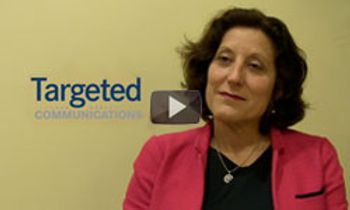
Hope S. Rugo, MD, from the University of California, San Francisco, Helen Diller Family Comprehensive Cancer Center, discusses pathway changes in breast cancer.

Sandra Swain, MD, medical director of the Washington Cancer Institute at MedStar Washington Hospital Center, gives an overview of the next steps for pertuzumab in breast cancer.

Torsten O. Nielsen, MD, PhD, FRCPC, professor, pathology, University of British Columbia, discusses Ki67 in breast cancer.

Richard Finn, MD, from UCLA, discusses the treatment of patients with estrogen receptor-positive (ER+) breast cancer with antiestrogens.
Antoni Ribas, MD, PhD, the director of the Tumor Immunology Program Area at UCLA's Jonsson Comprehensive Cancer Center, discusses PD-1 and PD-L1 in various cancers.

Women with breast cancer who were carriers of the BRCA1 mutation had increased mortality compared with noncarriers in preliminary results from a retrospective study.

Richard Finn, MD, from the Jonsson Comprehensive Cancer Center, UCLA, describes the development of cyclin-dependent kinases (CDKs) for the treatment of cancer.

Researchers at the NCI have developed the most comprehensive analysis of coding variants in the most frequently studied human tumor cell lines in cancer research.

High levels of HER2 expression in metastatic breast cancer tumors correlated with increased benefit from treatment with adotrastuzumab.

The next-generation PI3 kinase (PI3K) inhibitor GDC-0032 has shown signs of efficacy in patients with advanced cancers that were mutated for the PI3K alpha gene.

Emiel J. Rutgers, MD, from the Netherlands Cancer Institute, describes the personalization of treatment for patients with early-stage breast cancer.
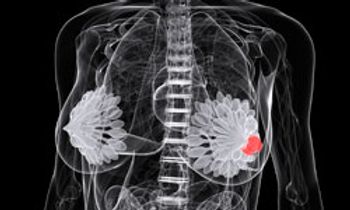
If approved, this regimen would be the first neoadjuvant regimen ever approved for the treatment of cancer.

Jane E. Churpek, MD, describes the BROCA genetic assay, uses targeted genomic capture and next-generation sequencing to analyze a panel of 42 genes.

The mechanism of action of trastuzumab (Herceptin), a monoclonal antibody that is approved for the treatment of early-stage breast cancer that is HER2-positive.

Richard G. Gray, MA, MSc, discusses results from the randomized, phase III aTTom study that examined 10 years of tamoxifen versus the more standard 5 years.
Richard Finn, MD, comments on the future of palbociclib (PD 0332991), a novel oral selective inhibitor of cyclin-dependent kinase 4/6 (CDK 4/6), for the treatment of breast cancer.

Data from the French National Cancer Institute showed an increase in testing for BRCA1/2 for breast and ovarian cancer, though not for the MMR mutation for Lynch syndrome.

Andrew D. Seidman, MD, comments on the findings of the phase III S0221 trial, which compared two schedules of paclitaxel as adjuvant therapy for breast cancer.

Mark D. Pegram, MD, describes research into the antibody-drug conjugate T-DM1 (trastuzumab emtansine), following its FDA approval in February as a treatment for HER2-positive metastatic breast cancer.

Ado-trastuzumab emtansine received FDA approval in February, and a number of ongoing trials now seek to determine whether the antibody-drug conjugate can be combined with other agents.

George W. Sledge, Jr, MD, Chief, Division of Oncology, Professor of Medicine, Stanford University School of Medicine, discusses the mechanisms of resistance in breast cancer.

The American Association for Cancer Research is an annual showcase of the latest scientific cancer research, with updates on phase I, often first-in-human clinical trials.

Lisa A. Carey, MD, Professor of Medicine, University of North Carolina at Chapel Hill, discusses assays and intrinsic subtypes of breast cancer.

Fabrice Andre, MD, PhD, says that there are no targets in triple-negative breast cancer in accordance with the current vision of the disease.
Advertisement
Advertisement
Trending on Targeted Oncology - Immunotherapy, Biomarkers, and Cancer Pathways
1
FDA Accepts NDA for Daraxonrasib in Metastatic Pancreatic Cancer
2
Advanced Renal Cell Carcinoma: Tailoring Second-Line Therapy After Prior Immunotherapy
3
FDA Approves Zidesamtinib for Previously Treated ROS1-Positive NSCLC
4
Teclistamab/Talquetamab Reduces Risk of Progression by 89% in R/R Multiple Myeloma
5