




BREAST CANCER
Latest News
Advertisement
Latest Videos
































Advertisement
More News

Eleftherios Mamounas, MD, MPH, discusses locoregional recurrence and tailoring radiotherapy following neoadjuvant chemotherapy.

The combination of multiple independent factors minimized the impact of baseline stage for predicting locoregional recurrence (LRR) following neoadjuvant chemotherapy in patients with breast cancer.

Postsurgery complications are infrequent among breast cancer patients undergoing surgery with reconstruction; however, according to a large database study, the rates of certain complications, including reoperation, blood transfusion, and implant loss, are higher with bilateral mastectomy versus unilateral mastectomy.

The actress Angelina Jolie’s decision to undergo a preventive double mastectomy after learning she carried the BRCA1 gene mutation—associated with an increased risk of breast and/or ovarian cancer—apparently sparked an “Angelina effect†on public health.

One of the first studies to prospectively examine women’s breast surgery preferences has revealed that newly diagnosed women with breast cancer who decide to undergo contralateral prophylactic mastectomy (CPM), may be making this decision as result of high anxiety and fear of recurrence.

Women who received signed letters from their family physician along with scheduled postcard reminders are more likely to return for mammography screening than women who only received a postcard.

A New Drug Application has been submitted to the FDA for palbociclib plus letrozole as a frontline treatment for postmenopausal women with ER-positive, HER2-negative advanced breast cancer.

Lori Goldstein, MD, director, The Naomi and Phil Lippincott Breast Evaluation Center, deputy associate director, Clinical Research, Fox Chase Cancer Center, discusses the possibility of using endocrine resistance therapy to treat patients with early stage breast cancer.

Debu Tripathy, MD, co-leader, Women's Cancer Program, University of Southern California Norris Comprehensive Cancer Center, discusses the goals of the SystHERs Registry.

The favorable safety profile of T-DM1 (ado-trastuzumab emtansine; Kadcyla) makes it apt to be looked at in other settings of breast cancer, according to a large study published in the Journal of Clinical Oncology.

Ragene Rivera, MD, medical oncologist, Texas Oncology-El Paso Cancer Treatment Center, discusses the next treatment steps for a patient with HER2-negative chemotherapy-resistant metastatic breast cancer.

Linda D. Bosserman, MD, FACP, president, medical oncologist, Wilshire Oncology Medical Group, discusses how she determines if a patient is resistant to a taxane or anthracyclines.

Linda D. Bosserman, MD, FACP, president, medical oncologist, Wilshire Oncology Medical Group, discusses how she would treat a patient with HER2-negative metastatic breast cancer.

Ragene Rivera, MD, medical oncologist, Texas Oncology-El Paso Cancer Treatment Center, discusses how she decides between hormone therapies in patients with ER+/PR+ tumors.

Claudine Isaacs, MD, professor, medical Director, Fisher Center for Familial Cancer Research, co-director, Breast Cancer Program, Georgetown University/Lombardi Cancer Center, discusses some of the challenges physicians are facing in the field of hereditary breast cancer.

Women harboring a loss-of-function mutation in the PALB2 gene demonstrated an increased risk of developing breast cancer that was similar to the predisposition seen with mutations in BRCA.
Edith A. Perez, MD, Breast Cancer: Giant of Cancer Care; deputy director at large, Mayo Clinic Cancer Center, Serene M. and Frances C. Durling professor of Medicine, Division of Hematology/Oncology, discusses a genomic analysis of immune function genes and clinical outcome in the NCCTG (Alliance) N9831 adjuvant trastuzumab trial.

Joyce A. O’Shaughnessy, MD, from Baylor Charles A. Sammons Cancer Center, discusses the results of a recent breast cancer study.

Robert L. Kirkman, MD, President and CEO, Oncothyreon, discusses the development of ONT-380, an oral HER2-specific inhibitor, for the treatment of patients with HER2-positive metastatic breast cancer.

A phase III trial analyzing sorafenib for the treatment of patients with advanced breast cancer did not meet its primary endpoint of improving progression-free survival (PFS).
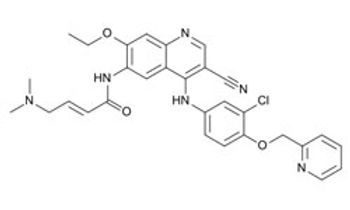
Extended adjuvant treatment with neratinib (PB272, HKI-272) significantly improved disease-free survival (DFS) compared with placebo for patients with HER2-positive breast cancer who received prior adjuvant trastuzumab.

Charles M. Perou, PhD, professor of genetics, pathology & laboratory medicine, UNC Lineberger Comprehensive Cancer Center, discusses the future of predicting outcomes in breast cancer.
Adam M. Brufsky, MD, PhD, gives a summary of his talk at the 13th Annual International Congress on the Future of Breast Cancer®. Brufsky discusses whether or not adjuvant bisphosphonates are ready to be a new standard of care in breast cancer.

Sara Hurvitz, MD, medical oncologist, UCLA Medical Center, discusses patient outcomes associated with PIK3CA mutations.

Suzanne A. W. Fuqua, PhD, professor of medicine at Baylor College of Medicine, discusses ESR1 mutations in primary breast cancer.
Advertisement
Advertisement
Trending on Targeted Oncology - Immunotherapy, Biomarkers, and Cancer Pathways
1
FDA Accepts NDA for Daraxonrasib in Metastatic Pancreatic Cancer
2
Advanced Renal Cell Carcinoma: Tailoring Second-Line Therapy After Prior Immunotherapy
3
FDA Approves Zidesamtinib for Previously Treated ROS1-Positive NSCLC
4
Teclistamab/Talquetamab Reduces Risk of Progression by 89% in R/R Multiple Myeloma
5