




EGFR+ Lung Cancer
Latest News
Advertisement
Video Series



Latest Videos


















































Advertisement
More News

Osimertinib given after chemoradiation in patients with advanced non–small cell lung cancer harboring a EGFR mutation showed significant benefits.

Suresh Ramalingam, MD, principal investigator of the phase 3 LAURA trial, explains the study's evaluation of osimertinib in EGFR-mutated non-small cell lung cancer.

Alex Spira, MD, PhD, discusses a subset analysis of the phase 3 MARIPOSA trial looking at dose interruptions during the course of amivantamab and lazertinib treatment for EGFR-mutant non-small cell lung cancer.
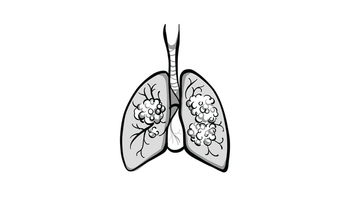
During a Case-Based Roundtable® event, Misako Nagasaka, MD, discussed treatment for a patient with non–small cell lung cancer and an EGFR exon 20 insertion.

During a Case-Based Roundtable® event, Joshua Sabari, MD, led a discussion on the need for next-generation sequencing to determine treatment in patients with EGFR-positive advanced non–small cell lung cancer in the first article of a 2-part series.

Sunvozertinib was granted breakthrough therapy designation by the FDA for the first-line treatment of patients with locally advanced or metastatic non-small cell lung cancer harboring an EGFR exon 20 insertion mutation.
Though osimertinib is the preferred frontline approach to treatment for those with non-small cell lung cancer with classic EGFR mutations, acquired resistance mechanisms invariably develop.
According to a subset analysis of the phase 3 MARIPOSA trial, dose interruptions during the course of amivantamab and lazertinib treatment were still effective in EGFR-mutant non-small cell lung cancer.

In this episode, Joshua K. Sabari, MD, discusses the FDA approval of amivantamab plus chemotherapy as a first-line treatment for patients with EGFR exon 20 insertion mutation-positive non-small cell lung cancer.
Amivantamab plus carboplatin and pemetrexed is now an approved first-line treatment for patients with EGFR exon 20 insertion mutation-positive non-small cell lung cancer.
Osimertinib shows significant progression-free survival improvement in stage III EGFR-mutated non-small cell lung cancer post-chemoradiotherapy, marking a major advance in treatment options for this patient population.

The FDA has approved the combination of osimertinib plus chemotherapy for the treatment of EGFR-mutated non-small cell lung cancer.
Participants in virtual events discussed the key issue of whether to initiate therapy immediately or wait for test results that could show the best approach in patients with advanced lung cancer.
The FLAURA2 study found that osimertinib with platinum-pemetrexed was more effective than osimertinib monotherapy in preventing central nervous system progression or death in patients with EGFR-mutated advanced non–small cell lung cancer.
In an interview, Martin F. Dietrich, MD, PhD, discussed his observations on the latest and upcoming trials that target biomarkers in earlier-stage non–small lung cancer.

During a Targeted Oncology™ Case-Based Roundtable™ event, Balazs Halmos, MD, discussed with participants how they interpret the ADAURA trial and the approach to adjuvant targeted therapy in non–small cell lung cancer This is the second of two articles based on this event.
In an interview with Targeted Oncology, Jonathan W. Riess, MD, discussed the ever-changing EGFR-mutated lung cancer treatment landscape, highlighting several agents that are currently under development.

Edward B. Garon, MD, MS, provides an overview of some of the available treatment options for patients with EGFR-mutated lung cancer.
During a Targeted Oncology™ Case-Based Roundtable™ event, Balazs Halmos, MD, discussed with participants how they would approach the case of a patient with T3N0 lung adenocarcinoma of stage IIB. This is the first of 2 articles based on this event.

Jonathan W. Riess, MD, medical director of thoracic oncology, University of California, Davis Comprehensive Cancer Center, discusses the phase 1b FAVOUR trial of furmonertinib in patients with advanced non–small cell lung cancer harboring EGFR Exon20 insertion mutations.
The FDA is considering 2 applications for amivantamab plus lazertinib as a first-line treatment for EGFR-mutated non–small cell lung cancer, based on the phase 3 MARIPOSA study.
Anlotinib, a novel multi-targeting tyrosine kinase inhibitor, and icotinib, a first-generation EGFR TKI, demonstrated efficacy and tolerability in the first line for the treatment of patients with EGFR-mutated advanced non–small cell lung cancer.
In an interview with Targeted Oncology, Edward B. Garon, MD, MS, discussed the ever-changing treatment landscape for EGFR-mutated lung cancer, as well as the unmet needs and potential next steps for research in this space.
Telisotuzumab vedotin demonstrated promising efficacy and safety in patients with advanced nonsquamous non–small cell lung cancer with high or intermediate c-Met expression.
Positive findings from the MARIPOSA-2 study of amivantamab with chemotherapy with or without lazertinib in locally advanced or metastatic non–small cell lung cancer with EGFR mutations support the submission of a supplemental biologics license application to the FDA.
Advertisement
Advertisement
Trending on Targeted Oncology - Immunotherapy, Biomarkers, and Cancer Pathways
1
FDA Oncology Recap: Approvals, Designations, and Decisions in September 2026
2
Plinabulin Receives FDA Fast Track Designation in Post-ICI NSCLC
3
Denosumab Biosimilar Approved For Existing Oncology Indications
4
CEPHEUS and Frontline Treatment in Newly Diagnosed Multiple Myeloma
5