




EGFR+ Lung Cancer
Latest News
Advertisement
Video Series
Latest Videos


















































Advertisement
More News
In a live virtual event, Yasir Y. Elamin, MD, discussed biomarker testing and management of non–small cell lung cancer (NSCLC) and a related patient case with participating physicians.
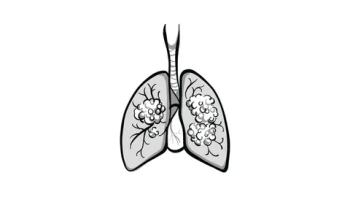
A first-in-human trial is assessing the safety, tolerability, pharmacokinetics, and preliminary antitumor activity of STX-721 as a monotherapy for patients with non–small cell lung cancer with EGFR exon 20 insertion mutations.

The FDA and Takeda have decided to voluntarily withdraw mobocertinib, a drug for patients with EGFR exon20 insertion mutation-positive non–small cell lung cancer.

During a Targeted Oncology™ Case-Based Roundtable™ event, Martin F. Dietrich, MD, discussed subgroup analysis and safety of osimertinib based on the FLAURA trial. This is the second of 2 articles based on this event.
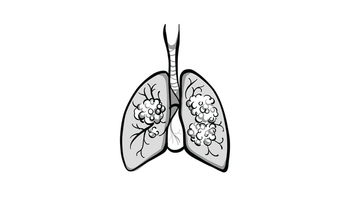
Data from a subgroup of patients with EGFR-mutated non–small cell lung cancer showed that an experimental treatment strategy using durvalumab and chemotherapy is not beneficial for patients.

Following PACIFIC-R trial, the ongoing phase 3 LAURA trial is working to evaluate the efficacy and safety of maintenance osimertinib for patients who have unresectable stage III, EGFR-mutated non–small cell lung cancer.
According to Baohui Han, MD, PhD, the confirmed objective response rate was 78.6% for treatment-naïve patients with non–small cell lung cancer with EGFR Exon20 insertion mutations treated with furmonertinib 240 mg daily in the FAVOUR trial.
Patritumab deruxtecan showed clinically meaningful and durable efficacy in the phase 2 HERTHENA-Lung01 trial of patients with advanced EGFR-mutated non–small cell lung cancer.
The phase 3 MARIPOSA-2 study has met its primary end point.
Ivonescimab is being investigated in phase 3 clinical trial against the combination of tislelizumab and chemotherapy.

Based on positive phase 3 PAPILLON results, an application for a new approval for amivantamab has been filed with the FDA.
During a Targeted Oncology™ Case-Based Roundtable™ event, Martin F. Dietrich, MD, PhD, discussed the phase 2 data for osimertinib plus chemotherapy in EGFR-mutated non–small cell lung cancer and what they suggest for the upcoming phase 3 FLAURA2 trial results.
Determining the safety and efficacy of zipalertinib combined with chemotherapy for patients with EGFR exon 20 insertion mutation-positive non–small cell lung cancer are the key goals of the newly-launched phase 3 REZILIENT3 study.
PAPILLON represents the first randomized study of newly-diagnosed patients with EGFR exon 20-mutant non–small cell lung cancer to show clinically meaningful results.
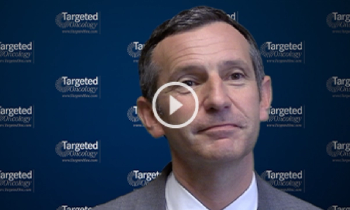
Benjamin Besse, MD, PhD, discusses the biomarker analysis of cohort D of the phase 1/1b CHRYSALIS-2 study.
The most effective regimen has yet to be determined for patients with EGFR-mutated non–small cell lung cancer after progression on an EGFR-tyrosine kinase inhibitor.
The most effective regimen has yet to be determined for patients with EGFR-mutated non–small cell lung cancer after progression on an EGFR-tyrosine kinase inhibitor. But chemotherapy regimens remain standard.
In an interview with Targeted Oncology, Nicholas Girard, MD, PhD reviews 3 key abstracts presented at the ELCC 2023, in which different targeted therapies were administered to patients with EGFR-mutant non–small cell lung cancer in clinical trial and real-world settings.
Benjamin Besse, MD, PhD, discusses the biomarker analysis of the phase 1/1b CHRYSALIS-2 study of amivantamab and lazertinib in patients with EGFR-mutated non–small cell lung cancer.
In an interview with Targeted Oncology, Benjamin Besse, MD, PhD, discussed recently reported results from the phase 1/1b CHRYSALIS-2 of amivantamab and lazertinib in patients with EGFR-mutated non–small cell lung cancer.
Benjamin Besse, MD, PhD, discusses the main findings and next steps of the phase 1/1b CHRYSALIS-2 study in EGFR-mutated non–small cell lung cancer.

Mark A. Socinski, MD, discusses his approach to managing toxicities related to osimertinib for patients with non–small cell lung cancer and EGFR mutations.
In an interview with Targeted Oncology, Se-Hoon Lee, MD, PhD, discussed long-term follow-up data from the CHRYSALIS trial in patients with EGFR-mutated advanced non–small cell lung cancer.

At a median follow-up of 4.1 months, the overall response rate across all patients with advanced solid tumors treated with BL-B01D1 was 45.3%, according to data from a phase 1 study.
Data presented at the ASCO 2023 Annual Meeting showed that the addition of pembrolizumab to pemetrexed and platinum-based chemotherapy did not statistically improve survival in patients with TKI-resistant EGFR-mutated non–small cell lung cancer.
Advertisement
Advertisement
Trending on Targeted Oncology - Immunotherapy, Biomarkers, and Cancer Pathways
1
FDA Oncology Recap: Approvals, Designations, and Decisions in September 2026
2
Plinabulin Receives FDA Fast Track Designation in Post-ICI NSCLC
3
Denosumab Biosimilar Approved For Existing Oncology Indications
4
CEPHEUS and Frontline Treatment in Newly Diagnosed Multiple Myeloma
5