





EGFR+ Lung Cancer
Latest News
Advertisement
Latest Videos

















































Advertisement
More News

James "Tate" T. Thigpen, MD, professor of medicine, director of medical oncology, University of Mississippi School of Medicine, discusses overall survival (OS) and progression-free survival (PFS) as endpoints in ovarian cancer trials.

Paul A. Bunn, Jr, MD, explains how patients with advanced-stage lung cancer benefit from tyrosine kinase inhibitors (TKIs)

Silvia Novello, MD, PhD, discusses the use of chemotherapy in lung cancer.

Giorgio V. Scagliotti, MD, PhD, discusses toxicities related to chemotherapy and surgery in patients with lung cancer.
David P. Carbone, MD, PhD, describes variations in the accuracy and availability of genetic testing technologies for patients with lung cancer.

Laurie Gaspar, MD, Professor and Chair Department of Radiation Oncology, Grohne Chair in Clinical Oncology, University of Colorado School of Medicine, discusses the risk of pneumonitis from radiation among patients with lung cancer.

Tony S.K. Mok, BMSc, MD, FRCPC, professor, Department of Clinical Oncology, Chinese University of Hong Kong, Prince of Wales Hospital Hong Kong, China, discusses different plasma testing approaches for patients with lung cancer.

Harvey I. Pass, MD, discusses some of the challenges of treating patients with mesothelioma
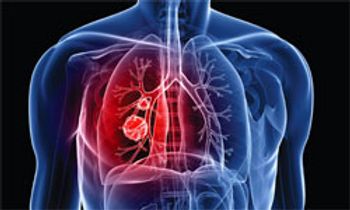
MK-3475, an investigational immunotherapy, has demonstrated an objective response rate (ORR) of up to 24% in patients with previously treated non-small cell lung cancer (NSCLC), according to interim results from a phase Ib expansion study.
Heather Wakelee, MD, discusses the results of the AVAPERL trial.

Individualized treatment protocols for patients are becoming increasingly important in the management of NSCLC. Consequently, drug research continues to focus on regimens that select therapy according to the molecular characteristics of the tumor.

Roy S. Herbst, MD, PhD, discusses targeting PD-1 and PD-L1 when treating patients with lung cancer.

Heather Wakelee, MD, discusses maintenance therapy for patients with lung cancer.
Julie R. Brahmer, MD, discusses tumor vaccines for patients with lung cancer.

Harvey I. Pass, MD, discusses blood-based markers in lung cancer.

Silvia Novello, MD, PhD, discusses some of the grey areas in lung cancer care.

Over the past two decades, there has been a shift away from indiscriminate cell-killing by anticancer agents toward the development of more specific drugs that target key aspects of cancer cell biology.

Bonnie Addario, a lung cancer survivor, discusses toxicities involved during lung cancer treatment.
Corey J. Langer, MD, from the Abramson Cancer Center, discusses recent advancements in treating an ALK mutation in patients with non-small cell lung cancer.

Giorgio V. Scagliotti, MD, PhD, from the University of Turin, San Luigi Hospital, Orbassano, Italy, discusses afatinib in patients with EGFR-mutated tumors.
D. Ross Camidge, MD, PhD, comments on the subgroup analysis of the PROFILE 1007 trial, which looked at crizotinib versus either pemetrexed or docetaxel in NSCLC.

Tony S.K. Mok, BMSc, MD, FRCPC, from the Prince of Wales Hospital Hong Kong, China, discusses how to improve the strategy of developing treatments for lung cancer.

The dependence of cancer cells on the continued activity of specific oncogenes for proliferation and survival can be explored for drug development.

Paul A. Bunn, Jr, MD, from the University of Colorado, discusses afatinib for patients with activating epidermal growth factor receptor mutation.
Carol Aghajanian, MD, from the Memorial Sloan-Kettering Cancer Center, discusses the difficulties with a gold standard clinical trial endpoint in ovarian cancer.
Advertisement
Advertisement
Trending on Targeted Oncology - Immunotherapy, Biomarkers, and Cancer Pathways
1
Plinabulin Receives FDA Fast Track Designation in Post-ICI NSCLC
2
FDA Oncology Recap: Approvals, Designations, and Decisions in September 2026
3
Denosumab Biosimilar Approved For Existing Oncology Indications
4
CEPHEUS and Frontline Treatment in Newly Diagnosed Multiple Myeloma
5