

EGFR+ Lung Cancer
Latest News
Advertisement
Latest Videos













































Advertisement
More News





Dr. Roy S. Herbst discusses a 5 year study focusing on the use of antibodies against EGFR alongside chemotherapy treatments.

Researchers note that chronic Hedgehog (Hh) pathway stimulation has been shown in prostate, lung, and ovarian cancers, and that zinc levels decrease early in prostate cancer continuing to castration-resistant disease. Researchers are exploring whether or not zinc may suppress the autocatalysis in the Hh precursor and inhibit production of biologically active Hh ligand.
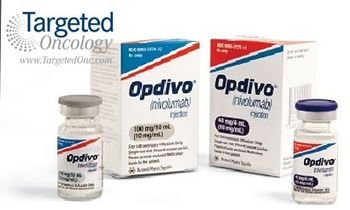
Three months ahead of schedule, nivolumab (Opdivo) has obtained FDA approval for patients with nonsquamous non-small cell lung cancer who progressed on or following platinum-based chemotherapy.

Researchers discovered that the use of anamorelin among patients with advanced non-small cell lung cancer considerably helped more patients stabilize or gain lean body mass, a factor that consequently enables patients with cachexia to survive longer.

Clinical Trial Profile: The Juniper trial is studying abemaciclib as a possible new treatment for patients with advanced non-small cell lung cancer harboring the KRAS mutation.
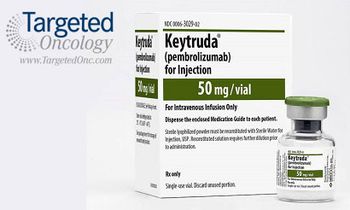
The immunotherapy, pembrolizumab (Keytruda), has been FDA approved for treatment in patients with pretreated advanced non-small cell lung cancer across all histologies with tumors expressing PD-L1.

Frontline combination treatment with erlotinib and bevacizumab demonstrated high efficacy in patients with advanced non-small cell lung cancer who harbored an EGFR T790M mutation.

Lorraine Pelosof, MD, PhD, assistant professor, Division of Hematology/Oncology, The University of Texas Southwestern Medical Center, discusses targets and possible therapies for never smokers diagnosed with non-small cell lung cancer (NSCLC).

Data from the pivotal KEYNOTE-001 trial showing pembrolizumab's efficacy in pretreated non-small cell lung cancer were presented just days before the FDA is scheduled to make its approval decision on the PD-1 inhibitor in this setting (October 2, 2015).

Rociletinib has been granted priority review designation as a treatment for patients with EGFR T790M-mutant metastatic non-small cell lung cancer following prior administration of an EGFR TKI.

Inhibition of PD-L1 with atezolizumab (MPDL3280A) showed crucial clinical efficacy as monotherapy for the treatment of patients with advanced non-small cell lung cancer (NSCLC).

Patients with advanced lung and gastrointestinal neuroendocrine tumors had a 52% reduction in risk of progression or death with everolimus compared with placebo.
David J. Stewart, MD, head, Division of Medical Oncology, University of Ottawa/The Ottawa Hospital, discusses a study that investigated the impact of delaying approval on overall survival.

Joshua M. Bauml, MD, assistant professor, University of Pennsylvania, discusses the significant impacts of a new electronic platform.

When cetuximab (Erbitux) was added to chemotherapy, the risk of death was reduced by 44% for patients with advanced squamous non-small cell lung cancer (NSCLC) whose tumors test positive for EGFR gene amplification.

Osimertinib (AZD9291), the third-generation TKI, demonstrated a 71% objective response rate (ORR) in those with EGFR T790M-mutant non-small cell lung cancer (NSCLC), following resistance to frontline anti-EGFR therapy.
Advertisement
Advertisement
Trending on Targeted Oncology - Immunotherapy, Biomarkers, and Cancer Pathways
1
Plinabulin Receives FDA Fast Track Designation in Post-ICI NSCLC
2
FDA Oncology Recap: Approvals, Designations, and Decisions in September 2026
3
Denosumab Biosimilar Approved For Existing Oncology Indications
4
CEPHEUS and Frontline Treatment in Newly Diagnosed Multiple Myeloma
5