


EGFR+ Lung Cancer
Latest News
Advertisement
Latest Videos















































Advertisement
More News

Lung cancer continues to be the leading cause of cancer-related mortality, resulting in ~1.4 million annual deaths worldwide and 160,000 deaths each year in the United States.

Advances in the treatment of non-small cell lung cancer (NSCLC) have resulted in some positive outcomes in recent years, adding choices to the treatment armamentarium.
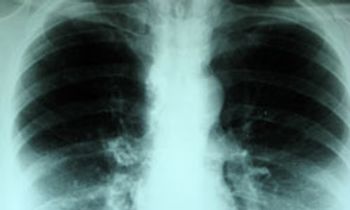
Although the current standard of care for advanced NSCLC remains platinum doublet chemotherapy, recent evidence suggests that most newly diagnosed patients may be candidates for targeted therapy as firstline treatment.
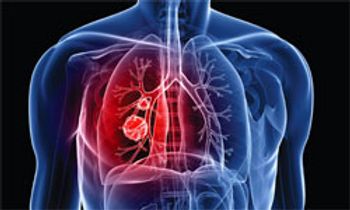
The second-line administration of ramucirumab in combination with docetaxel demonstrated a statistically significant improvement in overall survival (OS) and progression-free survival (PFS) compared with placebo plus docetaxel in patients with non-small cell lung cancer (NSCLC). The announcement was made Feb. 19 by Eli Lilly and Company, the company developing the agent.
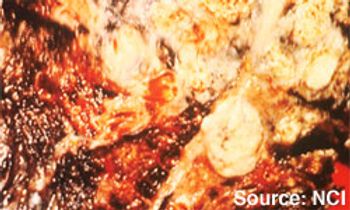
Anti-angiogenic therapy aims to disrupt blood supply to tumors and has proven clinical benefit in nonsquamous non-small cell lung cancer (NSCLC).
Chandra P. Belani, MD, discusses the VEGF-targeted agent nintedanib (BIBF 1120).
The FDA has granted a Breakthrough Therapy designation to dabrafenib for its potential as a treatment for patients with metastatic BRAF V600E mutation-positive NSCLC who have received at least one prior line of platinum-containing chemotherapy.
Bilal Piperdi, MD, discusses the recent advancements in non-small cell lung cancer treatment and what the future might bring.

LDK378 is a highly selective and potent inhibitor of ALK, and has demonstrated preclinical antitumor activity against tumors with acquired crizotinib resistance. In a phase I trial, LDK378 induced tumor response in 70% of patients with crizotinib-resistant NSCLC.
Alice T. Shaw, MD, PhD, from Massachusetts General Hospital, discusses the advent of more potent ALK inhibitors such as LDK378 and the treatment of ALK-positive lung cancer patients with crizotinib.
Marcia S. Brose, MD, PhD, Abramson Cancer Center, University of Pennsylvania, discusses BRAF mutations in thyroid cancer.a

Naiyer A. Rizvi, MD, discusses the phenomenon of pseudoprogression in patients with lung cancer after they receive immunotherapy treatment.

Frederick Alan Rapoport, MD, discusses the results of the SALT 1 and SALT 2 studies, which measured the efficacy of tolvaptan (Samsca) in patients with euvolemic and hypervolemic hyponatremia
Alice T. Shaw, MD, PhD, discusses using crizotinib to treat patients with ALK-positive lung cancer.
Charles S. Fuchs, MD, MPH, director, Gastrointestinal Cancer Center, Dana-Farber Cancer Institute, discusses targeting KRAS in colorectal cancer.

MPDL3280A produced durable responses in studies in patients with forms of locally advanced/metastatic cancers, including smokers with NSCLC who customarily have poorer responses to cancer therapies than nonsmokers.

Naiyer A. Rizvi, MD, an associate attending physician, Memorial Sloan-Kettering Cancer Center, discusses PD-1 and PD-L1 antibodies in development for the treatment of lung cancer.

PD-L1 expression in tumors is a candidate molecular marker warranting further investigation as a means to select patients for immunotherapy with an anti PD-1 antibody
Julie R. Brahmer, MD, from Johns Hopkins University School of Medicine, Sidney Kimmel Comprehensive Cancer Center, discusses the outlook for immunotherapies in cancer care.
Bilal Piperdi, MD, Associate Professor of Clinical Medicine, Department of Medicine (Oncology), Albert Einstein College of Medicine, comments on molecular targeted agents for stage III non-small cell lung cancer (NSCLC).

Today, the treatment options for non-small cell lung cancer (NSCLC) in the United States include targeted therapies aimed at angiogenesis (bevacizumab), EGFR mutations (erlotinib and afatinib), and ALK translocations (crizotinib).
WCLC is the largest meeting dedicated to lung cancer and other thoracic malignancies. This year’s theme was “Next-Generation Lung Cancer Care,†and highlights from some key data presented are provided here.
Mark G. Kris, MD, William and Joy Ruane Chair in Thoracic Oncology at Memorial Sloan-Kettering Cancer Center, gives an overview of current guidelines for molecular testing in lung cancer.
Chandra P. Belani, MD, from the Penn State Hershey Cancer Institute, discusses the treatment of subgroups of patients with lung cancer.

The addition of bevacizumab, erlotinib, afatinib, and crizotinib to the treatment arsenal for NSCLC has been a major advance in the treatment of this disease. However, there is a large imbalance within tumor types.
Advertisement
Advertisement
Trending on Targeted Oncology - Immunotherapy, Biomarkers, and Cancer Pathways
1
Plinabulin Receives FDA Fast Track Designation in Post-ICI NSCLC
2
Denosumab Biosimilar Approved For Existing Oncology Indications
3
FDA Oncology Recap: Approvals, Designations, and Decisions in September 2026
4
Tile-Based Radiation Improves Local Control in Resected Brain Metastases
5