




Gastric Cancer
Latest News
Advertisement
Latest Videos











































Advertisement
More News
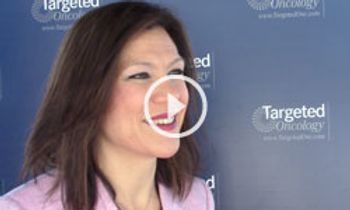
Johanna Bendell, MD, Director of GI Cancer Research Program, associate director, Drug Development Program, Sarah Cannon Research Institute, discusses the results of a randomized, double-blind, multicenter phase II trial that examined FOLFOX with or without ramucirumab as front-line therapy for advanced gastric or esophageal adenocarcinoma.
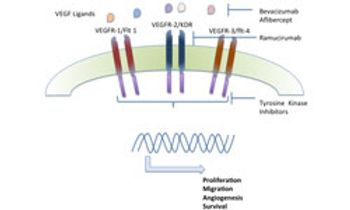
Advanced gastric cancer and gastroesophageal junction cancers are highly aggressive cancers with poor prognosis and limited treatment options. The VEGF pathway has been one of the key signaling pathways under investigation for these cancers.
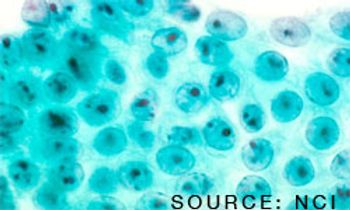
The FDA has approved ramucirumab as a treatment for patients with unresectable gastric cancer or GEJ adenocarcinoma following fluoropyrimidine- or platinum-containing therapy, based on a significant extension in overall survival (OS).
Pamela L. Kunz, MD, assistant professor of medicine, Oncology, Stanford University Medical Center, on the use of angiogenesis inhibitors for the treatment of metastatic gastric cancer.

Smitha Krishnamurthi, MD, a medical oncologist and associate professor of medicine at University Hospitals Case Medical Center and Case Western Reserve University, discusses the results of the phase III RAINBOW trial, which explored ramucirumab plus paclitaxel as a second-line treatment in gastric cancer.
Pamela L. Kunz, MD, assistant professor of medicine, Oncology, Stanford University Medical Center, discusses the need to identify molecular subtypes of gastric cancer.
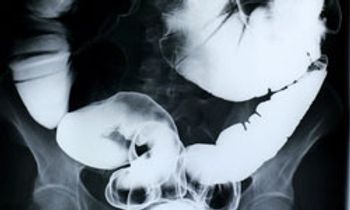
In the largest gastric cancer second-line trial, the VEGFR-2 inhibitor ramucirumab combined with paclitaxel demonstrated a significant increase in survival.

The combination of ramucirumab and paclitaxel resulted in a significant prolongation in survival and gains in quality of life when compared to paclitaxel alone for the second-line treatment of patients with metastatic gastric cancer.
Julie R. Brahmer, MD, from Johns Hopkins University School of Medicine, Sidney Kimmel Comprehensive Cancer Center, discusses the outlook for immunotherapies in cancer care.
The FDA has assigned a priority review designation to ramucirumab (IMC-1121B) as a second-line treatment for patients with advanced gastric cancer.

Over the past two decades, there has been a shift away from indiscriminate cell-killing by anticancer agents toward the development of more specific drugs that target key aspects of cancer cell biology.

Paul A. Bunn, Jr, MD, from the University of Colorado, discusses afatinib for patients with activating epidermal growth factor receptor mutation.
Carol Aghajanian, MD, from the Memorial Sloan-Kettering Cancer Center, discusses the difficulties with a gold standard clinical trial endpoint in ovarian cancer.
Antoni Ribas, MD, PhD, the director of the Tumor Immunology Program Area at UCLA's Jonsson Comprehensive Cancer Center, discusses PD-1 and PD-L1 in various cancers.

Richard Finn, MD, from the Jonsson Comprehensive Cancer Center, UCLA, describes the development of cyclin-dependent kinases (CDKs) for the treatment of cancer.

Researchers at the NCI have developed the most comprehensive analysis of coding variants in the most frequently studied human tumor cell lines in cancer research.
Advertisement
Advertisement
Trending on Targeted Oncology - Immunotherapy, Biomarkers, and Cancer Pathways
1
FDA Oncology Recap: Approvals, Designations, and Decisions in September 2026
2
Plinabulin Receives FDA Fast Track Designation in Post-ICI NSCLC
3
Denosumab Biosimilar Approved For Existing Oncology Indications
4
CEPHEUS and Frontline Treatment in Newly Diagnosed Multiple Myeloma
5