


GI CANCERS
Latest News
Advertisement
Latest Videos












































Advertisement
More News

In an interview with Targeted Oncology, Kashyap Patel, MD, discussed the COVID-19 pandemic and the implementation of new precautions in his practice as the number of COVID-19 infected persons rises in the state.<br />
Patients harboring IDH1/2 muta­tions may receive benefit by the use of PARP inhibitors, with investigators initi­ating clinical trials in patients across multiple different tumor types to determine the efficacy of this strategy.
Treatment with pembrolizumab demonstrated antitumor activity along with tolerable toxicity in patients with 4 different rare and hard-to-treat malignancies, according to results from a phase II study led by The University of Texas MD Anderson Cancer Center researchers and published in the Journal for ImmunoTherapy of Cancer.

The FDA has accepted a Biologics License Application for MYL-1402O, a proposed biosimilar to bevacizumab, according to a press release from co-developers Biocon and Mylan. The BLA is seeking approval for the biosimilar as a treatment for multiple types of cancer and the FDA has set an action date goal of December 27, 2020, for a decision on the BLA.
As the new coronavirus disease 2019 creates problems internationally, health-wise and economically, it is also becoming a cause for concern throughout the oncology community.
In February 2020, the FDA gave indications to multiple therapies meant for treatment of solid tumor and hematologic malignancies. FDA action included 10 Priority Reviews, 2 Breakthrough Therapy designations, and 2 Fast Track designations.

To help clinicians cope with an increasing number of geriatric patients with cancer, the Association of Community Cancer Centers is addressing this problem with a 2-pronged approach that focuses on the delivery of care and diagnostic assessment.
The FDA has granted Priority Review to the New Drug Application for ripretinib as treatment of patients with advanced gastrointestinal stromal tumors. This potential FDA approval has a Prescription Drug User Fee Act target action date of August 13, 2020, according to a press release from Deciphera Pharmaceuticals, Inc.<br />
The FDA has extended the Prescription Drug User Fee Act date by 3 months for the new drug application of avapritinib from February 14, 2020, to May 14, 2020, the manufacturer, Blueprint Medicines Corporation, announced in a news release. The NDA was seeking accelerated approval for the kinase inhibitor for the treatment of adults with fourth-line gastrointestinal stromal tumors.

The incidence of colorectal cancer is rising among people who are below 50 years of age, the colonoscopy screening age as recommended by the United States Preventive Service Task Force of the National Cancer Institute. To date, there is no research that can explain the rise which has led physicians to deliberation on whether the recommended screening age for colonoscopies should be lowered or left as is. During a debate at the 2020 Gastrointestinal Cancers Symposium, Uri Ladabaum, MD, and David S. Weinberg, MD, MSc, presented their stances on the topic.
A new phase II study of trastuzumab and pertuzumab added to neoadjuvant chemoradiotherapy followed by surgery in patients with esophageal adenocarcinoma has found the combined regimen to be feasible and worthy of further study.
The HER2-targeted antibody-drug conjugate trastuzumab deruxtecan demonstrated promising activity and manageable safety profile in patients with HER2-positive gastric or gastroesophageal junction cancer, meeting the primary end point of the study, according to a press release.

The combination of regorafenib plus an oral fluoropyrimidine, TAS-102, as third-line treatment in patients with metastatic colorectal cancer, achieved a clinically meaningful disease control rate in the phase I dose-escalation trial REMETY, according to data presented at the 2020 Gastrointestinal Cancers Symposium.

Joseph Chao, MD, discusses the importance of assessing the microsatellite instability (MSI) status in patients with advanced gastric/gastroesophageal junction cancer based on findings from a comparative analysis of KEYNOTE-059, KEYNOTE-061, and KEYNOTE-062.
In an interview with Targeted Oncology, Vincent Chung, MD, discussed the findings from the pilot trial evaluating the addition of dietary supplements to combination chemotherapy in patients with unresectable pancreatic cancer. He also highlighted the importance of these findings and the next steps necessary to evaluate the role of supplements in pancreatic cancer further.
Promising antitumor activity with durable responses were demonstrated with the combination of nivolumab and ramucirumab plus paclitaxel in a phase II study of patients with advanced gastric cancer, which wsa presented at the 2020 Gastrointestinal Cancers Symposium. Among patients treated with the combination, the objective response rate was 37.2%, and all responders had a partial response.
Overall survival was meaningfully improved with treatment of pembrolizumab in first and later lines for patients with advanced gastric/gastroesophageal junction cancer with a high number of PD-L1–expressing cells in the tumor, lymphocytes, and macrophages compared with chemotherapy.
A subset of patients with GI cancers harboring <em>NTRK</em> gene fusions had positive responses to selective TRK inhibition with larotrectinib, confirming efficacy of the agent in this group. The results of the confirmatory trial were recently reported the 2020 Gastrointestinal Cancers Symposium.
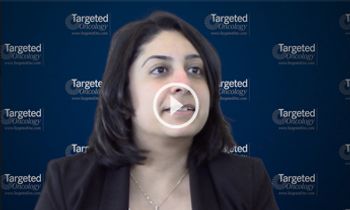
Hirva Mamdani, MD, explains the rationale for conducting a safety and efficacy study of durvalumab in patients following multimodality therapy for locally advanced esophageal and gastroesophageal junction adenocarcinoma.
A phase Ib/II clinical trial of the experimental anti-mitochondrial drug devimistat in combination with cisplatin and gemcitabine has been initiated in patients with biliary tract cancer, according to a press release from Rafael Pharmaceuticals, Inc. The company will collaborate with Michigan Medicine to proceed with the randomized multicenter clinical trial.
Integrating a geriatric assessment into the care of older adults who are receiving cancer treatment in communi­ty oncology practices improves patient and caregiver satisfaction and encourages commu­nication about aging-related concerns, accord­ing to results of a clinical trial that enrolled 541 patients with advanced cancer.
The present and future benefits of telehealth in oncology can be observed through Tahoe For­est Cancer Center and its affiliation with the UC Davis Cancer Center, use of other remote clinics, and participation in virtual tumor boards. Even though there are roadblocks to telehealth reaching more locations and more patients, the potential benefit warrants the time needed to get over those hurdles.

Aiwu Ruth He, MD, discusses the current role of immune checkpoint inhibitors in upper gastrointestinal and gastric cancers and which patients are most likely to benefit from the anti–PD-1 agents.
Infigratinib has been granted Fast Track Designation by the FDA for the treatment of cholangiocarcinoma in adult patients with first-line advanced or metastatic disease, according to a press release from QED Therapeutics, a subsidiary of BridgeBio Pharma, Inc, and developer of infigratinib.
In an interview with Targeted Oncology at the 2019 Ruesch Symposium, Fearon, professor, Weil Cornell Medicine, discussed his presentation on the CXCL-12 pathway, which can exclude T cells from pancreatic ductal adenocarcinoma. He also shared his opinion on how to advance the treatment landscape in the future.
Advertisement
Advertisement
Trending on Targeted Oncology - Immunotherapy, Biomarkers, and Cancer Pathways
1
Denosumab Biosimilar Approved For Existing Oncology Indications
2
FDA Oncology Recap: Approvals, Designations, and Decisions in September 2026
3
Plinabulin Receives FDA Fast Track Designation in Post-ICI NSCLC
4
Tile-Based Radiation Improves Local Control in Resected Brain Metastases
5